

Kunstværket vist på denne side er beskyttet af ophavsretsloven, hvilket betyder, at vi ikke lovligt kan skabe eller sælge en identisk reproduktion. Denne beskyttelse håndhæves i henhold til internationale aftaler som f.eks. den Bernerkonventionen og af nationale love, herunder de bestemmelser, der er fastlagt i Amerikansk ophavsretslov - Titel 17.
Denne metode overholder fuldt ud ophavsretsreglerne, da den ikke indebærer kopiering eller duplikering af det beskyttede kunstværk. I stedet er der tale om en kreativ nytolkning – et nyt maleri, som er inspireret af det oprindelige, men ikke identisk med det.
Giclée- eller lærredstryk i museumskvalitet med hurtig produktion og fleksible muligheder for finish. ( Køb håndmalet maleri Skift til digitalt billede)





























Vælg mellem vores forudindstillede størrelser, der matcher kunstværkets originale proportioner.

Indtast den bredde og højde, du har brug for, så det passer til din ramme eller din væg. Et print kan kun beskæres, aldrig gøres større end selve billedet, så en størrelse med et andet format vil medføre, at dele af motivet går tabt. Vi sender dig en digital mockup til godkendelse, før vi printer noget. Billedet vist på denne side viser ikke den faktiske beskæring — det er kun mockuppen, der gør.
Verdensomspændende levering () på 2 uger i stedet for de sædvanlige 4/5 uger. (8 november)
Hetta
Størrelse på reproduktion
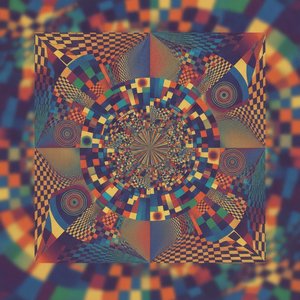
Victor Vasarely's "Hetta," a deceptively simple composition of four vibrant circles – red, orange, green, and blue – is far more than just an abstract arrangement. It’s a meticulously crafted exploration of perception, movement, and the very nature of visual experience, firmly rooted in the groundbreaking principles of Op Art and reflecting the artist's deep engagement with geometric abstraction. Born Károly Vaszary in 1906 in Pécs, Croatia, Vasarely’s artistic trajectory began unexpectedly, initially driven by a medical education before he was captivated by the expressive potential of painting. This shift, catalyzed by his studies at the Podolini-Volkmann Academy and crucially, Sándor Bortnyik's “Műhely” workshop – a breeding ground for Bauhaus ideals – established him as a key figure in challenging traditional artistic conventions. "Hetta" embodies this legacy, showcasing Vasarely’s mastery of creating illusions through precise geometric forms, anticipating the viewer’s eye and manipulating their perception with remarkable skill.
“Hetta” is a quintessential example of Op Art, a movement that emerged in the 1960s – though Vasarely's explorations began decades earlier – to deliberately stimulate visual responses through optical illusions. The painting’s seemingly static arrangement generates a dynamic sense of movement and vibration within the viewer’s eye. This effect is achieved through carefully calibrated patterns and contrasting colors, creating areas of light and dark that shift with the slightest change in viewing angle. Vasarely wasn't simply depicting circles; he was manipulating the way the brain processes visual information, demonstrating a profound understanding of how our perception is constructed.
Vasarely’s artistic vocabulary is profoundly shaped by his immersion in geometric abstraction and the principles championed by the Bauhaus movement. The precise, interlocking circles within “Hetta” reflect the Bauhaus emphasis on functional design and the reduction of form to its essential elements – line, shape, and color. This approach sought to create art that was both aesthetically pleasing and intellectually stimulating, rejecting representational imagery in favor of exploring the underlying structure of visual reality. The square arrangement of the circles further reinforces this geometric rigor, echoing the Bauhaus’s commitment to order and clarity.
While ostensibly abstract, “Hetta” possesses a subtle symbolic resonance. The four colors – red, orange, green, and blue – are often associated with fundamental human emotions: passion (red), enthusiasm (orange), growth (green), and tranquility (blue). Their arrangement within the circles suggests a harmonious balance or perhaps a dynamic interplay between these forces. More than just an aesthetic object, “Hetta” invites contemplation on perception itself, prompting viewers to question their own assumptions about reality and the nature of visual experience. The painting’s impact is one of controlled excitement – a quiet dynamism that draws the eye in and holds it captive.
Guiden til "Hetta" findes på værkets Elevguide-side – et printbart faktablad, der præsenterer værket sammen med dets billedtekst, kreditering og identifikationstabel (kunstner, datoer, medie, original størrelse, samling).
"Hetta" af Victor Vasarely forestiller: circles, geometry, op art, abstraction, color field, vasarely, visual perception.
I "Hetta" ledsages en Reflective følelse af Dark farver.

1906 - 1997 , Kroatien
Explore the mesmerizing world of Victor Vasarely. Discover how his Bauhaus-inspired Op Art masters the science of perception through geometric abstraction and vibrant color. A sophisticated guide for discerning art collectors seeking to understand the legacy of optical illusion.

Explore the profound spiritual depth of geometric abstraction. From Malevich's Suprematism to modern masters, our expert guide reveals how pure form and color command presence in fine art collections.
 Se i rummet
 Del som kort
 Del
Del
 Detaljer
 Guide
Guide

 Download
 Lignende værker
 Røntgenundersøgelse
 Diasshow
 Spørgsmål og svar
 Statistikker

 Vis mere









 Glasmulighed er kun tilgængelig i størrelser under 110 cm


