Vasily Perov: En Stemme fra Rusland – Realismets Hjerte
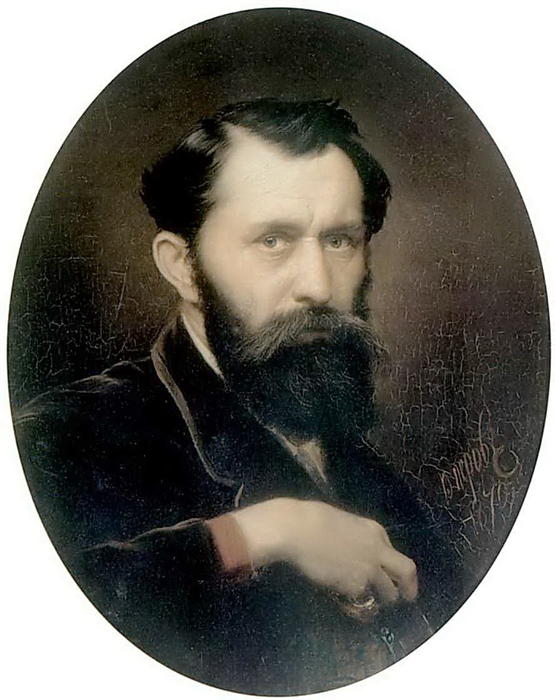
Vasily Grigoryevich Perov, født den 21. december 1833 (i henhold til det gamle regnskab) i den afsidesliggende sibirske by Tobolsk, var en central figur i russisk kunst og et ikon inden for realismen. Hans livshistorie er selv en fortælling om de sociale realiteter, han senere ville skildre på lærredet. Født ud af ægteskab til baron Grigory Kridener og Akulina Ivanova, var Perovs tidlige år præget af en usædvanlig opvækst, der indgydede i ham en dyb følsomhed over for samfundets uretfærdigheder. Navnet “Perov”, afledt fra det russiske ord “pero” (pen), var et nikk til hans tidlige færdigheder inden for kalligrafi og antydede hans dedikation til at detaljeret gengive verden omkring ham – en verden, der ofte blev overset eller bevidst skjult. Hans kunstneriske rejse begyndte på Alexander Stupins Kunstskole i Arzamas, hvor han skar sine grundlæggende færdigheder, før han fortsatte til Moskvas Kunstakademi i 1853. Denne periode var afgørende for at forme hans tekniske evner og eksponere ham for en bredere vifte af kunstneriske indflydelser. Tidlig anerkendelse kom i form af sølver- og guldmedaljer fra den kejserlige kunstakademi for værker som “Kommissær for landbefolkningen, der undersøger” og især “Prædiken i en landsby” i 1861 – et maleri, der ville cementere hans plads i det nationale fokus og give ham muligheden for at studere i udlandet.
En Livshistorie Formet af Uretfærdighed
Perovs barndom var præget af en usædvanlig opvækst. Født udenfor ægteskabet, blev han betragtet som en outsider, og hans tidlige liv var fyldt med økonomiske vanskeligheder og sociale udfordringer. Denne baggrund gav ham et unikt perspektiv på samfundet og inspirerede hans kunstneriske interesse for de marginaliserede og udstødte. Hans adoption af familien Kridener’s navn, selvom han senere foretrak navnet Perov, var en konstant påmindelse om hans usædvanlige oprindelse. Han blev opdraget i et miljø, der var præget af fattigdom og social ulighed, hvilket formodentlig bidrog til hans evne til at skildre den virkelighed med så stor ærlighed og autenticitet. Hans tid i Arzamas lærte ham de grundlæggende principper for kunstnerisk teknik, mens Moskvas akademiske miljø gav ham mulighed for at studere under anerkendte kunstnere og udvikle sin stil.
Temaer og Teknikker – En Realistisk Betragtning
Perovs kunstneriske vision var dybt rodfæstet i en forpligtelse til at portrættere det russiske samfund med upartisk ærlighed. Han afviste de idealiserede fremstillinger, der var populære blandt hans samtidige, og valgte i stedet at fokusere på livet for almindelige mennesker – bønder, arbejdere, de udstødte og dem, der blev glemt. Hans malerier er ikke blot gengivelser af virkeligheden; de er kraftfulde sociale kommentarer, der afslører vanskelighederne, uretfærdighederne og den åndelige tomhed, der prægede det 19. århundrede i Rusland. “Prædiken i en landsby” er et eksempel på dette, hvor han subtilt kritiserer religiøs hykleri ved at skildre en apatisk menighed under en kirke prædiken. Hans teknik var kendetegnet ved omhyggelig detalje, dæmpede farver og en mesterlig brug af lys og skygge for at skabe dramatiske effekter. Han var ikke interesseret i at romantisere fattigdom eller lidelse; snarere søgte han at præsentere det med værdighed og medfølelse, hvilket tvang betragterne til at konfrontere de ubehagelige sandheder om deres eget samfund. Værker som “Den sidste rejse” – der skildrer en landbrugsfuneral – og “Troika: Arbejdsmænd, der bærer vand” er rørende eksempler på hans evne til at vække dybe følelser gennem realistiske fremstillinger af hverdagens liv. Perovs færdigheder strækker sig ud over oliemaleri; han excellerede også i gravering, som demonstreret af det kraftfulde monokrome værk “Naushnitsa. Før stormen”, der viser hans mesterskab inden for chiaroscuro og intrikate detaljer.
Peredvizhniki – En Bevægelse født af Ærlighed
Perovs engagement i realismen stemte perfekt overens med den spirende åndelige revolution, der førte til dannelsen af Peredvizhniki (Wanderers) i 1870. Denne gruppe af russiske realistiske malere brød med begrænsningerne i Akademiet og etablerede en uafhængig forening dedikeret til at udstille kunst over hele Rusland – nå ud til publikum uden for de begrænsninger, der var i St. Petersborg og Moskva.
- Peredvizhniki havde til formål at bringe kunst direkte til folket,
- at adressere sociale spørgsmål gennem deres arbejde,
- og at fremme en unik russisk kunstnerisk identitet.
Perov var ikke blot et medlem; han var en grundlæggende kraft, der formede bevægelsens idealer og argumenterede for dens principper. Hans engagement i at skildre livet for almindelige russere resonerede dybt med Peredvizhniki’s mission, hvilket cementerede hans position som en førende figur inden for gruppen. Wanderernes udstillinger blev enormt populære, tiltrækker store menneskemængder og udløste vigtige samtaler om kunst, samfund og national identitet.
Et Arv af Ærlighed og Social Kommentar
Vasily Perovs tidlige død fra tuberkulose i 1882 i en alder af 48 år markerede et betydeligt tab for russisk kunst. Alligevel fortsatte hans arv med at inspirere generationer af kunstnere, der fulgte efter ham. Hans indflydelse kan ses i værkerne hos Ilya Repin og Vasily Surikov, begge mestere inden for realistisk maleri, der videreudviklede den tradition, han havde etableret. Perovs malerier forbliver relevante i dag ikke kun for deres kunstneriske værdi, men også for deres vedvarende sociale kommentar. De tjener som en kraftfuld påmindelse om vanskelighederne, der er mødt af almindelige mennesker gennem historien og fortsætter med at provokere empati og forståelse. Hans værker er nu udstillet i anerkendte samlinger, herunder Tropinin og Contemporary Moscow Artists Museum, hvilket sikrer, at hans vision fortsat resonerer hos publikum over hele verden. *Perovs bidrag strækker sig ud over blot kunstnerisk dygtighed; han var en social bevidsthed malet på lærredet, en stemme for de tavse og en pioner inden for russisk realisme.* Han efterlod et værk, der ikke kun dokumenterede hans tid, men også udfordrede den.


 Se i rummet
 Skift til printversion
 Send
Send Del
Del
 Detaljer
 Guide
Guide

 Download
 Lignende værker
 Røntgenundersøgelse
 Se diasshow
 Statistik


 Læs mere






































 Glasmulighed er kun tilgængelig i størrelser under 110 cm


