Giclée- eller lærredstryk i museumskvalitet med hurtig produktion og fleksible muligheder for finish. ( Køb håndmalet maleri Skift til digitalt billede)





























Vælg mellem vores forudindstillede størrelser, der matcher kunstværkets originale proportioner.

Indtast den bredde og højde, du har brug for, så det passer til din ramme eller din væg. Et print kan kun beskæres, aldrig gøres større end selve billedet, så en størrelse med et andet format vil medføre, at dele af motivet går tabt. Vi sender dig en digital mockup til godkendelse, før vi printer noget. Billedet vist på denne side viser ikke den faktiske beskæring — det er kun mockuppen, der gør.
Verdensomspændende levering () på 2 uger i stedet for de sædvanlige 4/5 uger. (10 november)
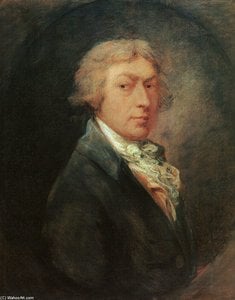
Self portrait
Størrelse på reproduktion
The year is 1754. Thomas Gainsborough, a young artist hailing from the quiet Suffolk market town of Sudbury, stands before his easel, meticulously rendering himself in oil on canvas. This self-portrait isn’t merely a likeness; it's a carefully constructed statement – a glimpse into the mind and ambitions of a rising star within the burgeoning world of British art. Measuring 58 x 49 cm, the painting immediately draws the viewer in with its restrained elegance and the palpable sense of quiet confidence emanating from Gainsborough’s gaze. It is a quintessential example of his skill, reflecting the Rococo style's emphasis on beauty, grace, and refinement – qualities that would define much of his subsequent work.
Gainsborough’s self-portrait speaks volumes about the artistic conventions of his time. The portraiture genre was experiencing a golden age, particularly within the Royal Academy, where Gainsborough eventually gained recognition. However, this is not simply a formal representation; it's infused with a subtle introspection. Dressed in the fashionable attire of the period – a dark suit and tie – he presents himself as both a professional artist and a man of discerning taste. The serious expression, far from being stern, conveys an air of quiet self-assurance and intellectual curiosity, hallmarks of the Enlightenment era.
The painting’s composition is carefully balanced, drawing the eye to Gainsborough's face while subtly incorporating elements of his studio – a suggestion of landscape sketches hinting at his broader artistic interests. The use of light and shadow, a hallmark of the Rococo style, adds depth and volume, enhancing the subject’s features and creating a sense of three-dimensionality.
Gainsborough’s mastery is evident in his meticulous technique. The delicate brushstrokes create a smooth surface texture, while subtle variations in color and tone contribute to the painting’s overall luminosity. He skillfully employs glazing techniques – applying thin layers of translucent oil paint over dried underlayers – to build up depth and richness of color. The attention to detail, particularly in rendering the fabric of his clothing and the textures of his hair, demonstrates a profound understanding of materials and their effects.
The canvas itself, primed with a suitable ground for oil paints, provides an ideal surface for Gainsborough’s expressive strokes. The choice of dark colors – predominantly browns, blacks, and grays – contributes to the painting's somber yet dignified tone, reflecting the artist’s serious demeanor.
Beyond its technical brilliance, the self-portrait carries symbolic weight. It represents Gainsborough’s ambition, his dedication to his craft, and his desire to establish himself as a leading figure in British art. The painting is not just a portrait; it's an assertion of identity – a declaration that this was the man behind the brush, a man driven by passion and a commitment to artistic excellence. It stands as a testament to Gainsborough’s enduring legacy, influencing generations of artists who followed.
"Self portrait" er et værk fra Thomas Gainsboroughs Rococo Style-periode, hvis gennemgående temaer inkluderer rococo elegance, societal norms, british art legacy, trends, portraiture’s valued genre”, “gainsborough’s professional demeanor”, self-portrait showcase, mastery.
"Self portrait" af Thomas Gainsborough har en Balanced farveintensitet.
Det originale værk "Self portrait" af Thomas Gainsborough er et Oil On Canvas med målene 58 x 49 cm. Teknik og størrelse beskriver det originale objekt.


1727 - 1788 , Storbritannien
Unlock your creative potential with WahooArt. Learn how to scale your art business through our automated print and premium oil reproduction services, transforming your original works into a global, passive income stream without compromising academic excellence.

Discover the enduring allure of oil on canvas. Explore how master techniques like impasto and glazing create the depth, texture, and emotional resonance found in the world's greatest masterpieces. An essential guide for fine art enthusiasts and discerning collectors.

Discover the profound allure of oil on canvas. Explore the mastery of impasto textures, the science of pigment longevity, and expert guides to selecting museum-quality reproductions that elevate your collection with timeless elegance and tactile depth.
 Se i rummet
 Del som kort
 Del
Del
 Detaljer
 Guide
Guide

 Download
 Lignende værker
 Røntgenundersøgelse
 Diasshow
 Spørgsmål og svar
 Statistikker

 Vis mere









 Glasmulighed er kun tilgængelig i størrelser under 110 cm