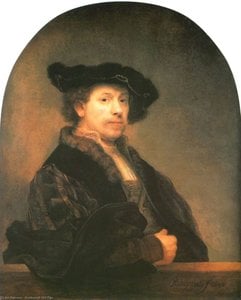
Sir Joshua Reynolds: En Lysende Figur i Det Oplyste Æra
Sir Joshua Reynolds, født i Plympton i Devon i 1723, var en af de mest indflydelsesrige og berømte malere i det 18. århundredes England. Han er kendt for at have været medstifter af Royal Academy og den første formand for institutionen, hvilket markerede et skelsættende øjeblik for britisk kunst. Reynolds’ arbejde var ikke blot teknisk dygtigt; han var en visionær, der forsøgte at hæve portrætteringen til en ny standard og definere det britiske kunstmaleriske landskab. Hans liv og kunst er et fascinerende eksempel på en mand, der både var præget af sin tid og i stand til at forme den.
- Tidlig Liv og Uddannelse: Reynolds voksede op i et hjem med en stærk akademisk tradition, da hans far var præst. Han modtog en grundig uddannelse, der gav ham en kærlighed til litteratur og klassiske studier. I 1740 blev han lærling hos Thomas Hudson, en populær portrætmaler i London, hvor han lærte de grundlæggende teknikker for portrætter. Denne tidlige uddannelse lagde fundamentet for hans senere karriere.
- Rejser til Rom og Inspiration: I 1750 tog Reynolds på en rejse til Rom, et afgørende øjeblik i hans kunstneriske udvikling. Derfor blev han dybt berørt af den klassiske kunst, der var der, og lærte om "Grand Style" – en stil, der fremhævede idealiseret skønhed, dramatiske kompositioner og historiske eller mytologiske allusions. Denne inspiration ville senere blive central for hans egen portrætteringsstil.
Udviklingen af 'Grand Style' i Portrætmaleriet
Reynolds var ikke blot en kopi af de kunstnere, han studerede. Han tog det lærte fra Hudson og udviklede det videre til noget nyt og unikt. Hans arbejde var præget af et ønske om at forbedre det britiske portrætteringskunst ud over blot at gengive fysisk udseende. Han mente, at portrætter skulle afsløre personlighed og social status. Dette ambitiøse mål førte ham til at inkorporere elementer af historie maleri i sine værker, ofte ved at skildre figurerne i overdådigt tøj eller i scenarier, der mindede om klassiske fortællinger. Han var ikke blot portrætteret mennesker; han skabte varige billeder af magt, intellekt og raffinement. Reynolds’ kunst handler om mere end blot at gengive et udseende – det er en konstruktion af identitet og status.
- Påvirkninger: Han studerede dybt de gamle mestre, især Raphael, Michelangelo og Titian, og deres teknikker og kompositioner var med til at forme hans egen stil.
- Idealiseret Skønhed: "Grand Style" fokuserede på idealiseret skønhed, dramatiske kompositioner og historiske eller mytologiske allusions, hvilket gav hans portrætter en dybde og betydning, der var usædvanlig for den tid.
Royal Academy og Hans Indflydelse
Reynolds’ indflydelse strækker sig langt ud over hans egne malerier. I 1768 blev han medstifter af Royal Academy of Arts, og som den første formand spillede han en central rolle i at forme kunstens fremtid i England. Han var ikke blot en leder; han var også en tænkte, der forsøgte at definere standarderne for god kunst. Reynolds’ indsats for at fremme kunstuddannelse og anerkendelsen af kunstnere som professionelle var banebrydende. Hans årlige foredrag til akademiet studerende blev betragtet som klassiske tekster om kunstteori og praksis, der beskrev hans vision for en britisk skole af maleri. Han understregede vigtigheden af at studere naturen, mestre teknikken og kultivere fantasien, idet han opfordrede kunstnere til at stræbe efter originalitet samtidig med at de holdt fast i traditionen. Reynolds’ lederskab forandrede det britiske kunstlandskab ved at hæve dens status og lægge grundlaget for et blomstrende kunstfællesskab.
Bemærkelsesværdige Værker og Et Eftermæle
Reynolds’ produktive output omfattede portrætter af nogle af de mest fremtrædende personer i det 18. århundredes England – aristokrater, litterære store mænd og militære helte. Hans portræt af
Duke of Devonshire udstråler aristokratisk magt og raffinement, mens hans skildring af
Peter Darnell Muilman, Charles Crokatt og William Keable i en Landscape viser hans evne til at integrere figurer smukt i naturlige omgivelser.
Mr og Mrs William Lindow er et andet eksempel på hans færdigheder i at fange intimiteten og de sociale dynamikker i familielivet. Ud over individuelle portrætter udmærkede Reynolds sig også ved gruppekompositioner, hvor han dygtigt arrangerede flere figurer i en enkelt ramme for at skabe dynamiske og engagerende fortællinger. Hans kunst var ikke blot teknisk dygtig; det var en fortælling – en måde at formidle essensen af en æra gennem omhyggeligt konstruerede billeder.
Reynolds’ indflydelse på den britiske kunst er uovertruffen. Han etablerede portrætteringen som en respekteret genre og bidrog til at forme det britiske folks kulturelle identitet i en periode med hurtige sociale og politiske forandringer. Hans fokus på "Grand Style" inspirerede generationer af kunstnere, mens hans lederskab af Royal Academy lagde grundlaget for udviklingen af et blomstrende kunstfællesskab. I dag fortsætter hans malerier med at fange publikums opmærksomhed med deres elegance, psykologiske dybde og historiske betydning – et vidnesbyrd om hans vision og kunstnerskab. Hans værker findes i prestigefyldte samlinger rundt om i verden, herunder Tate Britain i London og Royal Collection på Hampton Court, hvilket sikrer, at hans arv vil fortsætte med at inspirere og informere i årtier fremover.



 Se i rummet
 Skift til printversion
 Send
Send Del
Del
 Detaljer
 Guide
Guide

 Download
 Lignende værker
 Røntgenundersøgelse
 Se diasshow
 Statistik


 Læs mere






































 Glasmulighed er kun tilgængelig i størrelser under 110 cm