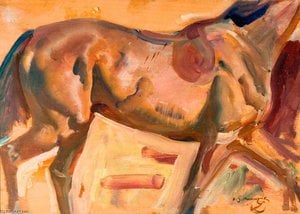
A Life Immersed in Equine Grace
Sir Alfred James Munnings, et navn uadskilleligt forbundet med den levende gengivelse af heste og den romantiske lokkende appel af det landlige England, optager en central position inden for 20. århundredes britiske kunst. Han blev født i 1878 midt i de bølgende landskaber i Suffolk, og hans liv blev dybt formet af en vedvarende forbindelse med den hestelige verden – et bånd, der ville definere hans kunstneriske vision og drive ham til anerkendelse. Munnings optog ikke blot det, han så; han bevarede en følelse, en atmosfære, en verden på randen af irreversibel forandring. Han fangede en forsvindende livsstil, et skarpt observeret portræt af England dybt rodfæstet i tradition, jagt og rytmen af landskabet.
Fra Landlige Begyndelser til Kunstnerisk Udvikling
Munnings’ kunstneriske rejse begyndte ikke inden for de formelle rammer af en akademisk institution, men i den praktiske verden af et Norwich trykkeri. Denne lærlingeposition skar hans færdigheder inden for design og observation, samtidig med at han fik mulighed for at studere på Norwich School of Art. Det var en dannelsesperiode, der indgydte disciplin, som han kunne udnytte, mens han navigerede i udfordringerne ved at etablere sig som kunstner. Tidlige påvirkninger inkluderede plein air-malerne fra Newlyn School i Cornwall, hvor han omfavnede deres engagement i at fange lys og atmosfære direkte fra naturen. Denne indtrængen i impressionistiske teknikker lagde grundlaget for hans signaturstil – løse penselstrøg, en livlig palet og en tydelig følelse af bevægelse. Hans tidlige værker skildrede ofte landskabsbilleder, især dem med klamper og heste, der vandrede over det suffolske landskab, indgydet med en romantisk sans for æstetik, der viste hans voksende mesterskab inden for farve og lys. Disse malerier var ikke blot repræsentationer; de var udtryk for en dyb kærlighed til landet og dets beboere.
Krig, Anerkendelse og en Forsvarer af Tradition
Første Verdenskrig formede både Munnings’ kunstneriske perspektiv og hans offentlige profil dybt. Selvom han i første omgang blev betragtet som uegnet til krigstjeneste, tjente han som officiel kunstner for den canadiske Cavalry Brigade, hvor han dokumenterede hesternes afgørende rolle i konflikten. Denne oplevelse bragte ham ansigt til ansigt med krigens barske realiteter – lidelse, tab og det vedvarende bånd mellem mennesker og dyr. Hans malerier fra denne periode er ikke glorificeringer af kamp, men hjerteskærende refleksioner over offer og modstandskraft, der fanger en melankolsk skønhed midt i ødelæggelsen. Efterkrigstiden vidnede om en stigning i Munnings’ popularitet og økonomisk sikkerhed. Præstigeopgaver strømmede ind, hvilket tillod ham at erhverve Castle House i Dedham, Essex – en ejendom, der blev både hans hjem og atelier for resten af sit liv. Han blev en eftertragtet portrætmaler, der fangede ikke kun fysisk lighed, men også karakter og ånd. Hans evne til at formidle ikke blot fysisk skønhed, men også deres ånd, cementerede hans ry som en af Storbritanniens førende kunstnere. Han var dog også en stærk fortaler for traditionelle kunstværdier.
En Kontroversiel Stemme og Et Varigt Arv
Munnings’ kunstneriske filosofi var dybt rodfæstet i tradition, og han blev en stemme mod den voksende modernistiske bevægelse, der udfordrede konventionelle opfattelser af kunst. Hans berømte – og ofte kontroversielle – radioudsendelse i 1949 førte til en skarpt formuleret angreb på Kubisme og Surrealisme, leveret med karakteristisk ærlighed (og tilsyneladende brændt op af alkohol). Selvom hans bemærkninger udløste vrede blandt fortalere for moderne kunst, resonerede de også med dem, der værdsatte repræsentationsmaleri og kunstens vedvarende kraft. Han var ikke blot imod forandring af for andets skyld; han mente, at det var vigtigt at bevare kunstneriske standarder og fejre skønhed i dens traditionelle former. Denne overbevisning kulminerede i hans valg som præsident for Royal Academy i 1944, en position, han besad indtil 1949, hvilket befæstede hans status inden for det britiske kunstmiljø. Han blev optaget i Order of the British Empire i 1946 og udnævnt til Knight Commander af Royal Victorian Order i 1947, hvilket yderligere anerkendte hans bidrag til nationens kulturelle liv. Sir Alfred James Munnings efterlod et omfattende og overbevisende kunstværk, der fortsat fanger publikums opmærksomhed i dag. Hans malerier giver et vindue ind i en forgangen æra – en verden af heste, jagt og landskaber, der stort set er forsvundet. Munnings Art Museum, grundlagt af hans kone Violet på Castle House, tjener som et vidnesbyrd om hans vedvarende arv, bevarer hans kunst og giver fremtidige generationer mulighed for at værdsætte hans unikke vision. Ud over den tekniske mesterskab i sine malerier er det Munnings’ evne til at vække følelser, der virkelig adskiller ham. Han fangede ikke kun hesternes fysiske skønhed, men også deres ånd, deres kraft og deres forbindelse til det menneskelige hjerte. Hans kunst forbliver et stærkt bevis på den vedvarende appel af repræsentationsmaleri og vigtigheden af at bevare kunstneriske traditioner i en verden, der konstant ændrer sig.
Vigtigste præstationer
- Præsident for Royal Academy: Valgt til præsident for Royal Academy i 1944, hvor han tjente indtil 1949.
- Ridderlighed: Optaget i Order of the British Empire i 1946 og udnævnt til Knight Commander af Royal Victorian Order i 1947.
- Officiel kunstner under krigen: Anerkendt for sit arbejde med at dokumentere den canadiske Cavalry under Første Verdenskrig.
- Skulpturel arbejde: Skabte skulpturer, herunder en hestesøjle statue af Edward Horner.
Hans arv består ikke kun gennem hans mesterlige malerier, men også som en passioneret fortaler for traditionel kunst i en hurtigt moderniserende verden.



 Se i rummet
 Skift til printversion
 Send
Send Del
Del
 Detaljer
 Guide
Guide

 Download
 Lignende værker
 Røntgenundersøgelse
 Se diasshow
 Statistik


 Læs mere






































 Glasmulighed er kun tilgængelig i størrelser under 110 cm