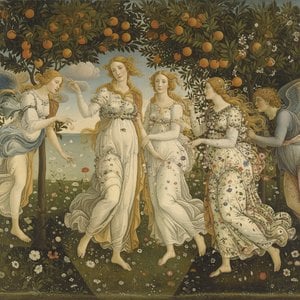
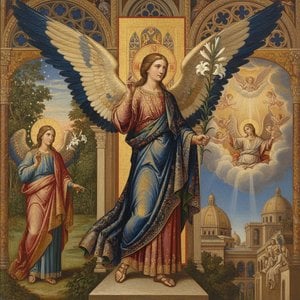
The Annunciation by Sandro Botticelli, hand-painted oil painting reproduction by a master artist
Se i rummet Se i AR Skift til printsalg Skift til digitalt billede Del som kort
Detaljer Guide Tilføj til favoritter Download Lignende værker Røntgenundersøgelse Diasshow Q&A Statistikker

The Annunciation Hand-painted oil painting reproduction

Witness the divine! Sandro Botticelli’s "Annunciation" (1489-90) captures Gabriel's momentous announcement to Mary, a masterpiece of Early Renaissance art in Florence.

Opdag Sandro Botticelli (1445-1510), renæssancens mester bag 'Barnets fødsel' & 'Forårsmånen'. Udforsk hans elegante stil, mytologiske temaer og varige indflydelse på kunsthistorien!

Håndlavet oliereproduktion

Håndmalet olie på lærred i din valgte størrelse og ramme, udført efter bestilling af vores kunstnere. ( Skift til printsalg Skift til digitalt billede)

Corner sample of the P118B picture frame: støbt polystyren, 5 cm wide and 3 cm thick
P118B Dkr10
Corner sample of the P118H picture frame: støbt polystyren, 5 cm wide and 3 cm thick
P118H Dkr10
Corner sample of the P118W picture frame: støbt polystyren, 5 cm wide and 3 cm thick
P118W Dkr10
Corner sample of the P438Z picture frame: støbt polystyren, 5.5 cm wide and 3.5 cm thick
P438Z Dkr10
Corner sample of the P508JH picture frame: støbt polystyren, 7 cm wide and 3.5 cm thick
P508JH Dkr12
Corner sample of the P508YH picture frame: støbt polystyren, 7 cm wide and 3.5 cm thick
P508YH Dkr12
Corner sample of the P805H picture frame: støbt polystyren, 5 cm wide and 3.5 cm thick
P805H Dkr10
Corner sample of the P805Z picture frame: støbt polystyren, 5 cm wide and 3.5 cm thick
P805Z Dkr10
Corner sample of the P919BZ picture frame: støbt polystyren, 7 cm wide and 3.5 cm thick
P919BZ Dkr10
Corner sample of the P919G picture frame: støbt polystyren, 7 cm wide and 3.5 cm thick
P919G Dkr10
Corner sample of the P919XJ picture frame: støbt polystyren, 7 cm wide and 3.5 cm thick
P919XJ Dkr10
Corner sample of the P959ZH picture frame: støbt polystyren, 5 cm wide and 3 cm thick
P959ZH Dkr10
Corner sample of the P968JZ picture frame: støbt polystyren, 6 cm wide and 4 cm thick
P968JZ Dkr12
Corner sample of the W106C picture frame: massivt træ, 5 cm wide and 3 cm thick
W106C Dkr8
Corner sample of the W218G picture frame: massivt træ, 5 cm wide and 3 cm thick
W218G Dkr10
Corner sample of the W218JH picture frame: massivt træ, 5 cm wide and 3 cm thick
W218JH Dkr8
Corner sample of the W218Y picture frame: massivt træ, 5 cm wide and 3 cm thick
W218Y Dkr10
Corner sample of the W307PJ picture frame: massivt træ, 6 cm wide and 3 cm thick
W307PJ Dkr10
Corner sample of the W316G picture frame: massivt træ, 6 cm wide and 3 cm thick
W316G Dkr10
Corner sample of the W316PJ picture frame: massivt træ, 6 cm wide and 3 cm thick
W316PJ Dkr8
Corner sample of the W316Y picture frame: massivt træ, 6 cm wide and 3 cm thick
W316Y Dkr10
Corner sample of the W398PJ picture frame: massivt træ, 5 cm wide and 3 cm thick
W398PJ Dkr8
Corner sample of the W4111J picture frame: massivt træ, 6.5 cm wide and 3.5 cm thick
W4111J Dkr10
Corner sample of the W500HY picture frame: massivt træ, 7 cm wide and 5 cm thick
W500HY Dkr15
Corner sample of the W500JH picture frame: massivt træ, 7 cm wide and 5 cm thick
W500JH Dkr15
Corner sample of the W692G picture frame: massivt træ, 8 cm wide and 4 cm thick
W692G Dkr12
Corner sample of the W849H picture frame: massivt træ, 5 cm wide and 3 cm thick
W849H Dkr8
Corner sample of the W940BG picture frame: massivt træ, 7.5 cm wide and 4.5 cm thick
W940BG Dkr15
Corner sample of the W953PJ picture frame: massivt træ, 6 cm wide and 3.5 cm thick
W953PJ Dkr8

Standardstørrelse
speciallavet
CM
INCH

Vælg mellem vores forudindstillede størrelser, der matcher kunstværkets originale proportioner.

bredde
højde

Indtast den bredde og højde, du har brug for, så det passer til din ramme eller din væg. Da dette er håndmalet, kan kunstneren ved en anden form på størrelsen male lidt mere rundt om billedet eller skære lidt væk — det er op til dig. Vi sender dig et digitalt mockup til godkendelse, før maleriet påbegyndes. Billedet, der vises på denne side, viser ikke det endelige resultat — det er kun mockuppet, der gør.

Eksempler på hvad der kan ændres: Udskift ansigt med kundens eget foto; Tilføj kæledyr (f.eks. udskift kat med hund); Inkluder en skjult besked i baggrunden; Ændr baggrundslandskab eller elementer.
Efter bestilling vil WahooArt.com team sende en e-mail til kunden for at indhente instruktioner og fremsende et udkast til gennemgang

Verdensomspændende levering () på 3-4 uger i stedet for de standard 5 uger. (31 oktober). Ingen kompromiser med kvaliteten.

Gratis ekspresforsendelse til hele verden
Lærred af linned i høj kvalitet
Fuld transportforsikring
Garanti for refusion af told og importafgifter
Garanti for præcis farvegengivelse
100 dages returret ved fabrikationsfejl
100% fuld returret
Mængderabat ved flere køb

Samlet pris

Dkr 1807

The Annunciation

Reproduktionsmetode

Størrelse på reproduktion

-

Samlet pris

Dkr 1807

Hurtige fakta

  • Artist: Sandro Botticelli
  • Medium: Tempera on panel
  • Movement: Early Renaissance
  • Subject or theme: Annunciation story
  • Location: Uffizi Gallery, Florence

The Annunciation: A Florentine Vision of Divine Grace

Sandro Botticelli’s “The Annunciation,” painted circa 1489-1490 and now residing within the hallowed halls of the Uffizi Gallery in Florence, is more than just a depiction of a pivotal biblical moment; it's a shimmering distillation of Renaissance ideals – a harmonious blend of classical elegance, burgeoning humanism, and profound spiritual contemplation. This tempera painting, commissioned by the church of the Florentine convent of Cestello, offers a glimpse into Botticelli’s unique artistic vision, one that resonated deeply with his contemporaries and continues to captivate viewers centuries later.

At first glance, the scene unfolds within a meticulously rendered garden setting, a space both earthly and imbued with an ethereal quality. The composition is cleverly divided by a series of elegant pillars, creating two distinct zones: on one side stands the Archangel Gabriel, depicted in motion as he approaches Mary, his gesture conveying urgency and divine revelation. His robes are rich in color – deep blues and purples signifying his celestial origin – while his face holds an expression of solemnity and reverence. Opposite him, we find Mary kneeling at her prie-dieu, a simple wooden bench that symbolizes her humility and devotion. Her posture is one of quiet contemplation as she receives Gabriel’s momentous announcement.

Beneath the figures, the floor is covered with an intricate geometric pattern – a hallmark of Botticelli's style. These repeating shapes aren’t merely decorative; they create a powerful illusion of depth and perspective, drawing the eye into the heart of the scene and reinforcing the sense of spatial harmony. Notably, beneath the original frame of the painting were inscribed words from St. Luke’s Gospel: ‘The Holy Ghost shall come upon thee, and the power of the Highest shalt thou overshadow; therefore also that holy thing which shall be born of thee shall be called the Son of God.’ This inscription underscores the central theological message of the work – the miraculous conception of Jesus through Mary.

Botticelli’s Renaissance Synthesis

Botticelli's artistic journey was deeply influenced by a confluence of factors that defined the Florentine Renaissance. The rediscovery of classical texts and artifacts, particularly those from Greece and Rome, fueled his fascination with idealized beauty and harmonious proportions. Simultaneously, the rise of humanism—a philosophical movement emphasizing human potential and earthly experience—encouraged artists to explore themes of mythology and virtue alongside religious subjects. Botticelli masterfully synthesized these influences in “The Annunciation,” creating a work that is both profoundly spiritual and strikingly beautiful.

He drew upon late Italian Gothic traditions, evident in the flowing drapery and delicate figures, yet he also embraced the innovations of the burgeoning Renaissance, notably the development of linear perspective. This technique—which creates an illusion of depth on a flat surface—is subtly employed here to enhance the painting’s realism and spatial coherence. Botticelli's use of color is equally noteworthy; he favored rich, vibrant hues – particularly blues and reds – that contribute to the work’s overall luminosity and emotional impact.

Symbolism and Spiritual Depth

Beyond its formal beauty, “The Annunciation” is laden with symbolic meaning. The garden setting itself represents paradise, a realm of innocence and divine grace. Gabriel's presence signifies God’s intervention in human affairs, while Mary’s acceptance embodies her willingness to embrace her destiny as the Mother of God. The inclusion of two cherubs—one near the top and another closer to the bottom—adds a touch of youthful exuberance and reinforces the miraculous nature of the event.

The painting also subtly references classical mythology, particularly the story of Joachim and Anna, the biblical parents of Mary. This connection adds layers of meaning and underscores the theme of divine providence – the belief that God orchestrates events in accordance with his plan. The overall effect is a profound meditation on faith, humility, and the transformative power of grace.

Reproductions: Bringing Botticelli’s Vision to Life

Botticelli's “The Annunciation” remains one of the most beloved and enduring works of the Early Renaissance. Its exquisite beauty, intricate detail, and profound symbolism continue to inspire artists and captivate audiences worldwide. WahooArt offers meticulously crafted, hand-painted reproductions that faithfully capture the essence of this masterpiece. Our skilled artisans utilize only the finest materials – traditional oil paints on archival canvas – to create stunning replicas that will grace your home or office for generations to come.

Whether you are a discerning collector, an art enthusiast, or simply seeking a timeless work of art to enhance your space, our “The Annunciation” reproduction provides an unparalleled opportunity to experience the beauty and spiritual depth of Botticelli’s vision. Visit https://WahooArt.com today to explore our selection and bring this iconic masterpiece into your life.

Spørgsmål og svar

Kan jeg se "The Annunciation" af Sandro Botticelli under forskellig belysning?

"The Annunciation" kan undersøges lag for lag på værkets Røntgenoptagelse-side, en interaktiv viewer inspireret af en konservators lysbænk med elleve optiske lag af billedet.

Hvor kan jeg købe en håndmalet reproduktion af "The Annunciation" af Sandro Botticelli?

"The Annunciation" er tilgængelig som en håndmalet oliereproduktion på lærred af hør. Du kan bestille den på dens Håndmalet reproduktion-side, hvor du kan vælge mellem forskellige størrelser.

Hvilket rum passer bedst til "The Annunciation" af Sandro Botticelli, når man ser på dets farver?

Med sin Neutrals farvepalette anbefales "The Annunciation" af Sandro Botticelli til et Living Room. Farverne er en del af årsagen til denne anbefaling.


Kunstnerbiografi

Early Life and Florentine Beginnings

Alessandro di Mariano Filipepi, bedre kendt som Sandro Botticelli, blev født omkring 1445 i Firenze, Italien – en by der i den tid var midtpunkt for en utrolig kulturel blomstring, den såkaldte tidlige Renæssance. Hans liv var dybt forankret i byen og dens kunstneriske og sociale væv; han boede tæt på sit nabolag Ognissanti, et bevis på både familiære bånd og det levende kreative økosystem, der ernærede ham. Hans far, Mariano Filipepi, var oprindeligt guldsmed og senere tanner – en erhvervsmæssig baggrund, der tidligt introducerede Botticelli til håndværkets præcision og omhyggelighed, kvaliteter der ville påvirke hans kunstneriske tilgang dybt. Selvom de første rapporter antydede en uddannelse som guldsmed, fandt han hurtigt sin kaldelse under veiledning af Fra Filippo Lippi, en førende maler på det tidspunkt. Denne lærerskab var afgørende – det fordybte ham i teknikkerne og æstetikken i den florentinske skole, samtidig med at det forbundede ham med indflydelsesrige mecenater som familien Medici.

A Style Defined by Grace and Myth

Botticellis kunstneriske stil er øjeblikkeligt genkendelig for sin lyriske skønhed, karakteriseret af elegant linære, flydende konturer og en delikat brug af farver. Han mestrede overgangen mellem de sene gotiske traditioner og den spirende renæssanceæstetik, absorberede indflydelser fra mestere som Fra Angelico og Paolo Uccello, men skabte samtidig en unikt personlig vision. Hans figurer har en æterisk kvalitet, ofte afbildet med forlængede proportioner og elegante positurer, der udtrykker både ro og en subtil melankoli. En definerende funktion i hans arbejde er den hyppige indarbejdelse af klassisk mytologi – et spejl af de humanistiske interesser, der bredte sig gennem renæssance-Firenze. Han illustrerede disse gamle fortællinger ikke blot; han indgydede dem med nye lag af mening, udforskede temaer som kærlighed, skønhed og åndelig længsel. Botticelli var en innovatør for sin tid – han brugte ofte silverpoint-tegning underlag for sine lærreds malerier, hvilket bidrog til den lysende og delikate detalje i hans færdige værker. Hans teknik med tempera-farver tillod præcis gengivelse og livlige farver, mens hans senere eksperimenter med oliefarve udvidede hans udtrykkelige muligheder.

Iconic Masterpieces and Artistic Development

Botticellis arv hviler på en håndfuld ikoniske malerier, der fortsat fanger publikums opmærksomhed århundreder senere. *Den Fødsel af Venus*, udført omkring 1486, står som måske hans mest berømte værk – en allegorisk fremstilling af gudinden, der kommer ud af en muslingeskal, og som indkapsler renæssanceidéer om skønhed og harmoni. Dens elegante komposition, delikate farvepalet og evokative symbolik har gjort den til et vedvarende symbol på æraen. Lige så berømt er *Primavera*, skabt omkring 1482, en kompleks og gådefuld maleri, der fejrer foråret og kærligheden, befolket med symbolske figurer fra klassisk mytologi. Disse værker viser Botticellis mesterskab i komposition, hans evne til at skabe atmosfærisk dybde og hans dybe forståelse af menneskelige følelser. Hans tidlige 1470'er var præget af religiøse emner, hvor han finpudsede sine tekniske færdigheder og etablerede en ry for dygtig udførelse. De følgende årtier markerede toppen af hans kreative magt, med skabelsen af hans mest berømte mytologiske malerier. Senere i 1490'erne oplevede han dog en ændring i sin stil, påvirket af den lidenskabelige prædiken fra Girolamo Savonarola – en dominikanermunk, der fordømte det, han så som Firenze’s dekadence og moralske korruption. Denne periode resulterede i mere austere og følelsesladede værker, der afspejlede en voksende åndelig intensitet.

Major Works

  • Den Fødsel af Venus (c. 1486): En ikonisk fremstilling, der indkapsler renæssanceidéer om skønhed.
  • Primavera (c. 1482): Et komplekst allegorisk maleri, der fejrer foråret og kærligheden.
  • Adoration of the Magi (1475-1476): Demonstrerer tidlig mesterskab i komposition og perspektiv.
  • Mystic Nativity (1501): Reflekterer en skiftning mod åndelige temaer i hans senere karriere.

Legacy and Rediscovery

Efter sin død i 1510 forsvandt Botticellis ry gradvist i glemslen, overskygget af de store mesteres præstationer fra den høje renæssance, såsom Leonardo da Vinci og Michelangelo. I løbet af næsten tre århundrede var hans arbejde stort set glemt, en sidebemærkning i kunsthistorien. Men en bemærkelsesværdig genopdagelse fandt sted i det sene 19. århundrede med fremkomsten af ​​Pre-Raphaelite Brotherhood – en gruppe engelske kunstnere, der afviste akademiske konventioner og søgte inspiration i kunsten fra den tidlige italienske renæssance. De blev betaget af Botticellis lineære elegance, livlige farver og poetiske sanselighed, genkendte ham som en fortrolig sjæl. Denne fornyede værdsættelse udløste en bredere omvurdering af hans arbejde og etablerede ham som en af ​​de vigtigste kunstnere fra den tidlige renæssance. I dag fejres han for sin unikke kunstneriske vision, hans mesterlige teknik og hans vedvarende evne til at fremkalde skønhed, følelser og åndelig kontemplation. Hans indflydelse kan ses i efterfølgende generationer af kunstnere, der har søgt at fange den samme følelse af elegance og grænseløshed i deres egne værker. Han er et symbol på florentinsk kunstnerisk præstation og et vidnesbyrd om renæssancens humanisme.
Sandro Botticelli

Sandro Botticelli

1445 - 1510 , Italien

Kort om kunstneren

  • Artistic Movement Or Style: Tidlig Renæssance
  • Artists Or Movements Influenced By This Artist: ['Pre-Raphaelite']
  • Artists Who Influenced This Artist:
    • Fra Angelico
    • Paolo Uccello
  • Date Of Birth: c. 1445
  • Date Of Death: 1510
  • Full Name: Alessandro di Mariano Filipepi
  • Nationality: Italiensk
  • Notable Artworks:
    • Venus' Fødsel
    • Primavera
  • Place Of Birth: Florenz, Italien
Udforsk kunstværker organiseret efter temaer, stilarter og karakteristika.