Early Life and Florentine Beginnings
Alessandro di Mariano Filipepi, bedre kendt som Sandro Botticelli, blev født omkring 1445 i Firenze, Italien – en by der i den tid var midtpunkt for en utrolig kulturel blomstring, den såkaldte tidlige Renæssance. Hans liv var dybt forankret i byen og dens kunstneriske og sociale væv; han boede tæt på sit nabolag Ognissanti, et bevis på både familiære bånd og det levende kreative økosystem, der ernærede ham. Hans far, Mariano Filipepi, var oprindeligt guldsmed og senere tanner – en erhvervsmæssig baggrund, der tidligt introducerede Botticelli til håndværkets præcision og omhyggelighed, kvaliteter der ville påvirke hans kunstneriske tilgang dybt. Selvom de første rapporter antydede en uddannelse som guldsmed, fandt han hurtigt sin kaldelse under veiledning af Fra Filippo Lippi, en førende maler på det tidspunkt. Denne lærerskab var afgørende – det fordybte ham i teknikkerne og æstetikken i den florentinske skole, samtidig med at det forbundede ham med indflydelsesrige mecenater som familien Medici.
A Style Defined by Grace and Myth
Botticellis kunstneriske stil er øjeblikkeligt genkendelig for sin lyriske skønhed, karakteriseret af elegant linære, flydende konturer og en delikat brug af farver. Han mestrede overgangen mellem de sene gotiske traditioner og den spirende renæssanceæstetik, absorberede indflydelser fra mestere som Fra Angelico og Paolo Uccello, men skabte samtidig en unikt personlig vision. Hans figurer har en æterisk kvalitet, ofte afbildet med forlængede proportioner og elegante positurer, der udtrykker både ro og en subtil melankoli. En definerende funktion i hans arbejde er den hyppige indarbejdelse af klassisk mytologi – et spejl af de humanistiske interesser, der bredte sig gennem renæssance-Firenze. Han illustrerede disse gamle fortællinger ikke blot; han indgydede dem med nye lag af mening, udforskede temaer som kærlighed, skønhed og åndelig længsel. Botticelli var en innovatør for sin tid – han brugte ofte silverpoint-tegning underlag for sine lærreds malerier, hvilket bidrog til den lysende og delikate detalje i hans færdige værker. Hans teknik med tempera-farver tillod præcis gengivelse og livlige farver, mens hans senere eksperimenter med oliefarve udvidede hans udtrykkelige muligheder.
Iconic Masterpieces and Artistic Development
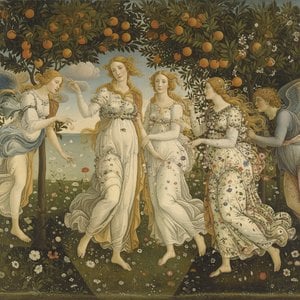
Botticellis arv hviler på en håndfuld ikoniske malerier, der fortsat fanger publikums opmærksomhed århundreder senere. *Den Fødsel af Venus*, udført omkring 1486, står som måske hans mest berømte værk – en allegorisk fremstilling af gudinden, der kommer ud af en muslingeskal, og som indkapsler renæssanceidéer om skønhed og harmoni. Dens elegante komposition, delikate farvepalet og evokative symbolik har gjort den til et vedvarende symbol på æraen. Lige så berømt er *Primavera*, skabt omkring 1482, en kompleks og gådefuld maleri, der fejrer foråret og kærligheden, befolket med symbolske figurer fra klassisk mytologi. Disse værker viser Botticellis mesterskab i komposition, hans evne til at skabe atmosfærisk dybde og hans dybe forståelse af menneskelige følelser. Hans tidlige 1470'er var præget af religiøse emner, hvor han finpudsede sine tekniske færdigheder og etablerede en ry for dygtig udførelse. De følgende årtier markerede toppen af hans kreative magt, med skabelsen af hans mest berømte mytologiske malerier. Senere i 1490'erne oplevede han dog en ændring i sin stil, påvirket af den lidenskabelige prædiken fra Girolamo Savonarola – en dominikanermunk, der fordømte det, han så som Firenze’s dekadence og moralske korruption. Denne periode resulterede i mere austere og følelsesladede værker, der afspejlede en voksende åndelig intensitet.
Major Works
- Den Fødsel af Venus (c. 1486): En ikonisk fremstilling, der indkapsler renæssanceidéer om skønhed.
- Primavera (c. 1482): Et komplekst allegorisk maleri, der fejrer foråret og kærligheden.
- Adoration of the Magi (1475-1476): Demonstrerer tidlig mesterskab i komposition og perspektiv.
- Mystic Nativity (1501): Reflekterer en skiftning mod åndelige temaer i hans senere karriere.
Legacy and Rediscovery
Efter sin død i 1510 forsvandt Botticellis ry gradvist i glemslen, overskygget af de store mesteres præstationer fra den høje renæssance, såsom Leonardo da Vinci og Michelangelo. I løbet af næsten tre århundrede var hans arbejde stort set glemt, en sidebemærkning i kunsthistorien. Men en bemærkelsesværdig genopdagelse fandt sted i det sene 19. århundrede med fremkomsten af Pre-Raphaelite Brotherhood – en gruppe engelske kunstnere, der afviste akademiske konventioner og søgte inspiration i kunsten fra den tidlige italienske renæssance. De blev betaget af Botticellis lineære elegance, livlige farver og poetiske sanselighed, genkendte ham som en fortrolig sjæl. Denne fornyede værdsættelse udløste en bredere omvurdering af hans arbejde og etablerede ham som en af de vigtigste kunstnere fra den tidlige renæssance. I dag fejres han for sin unikke kunstneriske vision, hans mesterlige teknik og hans vedvarende evne til at fremkalde skønhed, følelser og åndelig kontemplation. Hans indflydelse kan ses i efterfølgende generationer af kunstnere, der har søgt at fange den samme følelse af elegance og grænseløshed i deres egne værker. Han er et symbol på florentinsk kunstnerisk præstation og et vidnesbyrd om renæssancens humanisme.



 Se i fuld skala
 Køb håndlavet maleri
 Del
Del Del
Del
 Detaljer

 Download
 Lignende værker
 Røntgenundersøgelse
 Diasshow
 Statistik

 Se mere






































 Glasmulighed er kun tilgængelig i størrelser under 110 cm