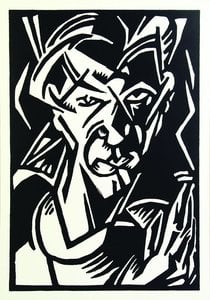
Sandor Bortnyik: Skyggernes og symbolismens væver
Sandor Bortnyik (1893-1976) forbliver en dybt gådefuld skikkelse i den ungarske kunsthistorie, en kunstner hvis hjemsøgte værker fortsat genlyder med en kraftfuld blanding af symbolisme, ekspressionisme og arkitektonisk præcision. Bortnyik blev født i Marosvásárhely, Transsylvanien – dengang en del af Kongeriget Ungarn – og hans liv var præget af fordrivelse og kunstnerisk evolution, hvilket i sidste ende formede ham til en af sin generations mest særprægede stemmer. Hans eftermæle ligger ikke blot i en omfattende produktion af malerier og grafisk design, men også i hans skelsættende rolle som underviser, hvor han fostrede en ny bølge af ungarske kunstnere inden for rammerne af Bauhaus-principperne.
Tidligt liv og indflydelser
Bortnyiks tidlige kunstneriske uddannelse begyndte i Budapest, hvor han øjeblikkeligt blev draget af den livlige energi fra fauvismen. Men de politiske omvæltninger efter Første Verdenskrig tvang ham i eksil, hvilket i 1922 førte ham til Weimar. Denne flytning viste sig at være transformativ og opslugte ham i det revolutionære miljø ved Bauhaus-skolen. Principperne om funktionalisme, geometrisk abstraktion og fokus på håndværk prægede hans kunstneriske udvikling dybt. Han studerede under mestre som Johannes Itten og Lyonel Feininger, hvor han absorberede deres filosofier, mens han samtidig skabte sit eget unikke visuelle sprog. Indflydelsen fra kubismen er tydelig i hans tidlige værker, især gennem fragmenteringen af former og udforskningen af multiple perspektiver – en teknik, som han senere mestrede at integrere med symbolsk billedsprog.
En mester af kommerciel kunst og grafisk design
På trods af hans engagement i avantgarde-bevægelser var Bortnyiks karriere uadskilleligt forbundet med den kommercielle kunstverden. Han etablerede sig hurtigt som en eftertragtet plakatdesigner, der skabte slående visuel kommunikation for en bred vifte af klienter – fra parfumeproducenter som Savoly til cigaretfirmaer som Modiano. Disse plakater er ikke blot reklamer; de er miniaturekunstværker, karakteriseret ved dristige farver, dynamiske kompositioner og ofte gennemtrængt af en følelse af melankoli eller varsel om noget uundgåeligt. Hans designs var bemærkelsesværdigt innovative for deres tid og introducerede modernistisk-konstruktivistisk æstetik på det ungarske marked.
Værkstedet og Bauhaus-arven
I 1928 grundlagde Bortnyik ”Værkstedet” (Mühely), en privat kunstskole i Budapest, der blev en afgørende inkubator for ungarsk kunstnerisk talent. Med dybe rødder i Bauhaus-principperne lagde han vægt på eksperimenter med materialer, teknikker og konceptuelle tilgodesyn. Hans pensum fremmede en innovationsånd og opfordrede eleverne til at udfordre traditionelle forestillinger om kunstnerisk skabelse. Han fungerede også som direktør for den ungarske kunstakademi fra 1949 til 1956, hvor han var med til at forme det kunstneriske landskab i det efterkrigstidens Ungarn. Hans engagement i uddannelse rakte ud over formel undervisning; han søgte aktivt at eksponere sine studerende for internationale udviklinger inden for kunst og design, hvilket skabte en tværkulturel dialog, der berigede deres kreative praksis.
Temaer om død, transformation og det urbane landskab
Bortnyiks værk er dybt optaget af temaer som død, forfald og transformation. Hans mest berømte værker – ofte omtalt som ”tunnelmalerier” – skildrer klaustrofobiske rum fyldt med forvrængede figurer, fragmenterede former og en gennemtrængende følelse af ubehag. Disse billeder fremkalder modernitetens psykologiske angst og afspejler en fascination af dødelighed og den menneskelige eksistens' skrøbelighed. Brugen af mørke farver, dramatisk lyssætning og symbolsk billedsprog – såsom kranier, visne blomster og ensomme skikkelser – skaber en atmosfære af dyb melankoli. Alligevel findes der midt i dette mørke ofte et glimt af håb eller modstandskraft, som antyder muligheden for fornyelse og genfødsel. Hans malerier skildrer ofte urbane landskaber, der indfanger isolationen og fremmedgørelsen i det moderne liv, samtidig med at de udforsker den skønhed og mystik, der gemmer sig i byens skygger.
Bortnyiks arbejde fortsætter med at blive studeret og beundret for sin hjemsøgte skønhed, tekniske mesterskab og dybe udforskning af den menneskelige tilstand. Han forbliver en central figur i ungarsk kunsthistorie, et vidnesbyrd om den kunstneriske visions kraft og Bauhaus-bevægelsens vedvarende arv.



 Se i rummet
 Skift til printversion
 Send
Send Del
Del
 Detaljer
 Studieguide til kunstværker

 Download
 Lignende værker
 Røntgenundersøgelse
 Se diasshow
 Statistik
 Læs mere