Roy Lichtenstein: En Pionerende Stemme i Pop Art
Roy Fox Lichtenstein, født den 27. oktober 1923 i det pulserende New York City, forandrede radikalt kunstens landskab i det tyvende århundrede. Han opstod som en central figur indenfor Pop Art-bevægelsen og gjorde ikke blot rede for sin tids æstetik; han udfordrede den aktivt, ved at transformere almindelige billeder til overbevisende kunstneriske udsagn. Hans barndom i en velhavende jødisk familie i Manhattan gav ham både kulturel bevidsthed og en tidlig kunstnerisk tilbøjelighed. Tidlig eksponering for museer og koncerter, kombineret med en dyb værdsættelse af jazzmusik, lagde grunden til en kreativ ånd, der ville udfordre traditionelle opfattelser af fin kunst. Selvom han i sin ungdom var tiltrukket af realistisk tegning og maleri, begyndte Lichtensteins formelle uddannelse ved Art Students League i 1939 under Reginald Marsh, efterfulgt af studier på Ohio State University – kortvarigt afbrudt af krigstjeneste i hæren. Disse erfaringer gav ham et solidt teknisk fundament, som han senere briljant genfortolkede gennem linsen af masse- og kommercialestetik. Frøene til hans signaturstil blev ikke plantet i de hellige sale af kunsttraditionen, men snarere i den ofte oversete verden af hverdagsbilleder, især tegneserier og reklamer.
Fra Abstraktion til Appropriation: En Afgørende Skift
Lichtensteins tidlige værker demonstrerede en klar engagement med Abstrakt Ekspressionisme, der afspejlede de dominerende æstetiske tendenser i post-krigstiden. Men denne fase viste sig at være overgangsagtig – et springbræt mod hans revolutionære stil. Et kritisk øjeblik opstod under hans ophold ved Rutgers University, hvor han mødte Allan Kaprow, hvis indflydelse genoplivede Lichtensteins interesse for proto-pop billeder. Denne møde udløste en fundamental ændring i hans kunstneriske bane, hvilket førte ham til at stille spørgsmålstegn ved de etablerede grænser mellem “høj” og “lav” kunst. Han begyndte at kigge ud over den subjektive eks- præsionisme og søgte efter objektive sprog – specifikt tegneserier og reklamer. 1961 markerede et vendepunkt med *Look Mickey*, en værk, der modsat sig de Disney-karakterer fra tegneserier, signalerede starten på hans signaturstil. Dette var ikke blot imitation; det var en kunstnerisk genvurdering, der hævede almindelige billeder til status som fin kunst. Han kopierede ikke blot tegneserier; han skabte dem omhyggeligt ved hjælp af teknikker, der efterlignede kommercialtrykprocesser – en bevidst udvisning af grænserne mellem originalt kunstværk og masseproduktion. Denne appropriation var ikke blot en fejring af forbrukerkulturen ukritisk; den undersøgte dens udbredte indflydelse på amerikansk samfund og udfordrede traditionelle kunstneriske hierarkier.
Sproget om Ben-Day Dots og Dristige Linjer
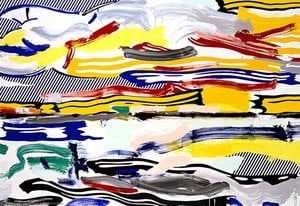
Lichtensteins kunstneriske vokabular er øjeblikkeligt genkendeligt: dristige primære farver, tykke sorte konturer og mest af alt Ben-Day dots – en teknik, der direkte blev lånt fra den mekaniske reproduktion af tegneserier. Disse dots var ikke blot dekorative; de var integrale for hans konceptuelle ramme, der repræsenterede selve processen med masseproduktion og udfordrede traditionel vægt på kunstnerens hånd. Hans malerier tog ofte detaljer fra tegneserier i monumental skala, hvilket tvang betragterne til at konfrontere de æstetiske kvaliteter af en kunstform, der typisk blev afvist som triviel. Værker som *Whaam!* (1963), *Drowning Girl* (1963) og *Oh, Jeff…I Love You, Too…But…* (1964) blev ikoniske repræsentationer af Pop Art, der fangede angst og ønsker i en hurtigt foranderlig forbrukerkultur. Disse var ikke blot gengivelser af tegneserie scener; de var kommentarer til temaer som krig, romantik og samfundsmæssige forventninger, filtreret gennem det visuelle sprog fra massemidler. Han havde til hensigt at fjerne enhver prætention om kunstnerisk subjektivitet, præsentere sit arbejde som objektive refleksioner over amerikansk samfund – et spejl holdt op mod dets egen fabrikerede virkelighed. Den bevidste fladhed og mangel på malerisk gestus understregede denne afkobling yderligere.
Arv og Varig Indflydelse
Roy Lichtensteins indflydelse strækker sig langt ud over kunsten til maleri. Hans innovative brug af kommercialteknikker og appropriation banede vejen for nye generationer af kunstnere, der udforsker temaer som forbrukerkultur, mediedystraktion og kulturel identitet. Salget af *Masterpiece* i 2017 for 165 millioner dollars bekræftede hans position som en af de mest kommercielt succesfulde amerikanske kunstnere nogensinde, men hans arv er ikke udelukkende defineret af monetær værdi. Han udfordrede traditionelle opfattelser af kunstnerisk autoritet og originalitet, hvilket tvang til en genvurdering af hvad der udgør “kunst” i sig selv. Hans arbejde inspirerer fortsat grafiske designere, illustratører og visuelle kunstnere på tværs af forskellige discipliner.
- Vigtigste præstationer: Pionerede Pop Art stil; opnåede international anerkendelse med banebrydende udstillinger.
- Bemærkelsesværdige værker: *Whaam!*, *Drowning Girl*, *Oh, Jeff…I Love You, Too…But…*, *Masterpiece*.
- Undervisningskarriere: Påvirkede spirende kunstnere på SUNY Oswego og Rutgers University.
Lichtenstein døde den 29. september 1997 og efterlod et værk, der fortsat er lige så relevant og provokerende i dag som det var under toppen af Pop Art-bevægelsen. Hans kunst tjener som en kraftfuld påmindelse om den udbredte indflydelse af massemedier og dets evne til at forme vores opfattelser af virkeligheden. Han reflekterede ikke blot sin tid; han udfordrede den aktivt, efterlod et varigt præg på kunsthistorien og inspirerer fortsat kritisk dialog om forholdet mellem kunst, kultur og kommerciel virksomhed.



 Se i rummet
 Skift til printversion
 Send
Send Del
Del
 Detaljer
 Guide
Guide

 Download
 Lignende værker
 Røntgenundersøgelse
 Se diasshow
 Statistik

 Læs mere






































 Glasmulighed er kun tilgængelig i størrelser under 110 cm