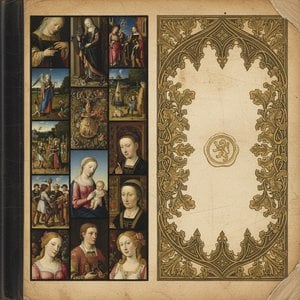
Kunstnerens biografi
A Master of Emotion: The Life and Legacy of Rogier van der Weyden
Rogier van der Weyden, en af de mest betydningsfulde og indflydelsesrige malere fra det flamske renæssance i det 15. århundrede, sammen med Jan van Eyck og Robert Campin, er kendt for sin evne til at repræsentere intense følelser. Han var internationalt anerkendt som en af de mest fremtrædende kunstnere i hans tid, og hans arbejde har inspireret generationer af efterfølgende kunstnere. Selvom detaljerne omkring hans tidlige liv er relativt uklare, menes han at have begyndt sin karriere som goldsmed – en træning, der tilsyneladende indgydte ham en urokkelig dedikation til præcision og raffinement, kvaliteter der ville blive kendetegnende for hans kunstneriske stil. Han var ikke blot optaget af at gengive virkeligheden; han stræbte efter at skabe en oplevelse, der transcenderede simpel observation.
Fra Tournai til Bruxelles: En Stigende Stjerne
I 1427 opnåede van der Weyden rangen som mester i Saint Luke’s Gild i Tournai – et bevis på hans voksende talent og dygtighed. Dette markerede en væsentlig vendepunkt, der konsoliderede hans position som professionel kunstner og åbnede døre til vigtige bestillinger. Hans fremgang fortsatte, da han i 1435 blev hofmaler for Philip den Gode, hertug af Bourgogne – et forhold, der dybtgående påvirkede hans karriere. At fungere som hofmaler sikrede ham ikke kun økonomisk sikkerhed, men også adgang til en elite kreds af indflydelse og eksponering for nogle af ærens mest krævende øjne. Det var i denne periode, at van der Weyden’s kunstneriske vision virkelig modnede, bevægende sig væk fra de noget stive konventioner, som tidligere flamske malere havde fulgt, mod en mere følelsesmæssigt resonans og naturalistisk tilgang. Han malede ikke blot religiøse scener; han stræbte efter at fremkalde ægte følelser hos betragteren, at skabe en oplevelse der var mere end blot observation.
Sproget om Følelser: Stil og Teknik
Rogier van der Weyden’s kunstneriske signatur er straks genkendelig gennem flere definerende karakteristika. Hans palet var bemærkelsesværdigt rig og divers, et livligt tæppe af farver nøje udvalgt til at undgå gentagelse og skabe dybde og kompleksitet i hans kompositioner. Han besad en ekstraordinær evne til at formidle intense følelser – *pathos* – især i fremstillinger af religiøse emner som Lamentation, hvor sorg og smerte er tydelige. Denne følelsesmæssige intensitet blev ikke opnået gennem dramatiske gestus eller overdrevne udtryk; snarere var den subtilt vævet ind i selve maleriets stof, formidlet gennem delikate nuancer i ansigtsudtryk, kropssprog og komposition. Hans figurer, mens de overholder tidens konventioner, demonstrerer en stigende interesse for realistisk repræsentation – ikke kun i anatomi og drapering, men også i at fange deres subjekters psykologiske tilstande. De har en værdig, næsten skulpturel kvalitet, især i hans store triptykker, der giver dem et seriøst og helligt udtryk. Han udnyttede mesterligt oliemalingen, bygger lag af gennemsigtige glazer for at opnå lummere effekter og skabe en følelse af dybde og realisme, som var revolutionerende på sin tid.
Historisk Betydning og Indflydelse
Van der Weyden’s indflydelse spredte sig langt ud over Grønlands grænser. Hans værker blev eftertragtede i hele Europa, især i Italien og Spanien, hvor de introducerede et nyt niveau af følelsesmæssig dybde og naturalisme til lokale kunsttraditioner. Selvom hans berømmelse oplevede en periode med relativt tilbagegang i det 17. århundrede, blev han genopdaget under den 19. århundrede, hvilket cementerede hans plads som en af de vigtigste malere af det 15. århundrede. Han stod sammen med Jan van Eyck og Robert Campin som en af de tre store tidlige flamske mestre, hver især bidrog til udviklingen af nordisk renæssansekunst. Hans innovative teknikker og følelsesladede kompositioner banede vejen for fremtidige generationer af kunstnere. Han etablerede oliemaling som det dominerende medium og hævede statusen af kunstneren inden for samfundet, transformerede dem fra dygtige håndværkere til beundrede skabere.
Vigtige Værker og Varig Masterværk
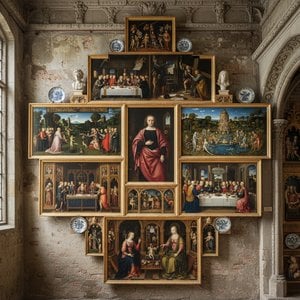
I løbet af sin produktive karriere producerede van der Weyden en række værker, der står som vidnesbyrd om hans kunstneriske dygtighed. *St Luke Drawing a Portrait of the Madonna*, bevaret på Museum of Fine Arts i Boston, viser hans mesterskab med panelmaling og præcis observation. *Lamentation*, der findes i Tournai’s Beaux-Arts Museum, er måske hans mest berømte værk – en kraftfuld følelsesmæssig fremstilling af Kristi sorg, kendt for sin dramatiske brug af *chiaroscuro* og evnen til at fremkalde dyb sorg hos betragteren. Flere versioner af *The Deposition* eksisterer, hver demonstrerer hans evne til at formidle sorg og drama med betagende følsomhed. *Annunciation*, et mesterværk af raffineret stil og opmærksomhed på detaljer, illustrerer hans evne til at indgyde selv de mest traditionelle emner med en følelse af friskhed og vitalitet. Og endelig står det intrikate og rigt dekorerede *Bladelin Triptych* som et monumentalt værk – en kompleks altarudskrivning, der viser hele viften af van der Weyden’s kunstneriske evner. Disse værker, og mange andre, fortsætter med at fange publikums opmærksomhed i dag, hvilket bekræfter hans plads som en af de vigtigste malere af det 15. århundrede.



 Se i fuld skala
 Køb håndlavet maleri
 Del
Del Del
Del
 Detaljer

 Download
 Lignende værker
 Røntgenundersøgelse
 Diasshow
 Statistik

 Se mere






































 Glasmulighed er kun tilgængelig i størrelser under 110 cm