Om kunstneren
Early Life and the Seeds of Surrealism
René Magritte, født René François Ghislain Magritte den 21. november 1898 i Lessines, Belgien, trådte ind i en verden, der dybtgående ville forme hans gådefulde kunstneriske vision. Hans tidlige år var præget af et foruroligende begivenhed – hans mors selvmord, da han blot var tytten år gammel. Billedet af hendes krop, der blev fundet i Sambre-floden med hendes kjole, der skjulte hendes ansigt, blev en hjemsøgende motiv, der subtilt ville gennemsyde hans senere værker, manifesterende sig i dækkede figurer og en vedvarende udforskning af det skjulte. Denne tidlige traume indstillede en fascination for mystik, tab og den foruroligende kraft af det, der forbliver uset. Selvom detaljer om hans barndom forbliver relativt elendige, er det klart, at denne formative oplevelse lagde grundlaget for hans livslange spørgsmål om perception og repræsentation. Han begyndte at tage tegneundervisning i en alder af ti år, hvilket afslørede en iboende tilbøjelighed mod visuel udtryk, men udforskede oprindeligt Impressionisme før han tog en vej, der ville føre ham til at blive en af de mest betydningsfulde figurer i Surrealistisk kunst.
Artistic Development and Influences
Magrittes kunstneriske rejse var ikke øjeblikkelig eller ligetil. Han studerede på Académie Royale des Beaux-Arts i Bruxelles, men fandt dens traditionelle metoder kvælende. Hans tidlige værker eksperimenterede med Futurisme og Kubisme, absorberede elementer af disse avantgarde bevægelser, men afviste deres rene formale bekymringer. Det var først i 1922, da han stødte på Giorgio de Chiricos maleri *The Song of Love*, at Magritte opdagede en resonans, der uomgængeligt ville ændre hans kunstneriske kurs. De Chiricos drømmende landskaber og foruroligende juxtapositioner åbnede en ny måde at se på – en verden, hvor det kendte kunne blive fremmedgjort, og det almindelige indgydet med dyb mystik. Dette møde udløste hans engagement i Surrealisme, selvom han ofte opretholdt en unik afstand fra dens mere åbenlyst psykologiske eller automatiske tilgange. Han foretrak en minutiøs, næsten klinisk præcision i sin maling, ved hjælp af realistiske teknikker til at male ulogiske scenarier.
The Heart of Surrealism: Challenging Reality
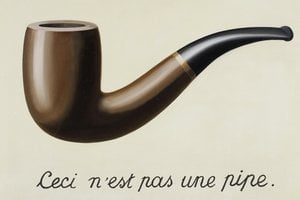
Senere i 1926 skabte Magritte *Le Jockey Perdu (The Lost Jockey)*, der bredt betragtes som hans første sandt surrealistiske værk. Men hans form for Surrealisme var distinkt. Han var ikke interesseret i at udforske det ubevidste gennem fri association eller drømmebilleder på samme måde som nogle af sine samtidige. I stedet søgte Magritte at udfordre betragternes opfattelse af virkeligheden ved at præsentere almindelige objekter i uventede kontekster, hvilket tvinger dem til at stille spørgsmålstegn ved deres antagelser om den verden, de lever i. Ikoniske værker som *The Treachery of Images (This is not a pipe)* (1929) dekonstruerer på genial vis forholdet mellem billede og objekt, minder os om, at en repræsentation aldrig er selve tingen. *Les Amants (The Lovers)* (1927-1928), med dets dækkede figurer, afspejler traumer over hans mors død, mens det samtidig udforsker temaer om skjulthed og intimitet. *Time Transfixed* (1938) præsenterer en togmotorvogn, der trænger igennem en mur, hvilket forstyrrer vores sans for rum og tid. Og *The Human Condition* (1933), et lærred inden i et lærred, udvisker grænserne mellem repræsentation og virkelighed, og får os til at overveje, hvordan vi opfatter og fortolker verden.
Later Life, Recognition, and Enduring Legacy
Trods tidlige vanskeligheder med anerkendelse fik Magrittes arbejde gradvist genkendelse, især i USA med udstillinger i 1936 og senere retrospektiver på Museum of Modern Art (1965) og Metropolitan Museum of Art (1992). Han forblev politisk engageret hele sit liv, der argumenterede for kunstnerisk autonomi. Han fortsatte med at finpudse sin signaturstil, udforskede temaer om gentagelse, illusion og magten af sprog i malerier, der er både intellektuelt stimulerende og visuelt slående. Magritte døde den 15. august 1967, efterlod et værk, der fortsat fanger og udfordrer publikum over hele verden. Hans indflydelse strækker sig langt ud over maleriet og påvirker popkunst, minimalistisk kunst, konceptuel kunst og endda reklame og film. I dag er hans malerier bevaret i store museam-samlinger rundt om i verden, herunder Musées royaux des beaux-arts de Belgique i Bruxelles, der huser Magritte Museum – dedikeret udelukkende til hans arbejde og med den største samling af hans værker.
Magrittes vedvarende arv ligger i hans evne til at få os til at se det kendte på ny, stille spørgsmålstegn ved vores antagelser om virkeligheden og værdsætte kunstens kraft til at provokere tanke og inspirere undren. Han malede ikke bare billeder; han skabte visuelle paradokser, der fortsat resonerer hos publikum årtier efter deres skabelse, hvilket cementerer hans position som en sand mester i Surrealisme og en afgørende figur i det 20. århundredes kunst.



 Se i rummet
 Skift til printversion
 Send
Send Del
Del
 Detaljer
 Guide
Guide

 Download
 Lignende værker
 Røntgenundersøgelse
 Se diasshow
 Statistik
 Læs mere






































 Glasmulighed er kun tilgængelig i størrelser under 110 cm