Et Liv Afsløret: Piet Mondrians Rejse
Piet Mondrian, født Pieter Cornelis Mondriaan i 1872 i den rolige hollandske by Amersfoort, fulgte ikke en vej af øjeblikkelig åbenbaring, men en gradvis udfoldelse. Hans tidlige liv var dybt forankret i traditionen; hans onkel, Frits Mondriaan, var allerede en etableret maler, og denne familiære forbindelse styrede ham indledningsvist mod landskabsmaleri. Disse formative værker, der minder om Haagskolen og hollandsk impressionisme – som for eksempel *Den Røde Mølle* – afslører en ung kunstner, der flittigt studerede naturen, mestrede teknikken, men subtilt søgte noget ud over blot repræsentation. Selv dengang syntes et længsel efter forenkling at trække i hans penselstrøg. Han var ikke tilfreds med blot at spejle verden; han ønskede at destillere dens essens. Denne tidlige periode bød på eksperimenter med pointillisme og fauvisme, hvor hver stil gav et forskelligt perspektiv på farve og form, men ingen fuldt ud tilfredsstillede hans spirende kunstneriske vision. Det var en tid med udforskning, en nødvendig optakt til den radikale afvigelse, der skulle definere hans arv.
Det Parisiske Vågnen og Neoplasticismens Fødsel
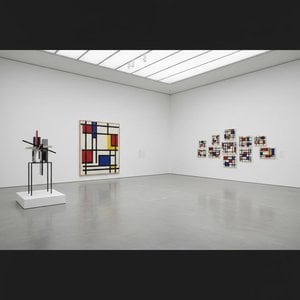
Et vendepunkt indtraf i 1912 med Mondrians flytning til Paris. Byen pulserede af avantgardistisk energi, og han befandt sig fordybet i Cubismens revolutionerende verden. Dette møde viste sig at være transformerende. Han begyndte at dekonstruere former, nedbryde objekter i deres geometriske komponenter, bevæge sig væk fra at skildre *hvad* han så, mod at udforske *hvordan* han så det. Men Mondrian adopterede ikke blot en ny stil; han begav sig ud på en spirituel søgen. Dybt påvirket af Theosofi – en mystisk filosofi, der understregede underliggende universelle principper – troede han, at kunsten kunne være et redskab til at udtrykke disse skjulte sandheder. Denne overbevisning drev hans utrættelige stræben efter abstraktion og fik ham til at reducere farve og form til deres mest fundamentale elementer. Omkring 1917 kulminerede denne rejse i formuleringen af Neoplasticisme, ofte omtalt som 'ren plastisk kunst'. Det var en radikal æstetik baseret på essentielle former – lige linjer, rette vinkler – og et begrænset farvevalg: primærfarver (rød, blå, gul), sort, hvid og grå. For Mondrian handlede denne reduktion ikke om tomhed; det handlede om at afsløre universets underliggende harmoni, en visuel manifestation af spirituel orden. Han grundlagde bevægelsen *De Stijl* sammen med Theo van Doesburg for at fremme disse ideer og cementerede Neoplasticismen som en definerende kraft i moderne kunst. Mesterværker som *Komposition med Rød, Blå og Gul* og *Tableau nr. 2 Komposition nr. V* står som vidnesbyrd om denne periode, ikoniske repræsentationer af hans urokkelige engagement i geometrisk renhed.
New Yorks Rytmer: En Senblomstrende Periode
Udbruddet af Anden Verdenskrig tvang Mondrian til at flygte fra Europa i 1940 og finde tilflugt i den travle metropol New York City. Denne omplacering viste sig uventet oplivende. Byens stramme gadenet – en skarp kontrast til de mere organiske landskaber, han havde kendt – resonerede med hans kunstneriske principper. Hans senere værker, især *Broadway Boogie Woogie* (1943), afspejler denne indflydelse. Mens han bevarede Neoplasticismens kerneelementer, introducerer maleriet en dynamisk energi, en levende rytme inspireret af byens pulserende liv og jazzmusikken. De lige linjer er stadig til stede, men de danser og krydser nu med større frihed og skaber en følelse af bevægelse og glæde. Det var som om Mondrian havde fundet et nyt sprog inden for sit etablerede ordforråd, en måde at udtrykke kompleksiteten i det moderne byliv gennem geometrisk abstraktions enkelhed. Han fortsatte med at finpudse sin stil indtil sin død i 1944 og efterlod sig et oeuvre, der fortsætter med at fange og inspirere.
En Varig Arv: Mondrians Vedvarende Indflydelse
Piet Mondrians indvirkning på kunstverdenen er umålelig. Han var ikke blot en kunstner; han var en visionær, der fundamentalt ændrede vores forståelse af abstraktion og dens potentiale for at udtrykke universelle sandheder. Hans arbejde har dybt påvirket utallige kunstnere, bevægelser og discipliner. Abstrakt ekspressionisme, minimalisme og Color Field-maleri skylder alle en gæld til hans banebrydende ånd. Men hans indflydelse rækker langt ud over lærredet. Principperne i Neoplasticismen – enkelhed, klarhed, geometrisk orden – har gennemtrængt arkitektur, design og mode. Fra møbler og tekstiler til bygningsfacader og grafiske layouts fortsætter Mondrians æstetik med at forme vores visuelle verden. Han forbliver en ikonisk figur i moderne kunst, et symbol på den utrættelige stræben efter abstraktion og kunstenes varige kraft. Som designhistorikeren Stephen Bayley rammende bemærkede, er Mondrian blevet et "totem for alt det Modernismen satte sig for at være". Hans arv er ikke blot en af æstetisk skønhed, men også af intellektuel stringens, åndelig dybde og en urokkelig tro på kunstenes transformative potentiale.
Indflydelser og Nøgleværker
- Tidlige Indflydelser: Haagskolen, hollandsk impressionisme, pointillisme og fauvisme lagde grundlaget for hans indledende kunstneriske udforskninger.
- Transformerende Indflydelse: Kubismen i Paris var afgørende for hans skift mod abstraktion og geometriske former.
- Filosofisk Grundlag: Theosofi informerede dybt hans tro på, at kunsten kunne udtrykke universelle spirituelle principper.
- Nøgleværker: *Den Røde Mølle* (tidlig naturalistisk periode), *Komposition med Rød, Blå og Gul* (quintessentiel Neoplasticisme), *Tableau nr. 2 Komposition nr. V* (demonstrerer reduktionen til essentielle former), *Broadway Boogie Woogie* (senblomstrende dynamik inspireret af New York City).
- Varig Indflydelse: Mondrians arbejde fortsætter med at inspirere kunstnere, arkitekter og designere og forme moderne æstetik på tværs af forskellige discipliner.
Hans æstetiske principper strakte sig ud over maleriet til at påvirke arkitektur, design og mode. Han forbliver en ikonisk figur i moderne kunst, der repræsenterer stræben efter abstraktion og universel harmoni.



 Se i fuld skala
 Køb håndlavet maleri
 Del
Del Del
Del
 Detaljer

 Download
 Lignende værker
 Røntgenundersøgelse
 Diasshow
 Statistik


 Se mere






































 Glasmulighed er kun tilgængelig i størrelser under 110 cm