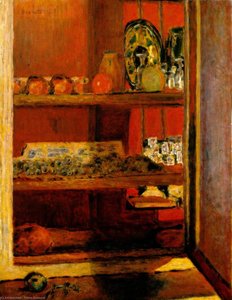
En Livets Lysende Verden: Pierre Bonnards Arv
Pierre Bonnard, født i 1867 i det parisanske forstæderområde Fontenay-aux-Roses, var ikke skabt til et liv præget af kunstnerisk udtryk. Hans far, en højtstående embedsmand i den franske krigministerium, havde forestillet sig en juridisk karriere for sin søn. Ung Pierre fulgte derfor omhyggeligt sine studier i jura og opnåede sit eksamen i 1888, men hans hjerte lå et andet sted – i den fængslende verden af farve og form. Denne dualitet, denne spænding mellem forventning og passion, ville subtilt informere hans kunstneriske rejse, og give hans arbejde en unik intimitet. I første omgang eksperimenterede han med karikaturer, hvilket skarpe hans observerende evner, som senere blomstrede ud i smukt gengivne hverdagsscener. Men det var ved Académie Julian, hvor Bonnard virkelig fandt sin vej, at han mødte ligesindede sjæle, der delte hans voksende afvisning af akademiske konventioner og omfavnede den avantgarde-ånde, der rasede gennem Paris. Denne møde førte ham til Nabis-gruppen – en gruppe af kunstnere, herunder Maurice Denis, Paul Sérusier og Édouard Vuillard – som søgte at infundere kunst med åndelighed og symbolik, bevægende sig ud over blot repræsentation mod en udforskning af indre oplevelser.
Nabis-Årene og Intimitets Kultivering
Bonnards tilknytning til Nabis var afgørende. Gruppens vægt på flade former, dristige farvepaletter og en afvisning af traditionel perspektiv resonerede dybt med hans kunstneriske sanser. Inspireret af japanske trætryk – deres elegante linjer og harmoniske kompositioner – og Symbolistbevægelsens udforskning af subjektive følelser, begyndte Bonnard at udvikle sin signaturstil. Han var ikke interesseret i store fortællinger eller historiske allegorier; i stedet vendte han indad, fokuserede på de stille øjeblikke i det daglige liv: en kvinde der bader, en familie samlet til middag, en solbeskinnet have. Disse var ikke blot gengivelser af scener, men destillationer af følelser – evokationer af minder og atmosfære. Denne fokus på intim hverdagdom gav ham et ry for at være "Intimist", en betegnelse der perfekt fanger den emotionelle resonans i hans arbejde. Hans malerier handler ikke om *hvad* der er gengivet, men *hvordan* det føles at være til stede i disse øjeblikke. Han arbejdede fra hukommelsen, skitserede grundigt og oversatte derefter disse indtryk på lærredet med en bemærkelsesværdig følsomhed over for lys og farve.
Farve som Emotion: En Dristig Farvelægger
Bonnards mesterskab inden for farve er måske hans mest definerende karakteristika. Han brugte ikke bare farver; han *følte* dem, tillod dem at diktere stemningen og atmosfæren i sine malerier. Hans palet var intens, men nuanceret, ofte ved hjælp af uventede kombinationer, der skabte en følelse af strålende lysstyrke. Han ville ofte vende tilbage til færdige lærred, forsigtigt justere farverne over flere værker for at opnå perfekt harmoni – et vidnesbyrd om hans obsessive dedikation til kromatiske balance. Dette var ikke blot en bestræbelse på realistisk repræsentation; det var en måde at fange den subjektive oplevelse af farve, dens evne til at vække følelser og minder. Han beviste sig væk fra direkte observation, foretrak i stedet at male ud fra hukommelsen, hvilket tillod ham at indgyde sine scener med en drømmende kvalitet. Hans landskaber var ikke blot gengivelser af steder, men emotionelle reaktioner på dem – filtreret gennem linsen af personlige oplevelser.
Senere Liv og Et Varigt Arv
Efterhånden som Bonnard blev ældre, skiftede hans kunstneriske fokus yderligere mod udforskningen af farve og lys. Han tilbragte stadig mere tid i det sydfranske Middelhav, fortryllet af landskabets intense lysstyrke. Hans forhold til Marthe de Meligny, hans kone og livslang muse, var centralt for hans liv og arbejde. Hun optræder ofte på hans malerier, ofte gengivet i badetøj, i køkkenet eller i et badekar – hendes tilstedeværelse udstråler en stille elegance og intimitet. I 1912 købte han "La Roulotte" i Vernonnet, nær Giverny, og etablerede et tæt venskab med Claude Monet. Denne nærhed til den mester af impressionismen stimulerede Bonnards udforskning af lys og farve, men han bevarede altid sin egen distinkte kunstneriske vision. Han fortsatte med at male indtil kort før sin død i 1947, efterladende et værk, der fortsat fanger og inspirerer. Bonnards indflydelse på efterfølgende generationer af kunstnere er uomtvistelig. Hans fokus på subjektiv oplevelse, hans mesterlige brug af farve og hans fejring af det daglige liv har efterladt et varigt præg på moderne kunst. Han viste, at skønhed kunne findes ikke i store gestus eller heroiske fortællinger, men i de stille øjeblikke i livet – badet i lys og fyldt med følelser.
Bemærkelsesværdige Værker & Samlinger
- Woman in Checkered Dress (1890): Et tidligt eksempel på hans Nabis-påvirkede stil, der viser flade former og dristige farvekombinationer.
- The Dining Room (1913): En typisk Intimist scene, der fanger varmen og intimiteten i det hjemlige liv.
- Bowl of Fruit (c. 1933): Demonstrerer hans mesterskab inden for stilleben, med levende farver og en følelse af strålende dybde.
- The Almond Tree in Blossom (1947): Et af hans sidste malerier, færdiggjort kort før sin død, der viser hans fortsatte udforskning af farve og lys.
Bonnards værker findes i fremtrædende museer verden over, herunder:
- Marmottan Monet Museum, Paris, Frankrig
- Art Institute of Chicago
- Museum of Modern Art, New York City
- Tate Modern, London



 Se i rummet
 Skift til printversion
 Send
Send Del
Del
 Detaljer
 Studieguide til kunstværker

 Download
 Lignende værker
 Røntgenundersøgelse
 Se diasshow
 Statistik

 Læs mere






































 Glasmulighed er kun tilgængelig i størrelser under 110 cm