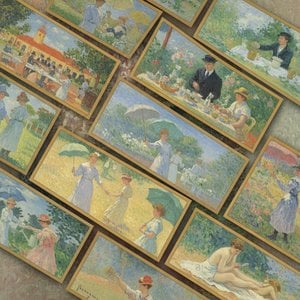
Et Liv Badet i Lys: Verden af Pierre-Auguste Renoir
Pierre-Auguste Renoir, født i den provinsielle franske by Limoges i 1841, er et lysende eksempel på en kunstners rejse fra beskedne kår som porcelænsmaler til at blive en fejret mester inden for impressionismen. Hans tidlige liv var præget af et skifte til Paris med sin familie, der søgte økonomiske muligheder – en oplevelse, der dybt formede hans kunstneriske følsomhed. Den pulserende by, med sit levende gadeliv og mangfoldige persongalleri, blev inspirationskilden for meget af hans senere arbejde. I første omgang lærte den unge Renoir at male porcelæn – en praktisk nødvendighed dikteret af økonomiske begrænsninger – men han fandt trøst i hyppige besøg på Louvre, hvor han nøje studerede de gamle mestre og absorberede deres teknikker. Han udviklede en forståelse for skønhed, der skulle blive et kendetegn ved hans stil. Denne tidlige eksponering tændte en passion i ham, der oversteg håndværk; det var et kald til at indfange lysets flygtige kvaliteter og livet på lærredet. Senere blev han optaget på Charles Gleyres atelier, hvor han knyttede livslange venskaber med aspirerende kunstnere som Claude Monet, Alfred Sisley og Frédéric Bazille – et afgørende øjeblik, der lagde grundlaget for impressionistbevægelsen.
Fra Realisme til Strålende Impressioner
Renoirs kunstneriske udvikling var en fascinerende proces, påvirket af en række forskellige mestre. Han blev først tiltrukket af Gustave Courbets og Édouard Manets realisme, der beundrede deres engagement i at skildre det samtidige liv med ærlighed og direktehed. Det var dog de lysende paletter og sensuelle former hos Peter Paul Rubens og Jean-Antoine Watteau, der virkelig fangede ham, og som indgav hans arbejde en dyb forståelse for skønhed og en tilbøjelighed til at portrættere scener af glæde og fritid. Disse tidlige påvirkninger kulminerede, da Renoir begyndte at forme sin egen unikke stil, der er karakteriseret ved levende farver, brudte penselstrøg og et fokus på at indfange lysets flygtige effekter. Hans deltagelse i den første impressionistiske udstilling i 1874 var et vendepunkt, selvom det oprindeligt mødte kritik fra traditionelle kunstkredse. Dette dristige træk signalerede en afvisning af akademiske konventioner og en omfavnelse af en ny kunstnerisk vision – en der søgte at indfange ikke kun hvad øjet ser, men hvordan det *føles* at opleve et bestemt øjeblik i tiden. Malerier som
Dance at Le Moulin de la Galette (1876) er et eksempel på denne tilgang og fordyber beskueren i den livlige atmosfære i det parisiske natteliv med sit spredte sollys og glade figurer.
Indfangning af Livets Flygtige Øjeblikke: Nøgleværker og Temaer
Renoirs oeuvre er en fejring af livets simple fornøjelser – intime sammenkomster, solbeskinnede landskaber og den strålende skønhed i menneskekroppen.
Luncheon of the Boating Party (1880-81) står som et af hans mest ikoniske værker, der viser en sammensværgende gruppe, der nyder en afslappet eftermiddag på Seinen. Maleriet er et mesterværk i at indfange lys og bevægelse med figurer badet i varmt sollys og refleksioner, der glimter i vandet.
After the Bath (1885-87) viser Renoirs udsøgte evne til at portrættere den kvindelige nøgenhed og fremhæver delikate hudtoner og yndefulde positurer. Hans malerier er ikke blot repræsentationer af virkeligheden; de er gennemsyret af en følelse af varme, intimitet og glæde, der resonerer dybt hos beskueren. Han interesserede sig ikke for store historiske fortællinger eller dramatiske allegorier; i stedet fokuserede han på at indfange den skønhed, der findes i hverdagen, og løfte almindelige øjeblikke til kunstværker.
Dance at Bougival, et andet berømt værk, demonstrerer hans evne til at indfange flygtige indtryk og atmosfæriske effekter og skabe en følelse af bevægelse og spontanitet.
Et Skift Mod Form og Struktur: Senere År og Arv
I 1890'erne gennemgik Renoirs stil en betydelig forandring. Selvom han aldrig helt opgav sine impressionistiske rødder, begyndte han at bevæge sig mod en mere skulpturel og klassisk tilgang, påvirket af hans rejser til Italien og en fornyet interesse for form og struktur. Dette skift blev også delvist fremprovokeret af fysiske begrænsninger – gigt indskrænkede gradvist hans bevægelsesfrihed og tvang ham til at tilpasse sin teknik. På trods af disse udfordringer fortsatte Renoir med at male med urokkelig dedikation, hvilket resulterede i værker præget af fyldigere figurer og en varmere palet. Hans senere malerier afspejler ofte et mere kontemplativt humør, men de bevarer stadig den samme underliggende fejring af skønhed, der definerede hans tidligere arbejde. Ud over sine kunstneriske præstationer strækker Renoirs arv sig gennem hans familie; hans søn, Jean Renoir, blev en berømt filminstruktør og videreførte en kreativ ånd på tværs af generationer. Pierre-Auguste Renoir døde i 1919 og efterlod et varigt oeuvre, der fortsat inspirerer og glæder publikum over hele verden. Han forbliver en af de mest elskede figurer i kunsthistorien, fejret for sin evne til at indfange livets glæde og den menneskelige oplevelses skønhed med uovertruffen følsomhed og ynde.
Varig Indflydelse
- Renoirs indflydelse på efterfølgende generationer af kunstnere er ubestridelig. Hans fokus på lys, farve og indfangning af flygtige øjeblikke banede vejen for mange moderne kunstbevægelser.
- Hans fejring af skønhed og sensualitet resonerer fortsat hos publikum i dag og gør hans arbejde universelt tiltalende.
- Han spillede en afgørende rolle i at etablere impressionismen som en stor kraft inden for kunsthistorien, udfordre traditionelle konventioner og åbne op for nye muligheder for kunstnerisk udtryk.
- Den vedvarende popularitet af hans malerier – gengivet på utallige plakater, kalendere og andre varer – vidner om den tidløse kvalitet i hans arbejde.



 Se i rummet
 Bestil håndmalet reproduktion
 Send
Send Del
Del
 Detaljer
 Studieguide til kunstværker

 Download
 Lignende værker
 Røntgenundersøgelse
 Se diasshow
 Statistik

 Læs mere






































 Glasmulighed er kun tilgængelig i størrelser under 110 cm