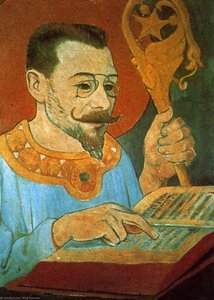
Kunstnerbiografi
Early Life and Artistic Beginnings
Paul Sérusier, født den 9. november 1864 i Paris, var en fransk maler, hvis navn i dag er synonymt med pionerkraften inden for abstrakt kunst og som en central figur i det banebrydende kunstnergruppeverk, Les Nabis. Hans barndom var præget af en velhavende familie, hvor hans far, en succesfuld parfumeringsmester af holstensk herkomst, sørgede for et godt uddannelsesgrundlag for sin søn. I 1885 meldte Sérusier sig ind på Académie Julian i Paris, et kunstakademi kendt for at fremme en mere fri og eksperimenterende tilgang til maleriet – en kontrast til de traditionelle, stive normer ved École des Beaux-Arts. Det var her, han begyndte sin rejse mod at definere sit eget unikke udtryk, og det var også her, han mødte Maurice Denis, som senere ville blive en af hans nærmeste samarbejdspartnere.
Sérusier havde dog en tidlig fascination for filosofi, hvilket førte til studier i Athen i 1886. Denne periode med intellektuel udforskning var dog kortvarig, og han vendte tilbage til Paris med et klart ønske om at forfølge sin kunstneriske drøm. Det var under en sommerrejse til Pont-Aven i Bretagne, en landsby kendt for sine malere og kunstnere, at Sérusier virkelig fandt sin retning. Her blev han introduceret til Paul Gauguin, en kunstner der allerede var kendt for sin ukonventionelle stil og sit fokus på farve og form.
The Talisman and the Dawn of Abstraction
Det var i Pont-Aven, at Sérusier skabte sit mest berømte værk, *Le Talisman* (1888). Maleriet er et afgørende øjeblik i kunsthistorien, da det repræsenterer en markant overgang mod abstraktion. Under Gauguins vejledning eksperimenterede Sérusier med at fange essensen af naturen snarere end blot at gengive dens ydre udseende. Han brugte stærke, rene farver og simple geometriske former til at skabe et billede, der var mere fokuseret på følelser og indtryk end på realistisk repræsentation. Gauguin opfordrede Sérusier til at frigøre sig fra traditionelle maleteknikker og i stedet bruge farve som et middel til at udtrykke personlige oplevelser og åndelige ideer – en tankegang, der var central for Les Nabis' kunstneriske filosofi. *Le Talisman* er derfor ikke blot et maleri; det er et symbol på den nye æra i kunsten, hvor form og farve blev set som uafhængige elementer, der kunne bruges til at skabe en dybere og mere intim forbindelse mellem betragteren og kunstværket.
The Nabis and the Pursuit of Synthesis
Sérusier var en central figur i gruppen Les Nabis (der betyder "profeterne" på hebraisk), som omfattede Paul Gauguin, Maurice Denis, Pierre Bonnard og Édouard Vuillard. Denne gruppe af kunstnere delte et fælles ønske om at bryde med den traditionelle akademiske kunst og skabe en ny æstetik, der kombinerede elementer fra religiøs symbolik, dekorativ kunst og moderne farveteknikker. Les Nabis var ikke blot en kunstnerisk gruppe; de var også en intellektuel kreds, der diskuterede filosofi, litteratur og musik. De søgte at skabe et samlet kunstnerisk udtryk, der omfavnede alle former for æstetisk oplevelse – fra maleri til design til arkitektur.
Sérusier bidrog væsentligt til gruppen ved at fremme ideen om, at kunst ikke blot skulle være en gengivelse af den ydre verden, men også et udtryk for indre følelser og åndelige opleveler. Han var især interesseret i at forene dekoration og fine kunst, en tankegang der var inspireret af Arts and Crafts-bevægelsen i England.
Later Years and Legacy
I de senere år af sit liv underviste Sérusier på École Ranson, som han selv havde hjulpet med at grundlægge, og udgav sin bog *ABC de la peinture* (1921), hvor han beskrev sine tanker om kunstens natur. Paul Sérusier døde den 7. oktober 1927 i Morlaix. Hans arbejde har haft en enorm indflydelse på udviklingen af abstrakt kunst og har inspireret generationer af kunstnere. Han er husket som en pioner, der var villig til at udfordre konventionerne og eksperimentere med nye former for udtryk – en visionær, der banede vejen for den moderne kunsts mange retninger. Hans værker fortsætter med at fascinere og inspirere os i dag, og hans arv lever videre gennem de mange kunstnere, han har påvirket.



 Se i rummet
 Skift til printsalg
 Del som kort
 Del
Del
 Detaljer
 Guide
Guide

 Download
 Lignende værker
 Røntgenundersøgelse
 Diasshow
 Statistikker


 Vis mere






































 Glasmulighed er kun tilgængelig i størrelser under 110 cm