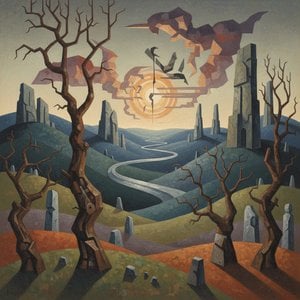
Druid Landscape (1938) by Paul Nash, hand-painted oil painting reproduction by a master artist
Se i rummet Se i AR Skift til printsalg Skift til digitalt billede Del som kort
Detaljer Guide Tilføj til favoritter Download Lignende værker Røntgenundersøgelse Diasshow Q&A Statistikker

Druid Landscape Hand-painted oil painting reproduction

Dimensioner
59.0 x 41.0 cm

Discover 'Druid Landscape' by Paul Nash (1938). A surrealist masterpiece blending mythology, British landscapes & modernism. Explore its mystical symbolism and artistic inspiration.

Oplev Paul Nash (1889-1946), en nøglefigur i britisk modernisme & surrealisme! Udforsk hans stemningsfulde landskaber og kraftfulde krigskunst – et unikt kunstnerisk udtryk.

Håndlavet oliereproduktion

Håndmalet olie på lærred i din valgte størrelse og ramme, udført efter bestilling af vores kunstnere. ( Skift til printsalg Skift til digitalt billede)

Corner sample of the P118B picture frame: støbt polystyren, 5 cm wide and 3 cm thick
P118B Dkr10
Corner sample of the P118H picture frame: støbt polystyren, 5 cm wide and 3 cm thick
P118H Dkr10
Corner sample of the P118W picture frame: støbt polystyren, 5 cm wide and 3 cm thick
P118W Dkr10
Corner sample of the P438Z picture frame: støbt polystyren, 5.5 cm wide and 3.5 cm thick
P438Z Dkr10
Corner sample of the P508JH picture frame: støbt polystyren, 7 cm wide and 3.5 cm thick
P508JH Dkr12
Corner sample of the P508YH picture frame: støbt polystyren, 7 cm wide and 3.5 cm thick
P508YH Dkr12
Corner sample of the P805H picture frame: støbt polystyren, 5 cm wide and 3.5 cm thick
P805H Dkr10
Corner sample of the P805Z picture frame: støbt polystyren, 5 cm wide and 3.5 cm thick
P805Z Dkr10
Corner sample of the P919BZ picture frame: støbt polystyren, 7 cm wide and 3.5 cm thick
P919BZ Dkr10
Corner sample of the P919G picture frame: støbt polystyren, 7 cm wide and 3.5 cm thick
P919G Dkr10
Corner sample of the P919XJ picture frame: støbt polystyren, 7 cm wide and 3.5 cm thick
P919XJ Dkr10
Corner sample of the P959ZH picture frame: støbt polystyren, 5 cm wide and 3 cm thick
P959ZH Dkr10
Corner sample of the P968JZ picture frame: støbt polystyren, 6 cm wide and 4 cm thick
P968JZ Dkr12
Corner sample of the W106C picture frame: massivt træ, 5 cm wide and 3 cm thick
W106C Dkr8
Corner sample of the W218G picture frame: massivt træ, 5 cm wide and 3 cm thick
W218G Dkr10
Corner sample of the W218JH picture frame: massivt træ, 5 cm wide and 3 cm thick
W218JH Dkr8
Corner sample of the W218Y picture frame: massivt træ, 5 cm wide and 3 cm thick
W218Y Dkr10
Corner sample of the W307PJ picture frame: massivt træ, 6 cm wide and 3 cm thick
W307PJ Dkr10
Corner sample of the W316G picture frame: massivt træ, 6 cm wide and 3 cm thick
W316G Dkr10
Corner sample of the W316PJ picture frame: massivt træ, 6 cm wide and 3 cm thick
W316PJ Dkr8
Corner sample of the W316Y picture frame: massivt træ, 6 cm wide and 3 cm thick
W316Y Dkr10
Corner sample of the W398PJ picture frame: massivt træ, 5 cm wide and 3 cm thick
W398PJ Dkr8
Corner sample of the W4111J picture frame: massivt træ, 6.5 cm wide and 3.5 cm thick
W4111J Dkr10
Corner sample of the W500HY picture frame: massivt træ, 7 cm wide and 5 cm thick
W500HY Dkr15
Corner sample of the W500JH picture frame: massivt træ, 7 cm wide and 5 cm thick
W500JH Dkr15
Corner sample of the W692G picture frame: massivt træ, 8 cm wide and 4 cm thick
W692G Dkr12
Corner sample of the W849H picture frame: massivt træ, 5 cm wide and 3 cm thick
W849H Dkr8
Corner sample of the W940BG picture frame: massivt træ, 7.5 cm wide and 4.5 cm thick
W940BG Dkr15
Corner sample of the W953PJ picture frame: massivt træ, 6 cm wide and 3.5 cm thick
W953PJ Dkr8

Standardstørrelse
speciallavet
CM
INCH

Vælg mellem vores forudindstillede størrelser, der matcher kunstværkets originale proportioner.

bredde
højde

Indtast den bredde og højde, du har brug for, så det passer til din ramme eller din væg. Da dette er håndmalet, kan kunstneren ved en anden form på størrelsen male lidt mere rundt om billedet eller skære lidt væk — det er op til dig. Vi sender dig et digitalt mockup til godkendelse, før maleriet påbegyndes. Billedet, der vises på denne side, viser ikke det endelige resultat — det er kun mockuppet, der gør.

Eksempler på hvad der kan ændres: Udskift ansigt med kundens eget foto; Tilføj kæledyr (f.eks. udskift kat med hund); Inkluder en skjult besked i baggrunden; Ændr baggrundslandskab eller elementer.
Efter bestilling vil WahooArt.com team sende en e-mail til kunden for at indhente instruktioner og fremsende et udkast til gennemgang

Verdensomspændende levering () på 3-4 uger i stedet for de standard 5 uger. (2 november). Ingen kompromiser med kvaliteten.

Gratis ekspresforsendelse til hele verden
Lærred af linned i høj kvalitet
Fuld transportforsikring
Garanti for refusion af told og importafgifter
Garanti for præcis farvegengivelse
100 dages returret ved fabrikationsfejl
100% fuld returret
Mængderabat ved flere køb

Samlet pris

Dkr 1806

Druid Landscape

Reproduktionsmetode

Størrelse på reproduktion

-

Samlet pris

Dkr 1806

Hurtige fakta

  • Artistic style: Surrealism, Abstract
  • Title: Druid Landscape
  • Influences:
    • Blake
    • Turner
  • Year: 1938
  • Dimensions: 59 x 41 cm
  • Medium: Oil on canvas

Kunstquiz

Der er kun ét korrekt svar på hvert spørgsmål.

Spørgsmål 1:
What is the primary artistic movement associated with Paul Nash’s ‘Druid Landscape’?
Spørgsmål 2:
In ‘Druid Landscape’, what prominent historical element is depicted, drawing inspiration from Nash’s childhood?
Spørgsmål 3:
What year was ‘Druid Landscape’ painted by Paul Nash?
Spørgsmål 4:
The painting utilizes bold colors and geometric shapes. What effect does this create?
Spørgsmål 5:
‘Druid Landscape’ is part of which prestigious collection?

A Vision of the British Soul

Paul Nash’s Druid Landscape, painted in 1938, isn't merely a depiction of a landscape; it’s an immersion into a carefully constructed dreamscape. Created during a period of profound social and political upheaval – just before the outbreak of World War II – the painting offers a poignant reflection on Britain’s past, its relationship with nature, and the anxieties of a rapidly changing world. Nash, deeply influenced by the Romantic movement and particularly by the visionary works of William Blake, sought to capture not simply what he saw, but what he *felt* about the land itself. The canvas pulsates with an almost unsettling stillness, drawing the viewer into a realm where ancient symbols and modern anxieties intertwine.

  • Subject Matter: The painting presents a stylized landscape dominated by a monumental stone circle, reminiscent of Stonehenge, set within a brooding, atmospheric valley. A solitary figure, seemingly lost in contemplation, stands before the stones, adding an element of human presence to this primordial scene.
  • Style & Technique: Nash employs a distinctive blend of Surrealism and abstraction. Geometric shapes – circles, triangles, and angular lines – are layered over a subtly textured surface, creating a sense of depth and disorientation. The color palette is deliberately muted, dominated by blues, greens, and browns, evoking a mood of melancholy and mystery.

Echoes of the Past: Myth and Ritual

The title itself – Druid Landscape – immediately connects the painting to the ancient Celtic tradition of Druidism. While Nash wasn’t a practicing Druid, he was fascinated by the mythology and symbolism associated with these enigmatic figures. The stone circle, a recurring motif in his work, represents a connection to the past, a gateway to the spiritual realm, and a locus of power. It's easy to imagine the Druids performing rituals within this very space, seeking guidance from the spirits of nature. The solitary figure before the stones can be interpreted as an individual searching for meaning or confronting their own mortality – a timeless theme explored throughout art history.

Historical Context:

Painted in 1938, the work reflects the growing anxieties surrounding impending war and the loss of traditional values. Nash’s use of ancient symbols served as a way to grapple with these uncertainties, suggesting that Britain's strength lay not in its military might, but in its connection to its roots.

Decoding the Symbols: Geometry and Emotion

Beyond the obvious references to Stonehenge, Druid Landscape is rich in symbolic detail. The geometric shapes – particularly the circles – are not merely decorative; they represent cycles of time, the interconnectedness of all things, and the underlying order of the universe. The muted color palette contributes to the painting’s overall sense of unease and introspection. Notice how the blues evoke a feeling of melancholy and distance, while the browns ground the scene in the earth. The placement of the figure is crucial; positioned slightly off-center, he seems both lost and strangely at peace within this otherworldly landscape.

  • Circles: Represent cycles, unity, and spiritual connection.
  • Angular Lines: Suggest tension, disruption, and the anxieties of the modern world.
  • Color Palette: Evokes a mood of melancholy, mystery, and introspection.

A Timeless Masterpiece

Druid Landscape is more than just a painting; it’s an experience. It invites the viewer to step into a world where myth and reality blur, where ancient symbols resonate with contemporary concerns. Paul Nash's ability to capture both the beauty and the unsettling aspects of the British landscape—and the human condition—makes this work a truly remarkable achievement. Today, reproductions of Druid Landscape continue to captivate audiences, offering a glimpse into the mind of one of Britain’s most visionary artists.

Spørgsmål og svar

Er billedet af "Druid Landscape" af Paul Nash frit tilgængeligt i det offentlige domæne?

"Druid Landscape" af Paul Nash er i det offentlige domæne – ophavsretten er udløbet. Denne status bestemmer, hvordan billedet af værket må reproduceres.

Hvad er den dominerende farve i "Druid Landscape" af Paul Nash?

Den farve, der træder tydeligst frem i "Druid Landscape", er Driftwood (#b0915b). Den dominerende farve er nyttig, når man skal matche et kunstværk med en indretning.

Hvem er kunstneren bag "Druid Landscape", og hvornår blev værket skabt?

Paul Nash skabte "Druid Landscape" i 1938.


Kunstnerbiografi

En Visionær Landskabsmaler: Paul Nash og det Moderne Englands Sjæl

Paul Nash, født i London i 1889 og død i 1946, var mere end blot en maler; han var en visjonær som fangede essensen av et land i rask forandring. Hans liv, preget av både personlig tragedie og kunstnerisk triumf, speiler det engelske samfunnets turbulente første halvdel av det 20. århundre. Oppvokst i en familie der hans far var advokat og hans mor plaget av psykiske lidelser, flyttet familien til Buckinghamshire, hvor landskapet rundt Iver Heath ble et tidlig og varig inspirasjonskilde for Nash. Denne barndommen, fylt med både skjønnhet og uro, formet hans kunstneriske blikk og bidro til den melankolske, ofte drømmeaktige kvaliteten i hans malerier. Hans utdannelse ved Parsons School of Art og senere Slade School of Fine Art ga ham et solid fundament, men han foretrakk å utvikle sin egen stil, fri for konvensjonelle begrensninger. Tidlige påvirkninger fra William Blake og J.M.W. Turner er tydelige i hans tidlige arbeider, der han kombinerte romantisk følsomhet med en spirende interesse for moderne former og farger.

Fra Landskap til Krigens Skarer: En Kunstnerisk Utvikling

Nashs kunstneriske utvikling var preget av en gradvis bevegelse fra tradisjonelle landskapsmotiver til mer abstrakte og symbolske komposisjoner. Han eksperimenterte med farger, geometriske former og surrealistiske elementer, noe som skilte ham ut fra mange av sine samtidige. Etter å ha sett en Giorgio de Chirico-utstilling i 1928, ble han dypt påvirket av den italienske kunstnerens mystiske landskapsbilder, og dette preget hans senere verk med en følelse av fremmedgjøring og melankoli. Hans tilknytning til surrealismen var imidlertid ikke fullstendig; han beholdt alltid et sterkt fotfeste i tradisjonell maleteknikk og en dyp kjærlighet til det engelske landskapet. Første verdenskrig markerte et vendepunkt i hans karriere, da han ble offisiell krigsmaler. Hans skildringer av slagmarkene var ikke glorifiserende eller heroiske; snarere var de hjemsøkende og poetiske, fylt med en følelse av tap og ødeleggelse. "The Menin Road" er kanskje hans mest kjente krigsbilde, et verk som fanger den uhyggelige stillheten etter kampens raseri. Senere i andre verdenskrig skapte han serien "Aerial Creatures," hvor antropomorfe flykropper lå spredt utover landskapet – en visjonær og foruroligende kommentar til krigens destruktive kraft.

En Pioner innen Britisk Modernisme og Krigsminnesmerke

Paul Nashs betydning i britisk kunsthistorie kan ikke overvurderes. Han var en sentral skikkelse i modernismens fremvekst, og brobygger mellom tradisjonell landskapsmaleri og de nye modernistiske strømningene. Hans evne til å kombinere det konkrete med det abstrakte, det vakre med det grufulle, gjorde ham til en unik kunstnerisk stemme. Han var også en viktig bidragsyter til krigskunsten, og hans bilder fra begge verdenskriger er ikoniske representasjoner av konfliktenes innvirkning på både soldater og miljøet. Hans deltakelse i Unit One-gruppen, sammen med Ben Nicholson og Barbara Hepworth, vitner om hans engasjement i den avantgarde kunstscenen. Nash var også en dyktig skribent og designer, og hans bidrag til brukskunst, inkludert scenografi, tekstiler og plakater, viser hans allsidighet som kunstner.

Arv og Inspirasjon: En Fortsatt Relevans

Selv om Paul Nash døde relativt ung i 1946, etterlot han seg en arv som fortsetter å inspirere kunstnere og publikum den dag i dag. Hans verk er representert i de mest prestisjefylte samlinger i Storbritannia, inkludert Tate Britain og Imperial War Museum. Nashs evne til å fange det engelske landskapets skjønnhet og melankoli, kombinert med hans dype forståelse for menneskets forhold til naturen, gjør hans malerier tidløse. Hans krigsbilder er kraftfulle minnesmerker over konfliktenes grusomheter, mens hans surrealistiske komposisjoner fortsetter å fascinere og utfordre seeren. Paul Nash var en kunstner som våget å utforske de mørke og lysende sidene av den menneskelige erfaring, og hans verk er et vitnesbyrd om kraften i kunsten til å reflektere over vår tid.
Paul Nash

Paul Nash

1889 - 1946 , Det Forenede Kongerige

Kort om kunstneren

  • Dødsdato: 11. juli 1946
  • Fødested: Kensington, Storbritannien
  • Fødselsdato: 11. maj 1889
  • Nationalitet: Britisk
Udforsk kunstværker organiseret efter temaer, stilarter og karakteristika.