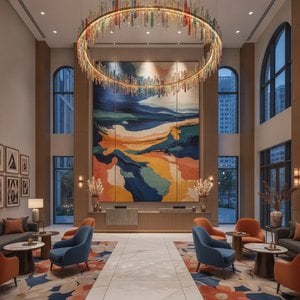
Et Liv Fordybelse i Farve og Form
Paul Klee, et navn synonymt med legende abstraktion og dyb følelsesmæssig resonans, indtager en unik position i det 20. århundredes kunstlandskab. Født den 18. december 1879 i Münchenbuchsee, Schweiz, var hans kunstneriske rejse en konstant udforskning, der trodsede let kategorisering og skabte en sti, der blandede påvirkninger fra ekspressionismen, kubismen og surrealismen til et distinkt personligt visuelt sprog. Klees opvækst fremmede en tidlig værdsættelse af kunsten; hans far, en tysk musiklærer, og hans mor, en schweizisk sangerinde, indgydte ham en følsomhed over for både auditiv og visuel harmoni. Denne grundlæggende forbindelse mellem musik og maleri blev et definerende kendetegn ved hans oeuvre, der formede ikke kun hans kompositionelle tilgang, men også hans teoretiske forståelse af kunst som en form for abstrakt udtryk svarende til musikalisk arrangement. I første omgang tiltrukket af tegning opgav Klee snart stræben efter realistisk repræsentation og erkendte dens begrænsninger i at formidle den indre verden af følelser og ideer, som han søgte at udtrykke. Han blev optaget på Akademiet for Fine Arts i München mellem 1898 og 1901, en periode præget af eksperimentering og udviklingen af hans unikke kunstneriske stemme.
Formningen af et Kunstnerisk Syn
Klees tidlige arbejde afslører indflydelsen fra jugendstil og symbolisme, men selv inden for disse rammer begyndte antydninger til hans fremtidige stil at dukke op. Et vendepunkt i hans kunstneriske udvikling var en rejse til Tunesien i 1914. Det intense lys og den livlige atmosfære i Nordafrika påvirkede dybt hans brug af farve, hvilket inspirerede ham til at bevæge sig ud over dæmpede toner mod mere dristige, ekspressive paletter. Denne oplevelse markerede et vendepunkt, der befæstede hans engagement i abstraktion som et middel til at fange essensen af perception snarere end blot at replikere dens overflade. Han *så* ikke bare Tunesien; han oversatte dets følelsesmæssige resonans til visuel form. Gennem denne periode engagerede Klee sig i forskellige kunstneriske bevægelser, absorberede deres principper og modstod samtidig fuldstændig overholdelse af nogen enkelt ideologi. Hans interesse for musik forblev altafgørende, og han talte ofte om maleri som en proces analog med at komponere musikalske stykker – en omhyggelig arrangement af elementer for at skabe en harmonisk helhed. Denne synæstetiske tilgang er tydelig i den rytmiske kvalitet af hans linjer, den delikate balance mellem farver og den overordnede følelse af bevægelse, der gennemsyrer mange af hans værker.
Bauhaus og Udenfor: En Periode med Blomstring
Fra 1931 til 1933 accepterede Klee en undervisningsstilling på den indflydelsesrige Bauhaus-skole for kunst, design og arkitektur sammen med Wassily Kandinsky. Denne periode viste sig at være bemærkelsesværdigt frugtbar for hans kunstneriske udvikling. Omgivet af innovative tænkere og medkunstnere blomstrede han i et miljø, der opmuntrede eksperimentering og teoretisk undersøgelse. Hans arbejde i disse år dykkede dybere ned i farveteori og formelle forhold og udforskede samspillet mellem abstrakte former og følelsesmæssigt udtryk. Denne kreative havn blev dog knust med Nazismens fremkomst i Tyskland. I 1933 blev Klee afskediget fra Bauhaus, fordi hans kunst blev anset for at være “degenereret” af nazistregimet – et isnende vidnesbyrd om farerne ved politisk ideologi, der undertrykker kunstnerisk frihed. Tvunget til at vende tilbage til Schweiz fortsatte han med at male, men hans helbred forværredes under skyggen af stigende politisk uro og personlige vanskeligheder. På trods af disse udfordringer forblev Klee engageret i sin kunstneriske vision og producerede værker, der afspejlede både tidens angst og hans varige tro på kunsten som en kraft til at transcendere modgang.
Temaer, Stil og Varig Arv
Paul Klees arbejde er kendetegnet af en fængslende blanding af legende og dyb kontemplation. Han anvendte ofte barnlige billeder og finurlige kompositioner, der indgydte dem med lag af symbolsk betydning. Gengangne temaer i hans kunst omfatter haver, landskaber, portrætter og abstrakte arrangementer – hver tjener som et middel til at udforske kompleksiteten af menneskelig erfaring. Hans “Paul Klee Notebooks”, udgivet posthumt, giver uvurderlig indsigt i hans omfattende teoretiske undersøgelser af farve og design, der afslører en omhyggelig og intellektuel tilgang til kunstnerisk skabelse. Han malede ikke bare; han konstruerede et visuelt sprog baseret på principper for harmoni, balance og følelsesmæssig resonans.
Hamamet,
Siblings og
En la corriente seis umbrales er blot nogle få eksempler, der viser hans mestring af farve og form. Paul Klee døde den 29. juni 1940 i Muralto, Schweiz, og efterlod sig en arv, der fortsætter med at inspirere kunstnere og fange publikum over hele verden. Han betragtes med rette som en af de vigtigste figurer i det 20. århundredes kunst, der bygger bro mellem figurativt og abstrakt udtryk og befæster sin plads som en ikonisk innovator, hvis arbejde forbliver evigt relevant.
Museer & Yderligere Udforskning
- Zentrum Paul Klee (Bern): Hjemsted for verdens største samling af Klees værker, der tilbyder et omfattende overblik over hans kunstneriske rejse.
- Museum of Fine Arts Bern: Fremviser betydelige stykker af Klee sammen med mesterværker af Picasso og Hodler.
- Kunstmuseum Bern: Schweiz’ ældste kunstmuseum, der viser en mangfoldig samling inklusive værker af Klee og andre moderne mestre.
Hans indflydelse strækker sig ud over maleriets verden og påvirker områder som design, arkitektur og musik. Den varige appel i Paul Klees arbejde ligger i dets evne til at fremkalde en følelse af undren og invitere seerne til at engagere sig med kunst på et følelsesmæssigt og intellektuelt niveau – et vidnesbyrd om hans geni og varige bidrag til den visuelle kulturs verden.



 Se i rummet
 Skift til printversion
 Send
Send Del
Del
 Detaljer
 Studieguide til kunstværker

 Download
 Lignende værker
 Røntgenundersøgelse
 Se diasshow
 Statistik


 Læs mere






































 Glasmulighed er kun tilgængelig i størrelser under 110 cm