Giclée- eller lærredstryk i museumskvalitet med hurtig produktion og fleksible muligheder for finish. ( Køb håndmalet maleri Skift til digitalt billede)





























Vælg mellem vores forudindstillede størrelser, der matcher kunstværkets originale proportioner.

Indtast den bredde og højde, du har brug for, så det passer til din ramme eller din væg. Et print kan kun beskæres, aldrig gøres større end selve billedet, så en størrelse med et andet format vil medføre, at dele af motivet går tabt. Vi sender dig en digital mockup til godkendelse, før vi printer noget. Billedet vist på denne side viser ikke den faktiske beskæring — det er kun mockuppen, der gør.
Verdensomspændende levering () på 2 uger i stedet for de sædvanlige 4/5 uger. (8 november)
The Neophyte
Størrelse på reproduktion
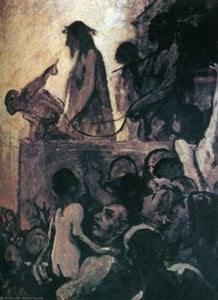
The image presents a monochrome scene set within a dimly lit interior, likely a corridor or communal room of a monastery. A young man, the central figure, sits amidst a group of older individuals. His face is directed toward the viewer, characterized by a fixed, downward gaze and a facial expression that conveys sorrow. He is positioned in front of several other figures, including monks and attendants, who are seated on chairs or benches and standing in the background. Some of these figures are engaged in quiet conversation, while others observe the surroundings.
The lighting in the scene is stark, creating deep shadows and bright highlights that define the textures of the subjects. The palette is restricted to shades of grey, black, and brown. This use of light and shadow emphasizes the physical presence of the figures and the folds in their drapery. The technical execution involves a complex layering of tonal values, achieved through drypoint etching and lithographic printing. These methods produce heavy, velvety textures on the wood block, particularly visible in the rendering of facial features and the weight of the clothing.
Created in 1875, this work belongs to the Romantic movement, a period that prioritized individual emotion and subjective experience over rationalism. The muted tones and heavy shadows reflect the internal state of the protagonist. The young man represents a struggle for spiritual conviction, with his gaze signifying doubt regarding his monastic vows. In contrast, the surrounding older monks represent established tradition and religious dogma.
The physical arrangement of the figures reinforces this theme of isolation. While the other individuals occupy the space as part of a collective community, the young man appears psychologically detached. The stark lighting isolates him from the group, highlighting his vulnerability. This visual narrative explores the tension between personal idealism and the reality of religious life, using the heavy, dark atmosphere to communicate a sense of existential anxiety.
"The Neophyte" deler med Gustav Dorés øvrige værker sin Romantic Realism-stil og de gennemgående temaer: biblical narrative, emotional depth, romantic vision, spiritual contemplation, dramatic expression.
De Earthy farver i "The Neophyte" af Gustav Doré matcher det anbefalede rum: et Living Room.
Ophavsretsstatus for "The Neophyte" af Gustav Doré: værket er i det offentlige domæne – ophavsretten er udløbet. Dette afgør, om der frit må foretages reproduktioner af billedet.


1832 - 1883 , Frankrig

Opdag hvordan du som influencer kan skabe passiv indkomst ved at sælge dine billeder som eksklusive kunsttryk via WahooArt. Forvandl din kreative vision til tidløse mesterværker og byg en økonomisk arv med global rækkevidde og uovertruffen kvalitet.

Master the nuances of Giclée printing with our expert guide. Discover how pigment-based inks and museum-grade substrates create fade-resistant, high-fidelity art reproductions designed for discerning collectors seeking unparalleled quality and longevity.

Embark on a scholarly journey through the alchemy of lithography. This definitive guide offers collectors profound insights into the chemical mastery of stone and ink, the medium's historical legacy, and essential expertise for acquiring rare, museum-quality prints with absolute confidence.
 Se i rummet
 Del som kort
 Del
Del
 Detaljer
 Guide
Guide

 Download
 Lignende værker
 Røntgenundersøgelse
 Diasshow
 Spørgsmål og svar
 Statistikker


 Vis mere









 Glasmulighed er kun tilgængelig i størrelser under 110 cm