Kunstnerens biografi
En Revolutionerende Vision: Livet og Kunsten hos Paul Cézanne
Paul Cézanne, født i Aix-en-Provence i 1839, står som en monumental skikkelse der forbinder de flygtige indtryk fra Impressionismen med Kubismens fragmenterede former. Hans rejse var ikke præget af øjeblikkelig anerkendelse; snarere var det en langsom udvikling af kunstnerisk udforskning, markeret af perioder med selvtvivl og kritisk afvisning, der til sidst kulminerede i en arv, som uigenkaldeligt ændrede moderne kunsts forløb. Cézanne blev født ind i en velstående familie – hans far var oprindeligt hattemager, men senere bankmand – og nød en økonomisk sikkerhed, der var usædvanlig for spirende kunstnere, hvilket gav ham friheden til at dedikere sig til sin passion uden det umiddelbare pres fra kommerciel succes. Selvom han i første omgang blev styret mod en juridisk karriere af sin fars ambitioner, viste trangen til kunstnerisk udtryk sig for stærk, og han opgav til sidst loven for at forfølge malerkunsten, en beslutning der skulle definere hans liv. Tidlige påvirkninger omfattede den Romantik, der var fremherskende i hans ungdom, og Barbizonskolens dedikation til landskabet, men det var gennem møder med kunstnere som Paul Gauguin og Georges Seurat, og deres innovative tilgange til farve og form, at Cézanne begyndte at bane sin egen særprægede vej.
Fra Mørke til Struktur: Udviklingen af en Stil
Cézannes tidlige værker afspejlede ofte de dramatiske, følelsesladede temaer, der er karakteristiske for Romantisk maleri – mørke paletter og ekspressive penselstrøg dominerede hans lærreder. Denne indledende fase var dog blot et springbræt til en langt mere analytisk og banebrydende tilgang. Utilfreds med blot at fange flygtige lysindtryk, som impressionisterne foretrak, begav Cézanne sig ud på en søgen efter at forstå og repræsentere objekternes underliggende struktur. Han søgte ikke kun *hvad* han så, men *hvordan* han opfattede de fundamentale former, der udgjorde virkeligheden. Dette førte ham til at nedbryde naturlige former i deres geometriske ækvivalenter – kegler, cylindre, kugler – og forudså Kubismens revolution årtier før den materialiserede sig. Hans teknik blev karakteriseret af små, gentagne penselstrøg, omhyggeligt lagt oven på hinanden for at opbygge komplekse farve- og teksturfelter, der skabte en følelse af soliditet og dybde, som tidligere var uset i malerkunsten. Han var ikke interesseret i illusionistisk rum; i stedet præsenterede han ofte objekter fra flere synsvinkler samtidigt, hvilket udfordrede traditionelle forestillinger om perspektiv og tvang beskueren til aktivt at engagere sig i hans kompositioners konstruerede natur. Denne bevidste forvrængning var ikke vilkårlig, men snarere et forsøg på at formidle en mere fuldstændig forståelse af formen, der repræsenterer ikke kun et enkelt øjeblik i tiden, men en syntese af perception.
Landskaber, Stilleben og Den Menneskelige Form: Nøglearbejder og Gengående Motiver
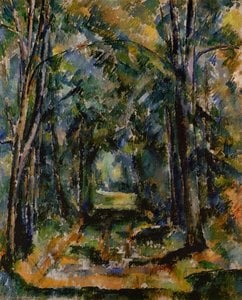
Cézannes oeuvre er bemærkelsesværdigt mangfoldig og omfatter landskaber, stilleben, portrætter og fremstillinger af badende kvinder, men alle er forenet af hans unikke tilgang til form og farve. Dammen ved Jas de Bouffan, malet i 1880, eksemplificerer hans landskabsarbejde og viser hans evne til at fange essensen af naturen gennem en omhyggelig arrangement af former og toner. Portræt af Émile Zola, skabt i 1866, afslører hans udviklende stil og giver et overbevisende indblik i den intellektuelle intensitet hos sin nære ven og medforfatter. Hans stilleben, som dem der viser æbler og anden frugt, er ikke blot repræsentationer af objekter, men snarere udforskninger af volumen, lys og rumlige forhold. Mont Sainte-Victoire serien blev en besættelse for Cézanne, et tilbagevendende motiv, der gav ham mulighed for ubønhørligt at undersøge form og perspektiv over årtier. Disse malerier er ikke blot fremstillinger af et bjerg; de er studier i, hvordan vi opfatter dybde, volumen og samspillet mellem lys og skygge. Endelig repræsenterer hans serie af Badende kvinder, der viser nøgne figurer i idylliske landskaber, en dybtgående udforskning af den menneskelige form og dens forbindelse til naturen, ofte gennemsyret af en følelse af tidløshed og stille kontemplation.
En Arv Smiddet i Innovation: Cézannes Indflydelse på Moderne Kunst
Paul Cézannes indvirkning på efterfølgende generationer af kunstnere er umålelig. Han betragtes bredt som "den moderne kunsts fader" for sine banebrydende bidrag til billedsproget, der banede vejen for mange af det 20. århundredes store kunstbevægelser. Pablo Picasso og Georges Braque var dybt taknemmelige over Cézannes vægt på geometriske former og flere perspektiver, som blev centrale principper i Kubismen. Hans dristige brug af farve inspirerede også Fauvismens bevægelse, ledet af kunstnere som Henri Matisse, der omfavnede levende, ikke-naturalistiske nuancer. Selv surrealistiske kunstnere fandt genklang i Cézannes udforskning af subjektiv perception og psykologisk dybde. Ud over specifikke bevægelser frigjorde Cézannes insisteren på kunstnerens personlige vision og hans afvisning af traditionelle akademiske begrænsninger generationer af malere til at udforske nye former for udtryk. Han udfordrede selve definitionen af repræsentation, idet han skiftede fokus fra at efterligne virkeligheden til at konstruere en visuel oplevelse baseret på underliggende struktur og subjektiv perception. Hans død i 1906 markerede ikke en slutning, men en begyndelse – daggryet af en ny æra i kunsthistorien, der var dybt præget af hans revolutionerende vision.



 Se i fuld skala
 Køb håndlavet maleri
 Del
Del Del
Del
 Detaljer

 Download
 Lignende værker
 Røntgenundersøgelse
 Diasshow
 Statistik
 Se mere






































 Glasmulighed er kun tilgængelig i størrelser under 110 cm