x
Olie på lærred
Vægkunst
Post-Impressionism
1878
det 19. århundrede
38.0 x 46.0 cmHåndmalet olie på lærred i din valgte størrelse og ramme, udført efter bestilling af vores kunstnere.
Vælg mellem vores forudindstillede størrelser, der matcher kunstværkets originale proportioner.
Du kan indtaste dine egne mål for at passe til en bestemt ramme eller plads. Hvis den valgte størrelse ikke stemmer overens med det originale billedes proportioner, vil vi enten beskære kunstværket eller udvide maleriet med yderligere håndmalede elementer. En digital skitse sendes til din godkendelse, før produktionen påbegyndes.
Bemærk venligst, at forhåndsvisningen på skærmen ikke afspejler den faktiske beskæring eller udvidelse. Kun skitsen vil nøjagtigt vise den endelige komposition.
Selvom specialmål er mulige, anbefaler vi at vælge en dimension fra den foruddefinerede liste for at bevare de originale proportioner.
Levering i hele verden () på 3/4 uger i stedet for de standard 5 uger. (3 juli). Ingen kompromiser med kvaliteten.
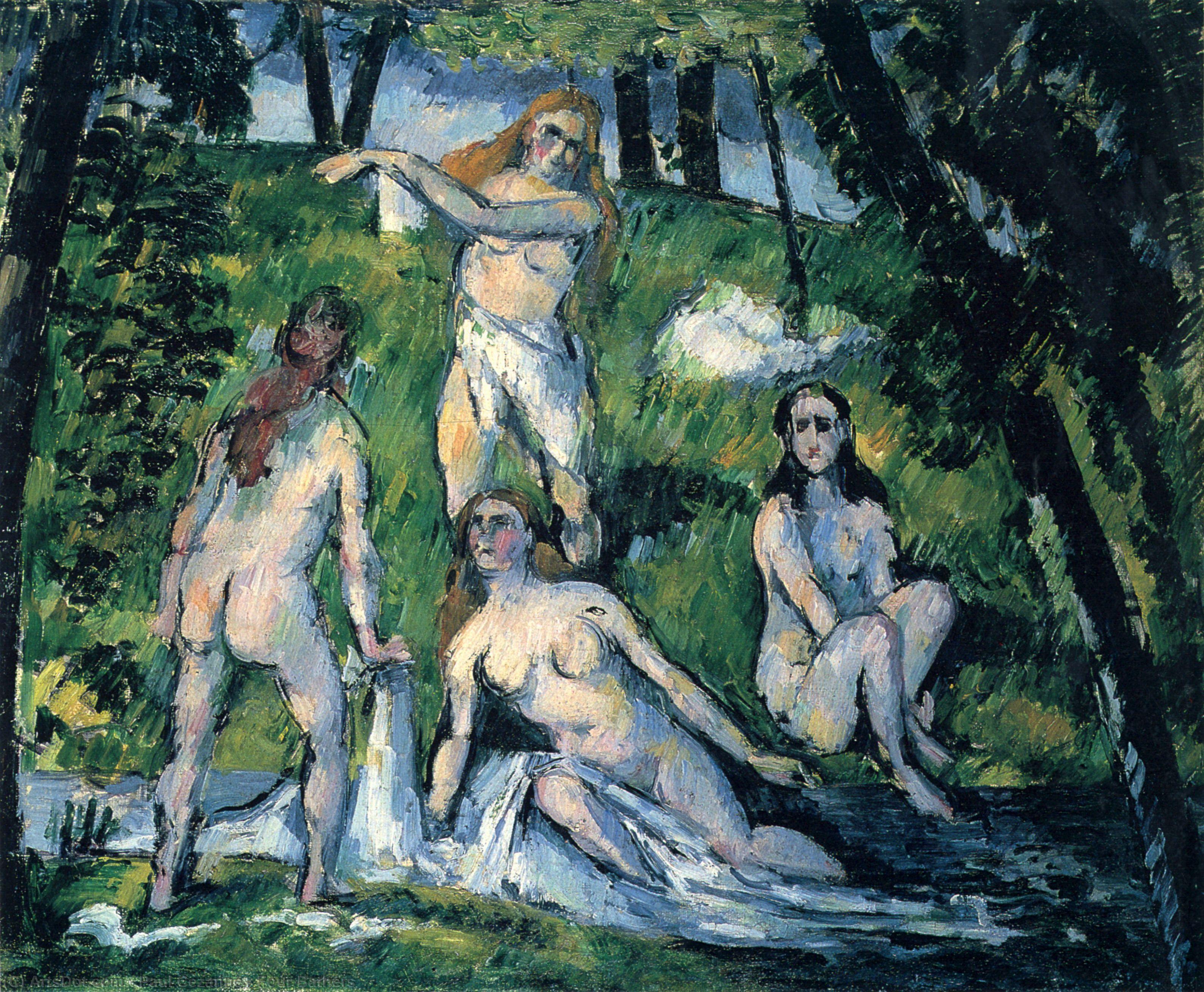
Fire baader
Størrelse på reproduktion
Paul Cézanne's "Four Bathers," painted in 1878, isn’t merely a depiction of nude figures enjoying the sun; it’s a pivotal moment in art history—a deliberate dismantling of established conventions and a bold assertion of a new visual language. This oil on canvas, measuring a modest 38 x 46 cm, embodies Cézanne's revolutionary approach to capturing the essence of nature and human connection, marking a crucial transition from the fleeting impressions of Impressionism towards the structured explorations of Cubism. The painting invites us into a world where form and color are not simply observed but actively constructed by the artist’s hand, revealing a profound shift in how we perceive and represent reality.
Cézanne's artistic journey began with an initial flirtation with Impressionist techniques – capturing the ephemeral effects of light and atmosphere. However, he quickly recognized the limitations of this approach, feeling that it lacked the underlying structure necessary to convey a sense of permanence and solidity. “Four Bathers” represents his decisive move away from mere representation towards a more conceptual understanding of form. The figures aren’t rendered with photographic accuracy; instead, they are fragmented into geometric planes of color, suggesting volume and mass through their arrangement within the composition. Notice how Cézanne uses overlapping forms to create depth—the bodies seem to emerge from and recede into the surrounding landscape, blurring the boundaries between subject and environment.

The painting’s composition is remarkably deliberate. Cézanne employs a technique he termed “alla prima,” working directly on the canvas with loose, expressive brushstrokes—a stark contrast to the meticulous layering of Impressionist paint. These strokes aren't blended; they retain their individual character, creating a textured surface that vibrates with energy. The figures are positioned at varying angles, some partially obscured by foliage, others emerging from the shadows. This dynamic arrangement creates a sense of movement and spontaneity, as if capturing a fleeting moment in time. Crucially, Cézanne isn’t interested in depicting a specific scene; he's exploring the fundamental building blocks of form—lines, planes, and volumes—that constitute the world around us.
The color palette is equally significant. Cézanne utilizes muted earth tones – ochres, browns, greens – to create a harmonious yet subtly unsettling atmosphere. He avoids bright, saturated hues, favoring instead subtle gradations of color that suggest light and shadow. The use of complementary colors—such as the blues and oranges—creates visual tension and adds depth to the composition. It’s important to note that Cézanne was deeply interested in the scientific study of color, believing that it could be used to create a more accurate representation of reality than traditional methods allowed.
“Four Bathers” emerged during a period of intense artistic ferment. The Impressionist movement, with its focus on capturing fleeting moments and atmospheric effects, was beginning to face criticism for its lack of structure and permanence. Cézanne’s work represented a direct response to this critique—a deliberate attempt to reintroduce order and form into the art world. Initially, his paintings were met with incomprehension and ridicule by contemporary critics who found them unsettling and unconventional. However, figures like Camille Pissarro and Ambroise Vollard recognized Cézanne's genius early on, championing his work and providing him with crucial support.
Vollard’s decision to organize the first solo exhibition of Cézanne’s work in 1895 proved transformative. This event brought Cézanne’s art to a wider audience and helped to establish his reputation as a major innovator. Remarkably, artists like Henri Matisse and Pablo Picasso later acknowledged Cézanne's profound influence on their own work, famously declaring him “the father of us all.” His emphasis on geometric form and the exploration of underlying structure paved the way for the development of Cubism—a revolutionary movement that shattered traditional notions of perspective and representation.
“Four Bathers” stands as a testament to Cézanne’s pioneering spirit and his enduring legacy. It's more than just a beautiful painting; it’s a foundational work in the history of modern art, bridging the gap between Impressionism and Cubism. Its influence can be seen in countless works by artists who followed in his footsteps—from Matisse to Picasso to Braque. Today, the painting is celebrated not only for its artistic merit but also for its historical significance as a pivotal moment in the evolution of Western art. It reminds us that art isn't simply about imitating reality; it’s about interpreting and transforming it according to the artist’s vision.
Experience the beauty of handmade oil painting reproductions at ArtsDot.com.
1839 - 1906 , Frankrig
Fortæl os om dit projekt, og vores kunsteksperter vil give dig 3 personlige kunstforslag.
Vi kuraterer 3 valgmuligheder kun til dig – Gratis!