

| 27.5 x 36.3 cm | Dkr315 |
| 39.1 x 51.5 cm | Dkr362 |
| 55.4 x 73.1 cm | Dkr463 |
| 188.4 x 248.4 cm | Dkr2434 |
Kunstværket vist på denne side er beskyttet af ophavsretsloven, hvilket betyder, at vi ikke lovligt kan skabe eller sælge en identisk reproduktion. Denne beskyttelse håndhæves i henhold til internationale aftaler som f.eks. den Bernerkonventionen og af nationale love, herunder de bestemmelser, der er fastlagt i Amerikansk ophavsretslov - Titel 17.
Denne metode overholder fuldt ud ophavsretsreglerne, da den ikke indebærer kopiering eller duplikering af det beskyttede kunstværk. I stedet er der tale om en kreativ nytolkning – et nyt maleri, som er inspireret af det oprindelige, men ikke identisk med det.
Giclée- eller lærredstryk i museumskvalitet med hurtig produktion og fleksible muligheder for finish. ( Køb håndmalet maleri Skift til digitalt billede)





























Vælg mellem vores forudindstillede størrelser, der matcher kunstværkets originale proportioner.

Indtast den bredde og højde, du har brug for, så det passer til din ramme eller din væg. Et print kan kun beskæres, aldrig gøres større end selve billedet, så en størrelse med et andet format vil medføre, at dele af motivet går tabt. Vi sender dig en digital mockup til godkendelse, før vi printer noget. Billedet vist på denne side viser ikke den faktiske beskæring — det er kun mockuppen, der gør.
Verdensomspændende levering () på 2 uger i stedet for de sædvanlige 4/5 uger. (25 november)
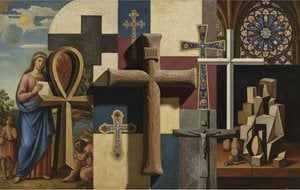
Cross
Størrelse på reproduktion
"Cross" af Patrick Caulfield har en luminans på Dark. Luminans beskriver, hvor meget lys farverne ser ud til at reflektere.
Farveharmonien i "Cross" er beskrevet som Unified Palette.
"Cross" af Patrick Caulfield tilhører Pop Art-bevægelsen fra sin skabers Moderne tid-æra.
Delve into the profound symbolism of cross imagery in fine art history. From Renaissance masterpieces to sacred iconography, explore how religious motifs shape Western art through our expert cultural analysis and curated collection of museum-quality reproductions.

Master the art of atmosphere with our expert guide on how abstract color and form transform interior moods. Discover sophisticated strategies for selecting emotive masterpieces that elevate modern spaces through professional curation and design excellence.

Master the vibrant world of Synthetic Cubism with our expert guide. Explore the revolutionary techniques of Picasso and Braque, from collage to color, and discover how this movement redefined modern art for collectors and connoisseurs alike.

 Se i rummet

 Del som kort
 Del
 Detaljer
 Guide


 Download
 Lignende værker
 Røntgenundersøgelse
 Diasshow
 Spørgsmål og svar

 Statistikker

 Vis mere









 Glasmulighed er kun tilgængelig i størrelser under 110 cm


