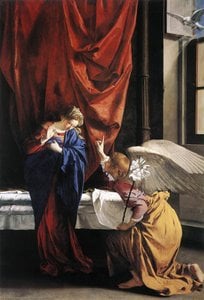
A Tuscan Dawn: The Life and Art of Orazio Gentileschi
Orazio Gentileschi, født i Toscana omkring 1563, trådte ind i en kunstnerisk verden præget af overgang og innovation. Hans tidlige liv var formet af de klassiske traditioner, men også af den spirende energi fra Rom, der hurtigt blev det europæiske centrum for kunst. Han begyndte sin karriere som Orazio Lomi, men tog hurtigt navnet Gentileschi, et navn der skulle blive synonymt med hans unikke bidrag til barokkunen. Hans tidlige arbejde var ofte knyttet til større dekorative projekter, hvor han fungerede som en dygtig assistent for andre kunstnere – en erfaring, der lærte ham samarbejde og tilpasningsevne, men også antydede et ønske om at skabe sit eget kunstneriske udtryk. Gentileschi var ikke blot en mester i at gengive figurer; han besad en grundig forståelse for komposition og form, der ville blive en konstant faktor i hans stil – selvom den gennemgår en markant udvikling.
Caravaggio’s Revolution: A Transformative Influence
Det er på midten af 1600-tallet, at Gentileschi’s kunstneriske rejse tager en dramatisk vending. Caravaggios revolutionerende stil – med sin intense brug af lys og skygge (*tenebrism*), sit ubarmhjertige realisme og sine levende, nutidige figurer – rystede den romerske kunstscene. Gentileschi blev dybt berørt af denne radikale bevægelse og begyndte at inkorporere elementer fra Caravaggios teknik i sin egen kunst. Han var dog ikke blot en simpel imitator; han filtrerede Caravaggio’s innovationer gennem sine egne, eksisterende kunstneriske sanser. Mens han bevarede den dramatiske intensitet, blødgjorde Gentileschi Caravaggio’s skarpe *tenebrism*, introducerede et lysere farveskema og en mere raffineret detaljeringsgrad. Resultatet var malerier, der rummede både følelsesmæssig kraft og elegant elegance – en unik syntese, der adskilte ham fra sine samtidige. Bibelske fortællinger og mytologiske scener blev ofte valgt som emner, hvilket gav Gentileschi mulighed for at udforske temaer som tro, heltemod og menneskelig sårbarhed med stor visuel overbevisning.
From Mannerism to Baroque: A Shifting Palette
Gentileschi’s tidlige stil var præget af elementer fra Manierismen – en kunstnerisk periode kendetegnet ved komplekse former, forvrængede proportioner og et teatralsk udtryk. Han lærte i Cola dell'Amata’s værksted og blev påvirket af Francesco da Sangallo’s arkitektoniske sans. Disse tidlige indflydelser gav ham en dyb forståelse for form og komposition, men det var Caravaggio, der virkelig satte gang i hans udvikling. Han bevægede sig gradvist fra de stive former i Manierismen mod den dynamiske energi og realistiske detaljer, som Caravaggio havde skabt. Han bevarede en vis elegance og raffinement, men tilføjede også et lag af følelsesmæssig intensitet og drama, der var helt unik for hans kunst.
Royal Patronage and Continental Travels
Gentileschi’s talent tiltrak sig snart opmærksomhed fra de magtfulde i Europa. Han fik flere vigtige bestillinger, herunder i Fabriano og Genova, og rejste rundt på kontorerne i Paris og London. I Paris, ved Marie de Medici’s hof, fandt han et publikum, der værdsatte hans elegante stil. Hans arbejde i England, hvor han blev udnævnt til hoffets maler under Charles I, markerede en ny fase i hans karriere. Han udførte ambitiøse projekter, herunder plafondmalerier på Greenwich Palace, hvilket demonstrerede hans evner inden for store dekorative kompositioner og cementerede hans position som en af de førende kunstnere i sin tid.
Legacy and Enduring Influence
Orazio Gentileschi var mere end blot en maler; han var en brobygger mellem Manierismen og barokken, der absorberede Caravaggio’s innovationer, samtidig med at han udviklede sin egen distinkte stil. Hans brug af levende farver, dramatiske kompositioner og raffineret teknik påvirkede en hel generation af kunstnere i hele Europa. Han introducerede Caravaggismens principper til England, hvilket havde en betydelig indflydelse på udviklingen af engelsk barokkunst. Men hans mest varige arv ligger måske i hans datter, Artemisia Gentileschi – en anden stor kunstner, der blev trænet i hendes fars værksted og opnåede anerkendelse som en af de mest fremragende kvindelige malere i baroktiden. Gentileschi’s værker findes i dag på prestigefyldte museer verden over – fra Uffizi-galleriet i Firenze til Accademia-galleriet i Venedig – og er vidnesbyrd om hans vedvarende genialitet og indflydelse på kunsthistorien.
- Major Works: “Danae”, "The Annunciation", "The Virgin Mary"
- Key Influences: Mannerism, Caravaggio
- Artistic Style: Baroque, Dramatic compositions, Bright colors.



 Se i fuld skala
 Skift til print
 Del
Del Del
Del
 Detaljer

 Download
 Lignende værker
 Røntgenundersøgelse
 Diasshow
 Statistik


 Se mere






































 Glasmulighed er kun tilgængelig i størrelser under 110 cm