Se i rummet Se i AR Køb håndmalet maleri Skift til digitalt billede Del som kort
Detaljer Guide Tilføj til favoritter Download Lignende værker Røntgenundersøgelse Diasshow Statistikker

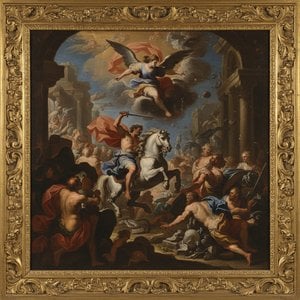
Apollo and Muses

Apollo and Muses by Nicolas Poussin – A serene depiction of mythological figures amidst a tranquil park setting, capturing the essence of classical beauty and humanist contemplation.

Nicolas Poussin - En fransk klassicist, hvis kunst var præget af lys og skønhed samt en dyb forståelse for klassiske idéer og temaer.

Giclée / Kunsttryk

Giclée- eller lærredstryk i museumskvalitet med hurtig produktion og fleksible muligheder for finish. ( Køb håndmalet maleri Skift til digitalt billede)

Corner sample of the P118B picture frame: støbt polystyren, 5 cm wide and 3 cm thick
P118B Dkr10
Corner sample of the P118H picture frame: støbt polystyren, 5 cm wide and 3 cm thick
P118H Dkr10
Corner sample of the P118W picture frame: støbt polystyren, 5 cm wide and 3 cm thick
P118W Dkr10
Corner sample of the P438Z picture frame: støbt polystyren, 5.5 cm wide and 3.5 cm thick
P438Z Dkr10
Corner sample of the P508JH picture frame: støbt polystyren, 7 cm wide and 3.5 cm thick
P508JH Dkr12
Corner sample of the P508YH picture frame: støbt polystyren, 7 cm wide and 3.5 cm thick
P508YH Dkr12
Corner sample of the P805H picture frame: støbt polystyren, 5 cm wide and 3.5 cm thick
P805H Dkr10
Corner sample of the P805Z picture frame: støbt polystyren, 5 cm wide and 3.5 cm thick
P805Z Dkr10
Corner sample of the P919BZ picture frame: støbt polystyren, 7 cm wide and 3.5 cm thick
P919BZ Dkr10
Corner sample of the P919G picture frame: støbt polystyren, 7 cm wide and 3.5 cm thick
P919G Dkr10
Corner sample of the P919XJ picture frame: støbt polystyren, 7 cm wide and 3.5 cm thick
P919XJ Dkr10
Corner sample of the P959ZH picture frame: støbt polystyren, 5 cm wide and 3 cm thick
P959ZH Dkr10
Corner sample of the P968JZ picture frame: støbt polystyren, 6 cm wide and 4 cm thick
P968JZ Dkr12
Corner sample of the W106C picture frame: massivt træ, 5 cm wide and 3 cm thick
W106C Dkr8
Corner sample of the W218G picture frame: massivt træ, 5 cm wide and 3 cm thick
W218G Dkr10
Corner sample of the W218JH picture frame: massivt træ, 5 cm wide and 3 cm thick
W218JH Dkr8
Corner sample of the W218Y picture frame: massivt træ, 5 cm wide and 3 cm thick
W218Y Dkr10
Corner sample of the W307PJ picture frame: massivt træ, 6 cm wide and 3 cm thick
W307PJ Dkr10
Corner sample of the W316G picture frame: massivt træ, 6 cm wide and 3 cm thick
W316G Dkr10
Corner sample of the W316PJ picture frame: massivt træ, 6 cm wide and 3 cm thick
W316PJ Dkr8
Corner sample of the W316Y picture frame: massivt træ, 6 cm wide and 3 cm thick
W316Y Dkr10
Corner sample of the W398PJ picture frame: massivt træ, 5 cm wide and 3 cm thick
W398PJ Dkr8
Corner sample of the W4111J picture frame: massivt træ, 6.5 cm wide and 3.5 cm thick
W4111J Dkr10
Corner sample of the W500HY picture frame: massivt træ, 7 cm wide and 5 cm thick
W500HY Dkr15
Corner sample of the W500JH picture frame: massivt træ, 7 cm wide and 5 cm thick
W500JH Dkr15
Corner sample of the W692G picture frame: massivt træ, 8 cm wide and 4 cm thick
W692G Dkr12
Corner sample of the W849H picture frame: massivt træ, 5 cm wide and 3 cm thick
W849H Dkr8
Corner sample of the W940BG picture frame: massivt træ, 7.5 cm wide and 4.5 cm thick
W940BG Dkr15
Corner sample of the W953PJ picture frame: massivt træ, 6 cm wide and 3.5 cm thick
W953PJ Dkr8

Standardstørrelse
speciallavet
CM
INCH

Vælg mellem vores forudindstillede størrelser, der matcher kunstværkets originale proportioner.

bredde
højde

Indtast den bredde og højde, du har brug for, så det passer til din ramme eller din væg. Et print kan kun beskæres, aldrig gøres større end selve billedet, så en størrelse med et andet format vil medføre, at dele af motivet går tabt. Vi sender dig en digital mockup til godkendelse, før vi printer noget. Billedet vist på denne side viser ikke den faktiske beskæring — det er kun mockuppen, der gør.

Verdensomspændende levering () på 2 uger i stedet for de sædvanlige 4/5 uger. (28 oktober)

Gratis ekspresforsendelse til hele verden
Lærred af linned i høj kvalitet
Fuld transportforsikring
Garanti for refusion af told og importafgifter
Garanti for præcis farvegengivelse
100 dages returret ved fabrikationsfejl
100% fuld returret
Mængderabat ved flere køb

Samlet pris

Dkr 454

Apollo and Muses

Giclée / Kunsttryk

Størrelse på reproduktion

-

Samlet pris

Dkr 454

Hurtige fakta

  • Medium: Oil on canvas
  • Subject or theme: Mythology; Pastoral Scene
  • Title: Apollo and Muses
  • Notable elements or techniques: Classical Composition; Atmospheric Perspective
  • Influences: Italian Renaissance
  • Movement: Baroque

Kunstquiz

Der er kun ét korrekt svar på hvert spørgsmål.

Spørgsmål 1:
What artistic movement is Nicolas Poussin associated with?
Spørgsmål 2:
Where was Nicolas Poussin primarily active during his artistic career?
Spørgsmål 3:
What is a prominent feature of the painting's composition – how are figures arranged?
Spørgsmål 4:
The image depicts a scene in which setting?
Spørgsmål 5:
What is the significance of the baby figure in the painting?

A Celestial Gathering: The Divine Harmony of Apollo and the Muses

In the hallowed halls of art history, few works capture the intersection of divine intellect and earthly beauty as profoundly as Nicolas Poussin’s Apollo and Muses. Created during the artist's transformative Roman period between 1642 and 1645, this masterpiece serves as a breathtaking window into the High Renaissance’s enduring legacy. The canvas presents us with an idyllic, sun-drenched park where Apollo, the radiant god of music, light, and prophecy, presides over the nine Muses. This is not merely a pastoral scene; it is a meticulously orchestrated symphony of figures engaged in the sacred exchange of ideas. As the Muses converse, their gestures and expressions weave a tapestry of creative energy, suggesting that art is a living, breathing dialogue between the soul and the cosmos.

The composition is anchored by a profound philosophical depth, drawing heavily from Platonic ideals. Poussin invites the viewer to look beyond the surface of the lush landscape to find an allegory of enlightenment. While the Muses represent the various branches of human knowledge and artistic endeavor, Apollo’s upward gaze directs our attention toward the heavens, symbolizing the eternal pursuit of cosmic truth. The presence of a small child nestled within the scene adds a layer of poignant symbolism, representing the purity of innocence and the untapped potential of new ideas. Even a solitary book resting near the group serves as a quiet testament to the importance of literacy and recorded wisdom in the cultivation of the human spirit.

Mastery of Light and Baroque Elegance

Technically, Apollo and Muses stands as a triumph of Poussin’s unique brand of Baroque refinement. Eschewing the aggressive, shadow-heavy chiaroscity often associated with his contemporary Caravaggio, Poussin instead employs a sophisticated use of sfumato. This subtle gradation of light softens the edges of the figures, bathing the entire assembly in an ethereal, luminous glow that feels both tangible and dreamlike. His brushwork is characterized by a disciplined precision inherited from the masters Raphael and Michelangelo, ensuring that every fold of drapery and every leaf in the background contributes to a sense of structural clarity and monumental stability.

For the discerning collector or interior designer, this painting offers more than just visual splendor; it provides an emotional anchor for any sophisticated space. The painting’s palette—a harmonious blend of soft earth tones and celestial light—creates an atmosphere of tranquility and intellectual repose. It is a piece that commands attention through its quiet dignity rather than through loud spectacle. Whether placed in a grand library, a formal salon, or a contemporary study, a high-quality reproduction of this work brings with it an aura of classical sophistication, inviting guests to pause, reflect, and lose themselves in the timeless dance of myth and meaning.

Spørgsmål og svar

Hvor mættet er farvepaletten i "Apollo and Muses"?

"Apollo and Muses" af Nicolas Poussin er gengivet med en Balanced Soft mætning.

Hvor kommer de besøgende til "Apollo and Muses" af Nicolas Poussin fra?

Siden Besøgsstatistik for "Apollo and Muses" af Nicolas Poussin præsenterer statistikker over offentlige besøg: månedlige besøg af dette kunstværk, en sammenligning med kunstnerens mest sete værker og hvor de besøgende kommer fra.

Er "Apollo and Muses" af Nicolas Poussin i det offentlige domæne, og hvorfor?

"Apollo and Muses" af Nicolas Poussin er i det offentlige domæne – ophavsretten er udløbet. Ophavsretten løber fra kunstnerens dødsår, som var 1665.


Kunstnerbiografi

Nicolas Poussin – En Klassiker Af Fransk Barokkunst

Nicolas Poussin, en navn synonymt med den majestætiske franske barok kunst, var dog en sjæl dybt rodfæstet i italiensk jord gennem størstedelen af sin kunstneriske karriere. Han blev født i Les Andelys, Normandien, i juni 1594 og hans tidlige år forbliver noget eftertragtet, hvorimod de uden tvivl lagde grundlaget for en beskæftigelse, der skulle forme klassisk tradition inden for fransk kunst. Selvom han kortvarigt studerede i Paris i begyndelsen af 1610’erne og absorberede indflydelse fra mindre kendte kunstnere på tiden, var hans rejse til Rom i 1624 virkelig en katalysator for hans kunstneriske skæbne. Dette var ikke blot en geografisk omplacering; det var en immersion i hjertet af antikken, en pilgrimsfærd til selve kilden til inspiration, der skulle definere hans æstetiske vision. Poussin’s første forsøg på maleri var præget af sensualitet, hvilket mindede om venetianske mesterværker som Titian, men selv i disse tidlige værker begyndte en næsten følelsesløs orden og intellektuel dygtighed at dukke op – et forvarsel om stilen han så perfektionerede.

Rom Årene: Skabelsen Af En Klassisk Ideal

Rom viste sig mere end blot et atelier for Poussin; det blev hans intellektuelle kildehus. Han fandt sig midt i en blomstrende cirkel af forskere, arkæologer og kunstnere, hvoraf Cassiano dal Pozzo var særligt bemærkelsesværdig – hvis dybe forståelse af klassisk antikken havde en enorm indflydelse på kunstnerens tilgang. Dal Pozzo’s dedikation til omhyggeligt dokumentation af gamle rester fik Poussin til at udvikle en dyb respekt for historisk nøjagtighed og et ønske om at præge hans malerier med følelsen af tidløshed. Denne periode så Poussin træde væk fra den flamboyante ekstravagance hos nogle af sine samtidige og omfavne en stil karakteriseret af klarhed, balance og en målrettet fokus på linjekomposition. Han studerede minutiøst Rafael’s værker og absorberede deres harmoniske arrangementer og elegante former, samtidig med at han søgte inspiration fra gamle statuer og litterære kilder som Ovids *Metamorphoser*. Hans malerier begyndte at udfolde sig med figurer trukket fra klassisk historie og mytologi og blev præsenteret ikke blot som dekorative elementer, men som udtryk for moralske værdier og filosofiske idealer. Han var særligt imponeret af Rafael’s brug af perspektiv og lys – teknikker han efterfølgende perfektionerede og anvendte konsekvent i sine værker.

Temaer Af Historie, Myth Og Det Hellige

Poussin’s kunstneriske produktion var bemærkelsesværdigt diversificeret, men forbundet af hans engagement i disse grundlæggende principper. Han malede ofte scener fra klassisk historie – den tragiske skæbne for Germanicus, f.eks. – hvilket blev præget af stoic visdom og moralsk vægt. Hans mytologiske billeder var ikke blot fortællinger om kendte historier; de var udforskninger af menneskelig natur og ofte fyldt med allegorisk betydning. *Arcadia*-serien, især *Et in Arcadia ego*, blev ikonisk for hans filosofiske dybde og fremkaldte refleksion over døden og den vedvarende kraft af hukommelse. Han var en stor admirer af klassisk kunst og arkitektur og søgte konstant inspiration fra gamle monumenter og kunstværker. Denne interesse manifesterede sig i hans præcise gengivelse af detaljer og hans omhyggelige brug af komposition – egenskaber, der gjorde hans værker unikke og satte nye standarder for kunstuddannelse og praksis i Frankrig. Han var en aktiv deltager i Akademiet i Paris og blev betragtet som en af de mest betydningsfulde kunstnere på sin tid.

Et Efterladenskab Af Orden Og Æstetisk Reflektion

Nicolas Poussin døde i Rom i 1665 og efterlod sig et kunstnerisk arv, der fortsatte at inspirere efterfølgende generationer af kunstnere. Hans fokus på klassiske idealer var ikke blot en stilistisk præference; det repræsenterede en dyb respekt for menneskelig kultur og historie samt en søgen efter skønhed og harmoni – et testament til en kunstner, der ønskede mere end blot at gengive verden; han ville hæve den gennem linserne af fornuft og æstetisk refleksion. Hans værker blev udstillet i nogle af Europas mest prestigefulde museer og galerier og fortsætter med at fascinere publikum over hele verden. Han er blandt de få kunstnere, hvis stil og filosofi har haft en varig indflydelse på udviklingen af europæisk kunst gennem århundrederne. Hans navn vil altid være forbundet med klassisk fransk kunst og hans værker vil fortsat inspirere kunstnere og kunsthistorikere til denne dag.

  • Bemærkelsesværdige Værker: *The Death of Germanicus*, *The Seven Sacraments Series*, *A Roman Road*, *Orion Blinded Searching for the Sun*, *The Seasons*.
  • Nøgleegenskaber: Klassisk Komposition, Linjekomposition, Historiske Og Mytologiske Temaer, Serene Landskaber.
Nicolas Poussin

Nicolas Poussin

1594 - 1665 , Frankrig

Kort om kunstneren

  • Artistic Movement Or Style: Barok, Klassicisme
  • Artists Who Influenced This Artist:
    • Raphael
    • Titian
  • Date Of Birth: 1594
  • Date Of Death: 1665
  • Full Name: Nicolas Poussin
  • Nationality: Fransk
  • Notable Artworks:
    • Døden af Germanicus
    • Syv Sakramenter Serien
    • Romersk Vej
    • Orion Blinde Efter Solen
    • Sæsonerne
  • Place Of Birth: Les Andelys, Frankrig
Udforsk kunstværker organiseret efter temaer, stilarter og karakteristika.