A Liv Dedikeret til Kunst og Ånd
Nicholas Roerich, født den 9. oktober 1874 i det pulserende kulturelle centrum Sankt Petersborg, Rusland, var en figur hvis liv transcenderede grænserne for kunstnerisk udtryk. Han var ikke blot en maler; han var arkæolog, forfatter, filosof og en utrættelig fortaler for fred og kulturel bevarelse. Hans opvækst, dybt rodfæstet i intellektuel rigor – hans far var notar – og kunstnerisk værdsættelse takket være sin mor, lagde grundlaget for en bemærkelsesværdigt alsidig karriere. Roerich søgte samtidig studier i jura og kunst på Sankt Petersborg Universitet og den Kejserlige Kunstakademi begyndende i 1893, hvilket afspejlede en tidlig forpligtelse til at forstå verden i et bredt perspektiv. Denne duale vej var ikke modstridende for ham; snarere afspejlede det en overbevisning om, at kunstnerisk vision krævede grundlag i historisk kontekst og intellektuel disciplin. Han modtog sin kunstuddannelse i 1897 og afsluttet sin juridiske grad året efter, hvilket lagde grundlaget for et liv dedikeret til både kreativ udforskning og rationel handling.
Symbolisme og Teatralsk Innovation
Roerichs kunstneriske udvikling blev dybt påvirket af strømmen af russisk symbolisme, en bevægelse der søgte at evokere følelsesmæssige og åndelige dybder gennem suggestive billeder og formgivning. Han involverede sig hurtigt med Sergei Diaghilevs indflydelsesrige “Verdens Kunst” selskab, hvor han senere overtog præsidentiet fra 1910 til 1916. Denne forbindelse viste sig at være afgørende, idet den udsatte ham for et netværk af innovative kunstnere, komponister og tænkere, der omdannede det russiske kunstlandskab. Hans tidlige værker afslørede en fascination af arkæologi og scenografi, hvilket førte til banebrydende samarbejder med Diaghilevs Ballets Russes. Roerichs designs for forestillinger som Alexander Borodins *Prins Igor* (1909) og især Igor Stravinskys revolutionerende *Springens Rite* (1913), var ikke blot baggrunde; de var integrerede dele af det teatermæssige oplevelse. Han blandede omhyggelig historisk research med en dristig fantasivision, skabte visuelt slående miljøer, der forstærkede den følelsesmæssige kraft i musikken og koreografien. Disse designs var ikke blot dekorative; de var forsøg på at evokere urkrafter og gamle ritualer, hvilket afspejlede Symbolistens interesse for myte og spiritualitet. Hans arbejde blev også påvirket af apokrypha og middelalderlige sektariske skrifter som *Dove Bogen*, hvilket lagde yderligere esoteriske betydninger til hans kunstneriske kreationer.
En Rejse mod Mystik og Himalaya-Visioner
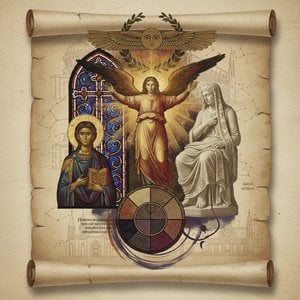
Efterhånden som Roerichs karriere udviklede sig, gennemgik hans malerier en væsentlig transformation, der i stigende grad omfavnede mystiske og åndelige temaer. Denne skift blev drevet af hans voksende interesse for Theosophi og østlige religioner, filosofier der understregede sammenhængskraften mellem alle ting og søgen efter indre visdom. Hans *Arkitektoniske Studier* serie (1904-1905) viste ikke kun hans arkitektoniske færdigheder, men også en dyb forpligtelse til at bevare kulturarven, hvilket forudså hans senere fortalerarbejde for at beskytte kunst i tider med konflikt. Gentagne motiver begyndte at dukke op i hans værker: majestætiske landskaber, gamle byer skjult i mystik og figurer indgydet af åndelig betydning som St. Panteleimon og Kuan Yin. Mest bemærkelsesværdigt blev Himalaya en central emne i hans malerier, der repræsenterede ikke kun et geografisk sted, men også et domæne for dyb åndelig magt og oplysning. Han foretog omfattende rejser gennem Centralasien, udførte arkæologisk forskning og dokumenterede gamle kulturer, oplevelser der dybt informerede hans kunstneriske vision og understregede vigtigheden af kulturel forståelse.
Arv af Bevarelse og Vedvarende Indflydelse
Nicholas Roerichs engagement udgik langt ud over lærredet; han var en dedikeret fortaler for at beskytte kunst og arkitektur i tider med konflikt. Erkendelsen af den sårbarehed, som kulturarven havde, førte til skabelsen af Roerich-pakten i 1935 – et internationalt traktat designet til at beskytte kulturelle objekter mod ødelæggelse. Denne indsats sikrede ham flere nomineringer til Nobels Fredspris, hvilket understregede hans dybe humanisme. Hans utrættelige arbejde viste en overbevisning om, at bevarelse af kulturarven var ikke kun vigtig for at forstå fortiden, men også for at bygge en mere fredelig fremtid. I dag fejres Roerichs værk i prominente museer verden over, herunder Astrakhan State Picture Gallery og især Nicholas Roerich Museum i New York City. Hans indflydelse på russisk kunst og kultur er ubestrideligt. Han brolagde mellem kunstnerisk udtryk og åndelig udforskning, hvilket inspirerede generationer af kunstnere og tænkere med sin visionære tilgang. *Han huskes ikke kun som en maler, men også som en videnskabsmand, en humanitær og et fyrtårn af håb for kulturel bevarelse.*
Nøgleværker & Vedvarende Relevans
- Saint Nicholas: En detaljeret monokrom mural der viser middelalderkunst og heraldisk symbolik.
- City: Suggestive billeder af gamle bylandskaber, der afspejler hans arkæologiske interesser.
- Lake of the Nagas: Et tempera maleri der blander symbolik og natur, som eksemplificerer hans unikke kunstneriske vision.



 Se i fuld skala
 Køb håndlavet maleri
 Del
Del Del
Del
 Detaljer

 Download
 Lignende værker
 Røntgenundersøgelse
 Diasshow
 Statistik

 Se mere






































 Glasmulighed er kun tilgængelig i størrelser under 110 cm