A Symphony of Motion and Color
In the vast landscape of Abstract Expressionism, few works capture the intersection of physical vitality and existential depth as poignantly as Mark Rothko’s 1968 masterpiece, Untitled (man with racket and ball). While many recognize Rothko for his silent, monumental color fields, this particular work offers a captivating glimpse into a more rhythmic, kinetic dimension of his genius. Often referred to by enthusiasts as the "Tennis Player," the painting transcends the mere depiction of an athletic pastime. It serves as a profound meditation on the human condition, where the boundaries between the physical exertion of sport and the spiritual weight of existence begin to blur. The canvas does not simply show a figure in motion; it invites the viewer into a visual exploration of vulnerability and resilience, framed within the stark, breathtaking beauty of layered pigment.
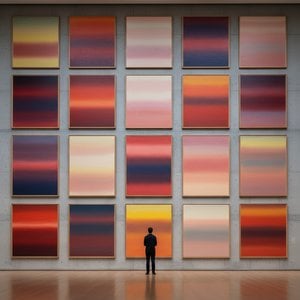
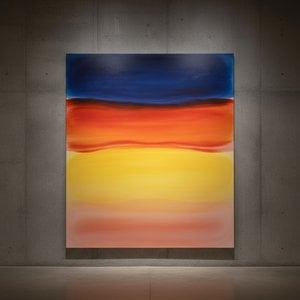
The composition is a masterclass in the language of color and light. Rothko’s technique during this period was nothing short of alchemical. Eschewing traditional blending, he employed a meticulous process of "incubation," applying thin washes of pigment onto linen to allow the colors to oxidize and deepen over time. This resulted in surfaces that possess an ethereal, inner glow, as if the canvas itself were breathing. In this work, the dominance of crimson, orange, and yellow creates a visual pulse—a rhythmic vibration that mimics the frantic energy of a tennis ball in flight and the muscular intensity of the player. For the discerning collector or interior designer, these luminous blocks of color offer an unparalleled emotional resonance, capable of transforming a space into a sanctuary of contemplative energy.
The Weight of the Moment
To understand this painting is to understand the turbulent era from which it emerged. Created in the late 1960s, a period defined by global social upheaval and profound existential questioning, the work reflects a search for spiritual solace amidst chaos. While the subject matter—a figure engaged in the focused intensity of a game—suggests a moment of earthly activity, Rothko imbues it with a sense of cosmic significance. The way the colors hover and overlap suggests a state of flux, mirroring the anxieties of an era grappling with mortality and change. There is no representational detail to cling to; instead, we are left with the raw, unadultered feeling of presence.
For those seeking to integrate fine art into a modern living environment, this reproduction offers more than mere decoration. It provides a focal point of profound depth. The interplay of light and shadow within the color fields creates a sense of three-dimensional movement that engages the eye from every angle. Whether placed in a minimalist gallery setting or as a bold statement piece in a sophisticated residential study, Untitled (man with racket and ball) acts as a portal to an inner landscape. It is a piece that demands presence, rewarding the viewer with a silent, transformative dialogue that lingers long after the first encounter.



 Se i rummet
 Skift til printversion
 Send
Send Del
Del
 Detaljer
 Studieguide til kunstværker

 Download
 Lignende værker
 Røntgenundersøgelse
 Se diasshow
 Statistik

 Læs mere






































 Glasmulighed er kun tilgængelig i størrelser under 110 cm