Mark Rothko’s ‘No. 5/No. 22’: A Dialogue Between Color and Emotion
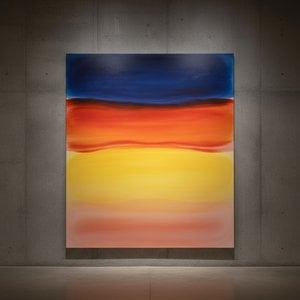
Mark Rothko's *No. 5/No. 22* (1949-1950) stands as a monumental achievement in Color Field painting, encapsulating the anxieties and aspirations of postwar America while simultaneously pursuing an elusive quest for spiritual transcendence. More than just pigment on canvas—it’s a carefully orchestrated visual experience designed to provoke contemplation and elicit profound emotional responses from the viewer. Currently residing within the Museum of Modern Art (MoMA), this iconic artwork continues to fascinate audiences with its understated grandeur and enduring mystery, prompting ongoing discussions about its artistic significance and psychological impact.
From Figuration's Shadow to Pure Color Expression
Rothko’s journey toward abstraction began with a fascination for figurative art—particularly portraits—but he swiftly recognized the limitations of representing human experience through conventional imagery. Driven by a desire to communicate fundamental emotions directly, bypassing visual clichés, he embarked on a transformative process that would ultimately redefine his artistic vision. The *Multiform* series (1947-1949), preceding *No. 5/No. 22*, served as crucial stepping stone, experimenting with layered rectangles of color and subtly shifting tonal relationships—a precursor to the monumental scale and luminous hues that characterize his mature style. This deliberate distancing from representational forms wasn’t merely stylistic; it reflected a deeper philosophical conviction about the nature of art's role in conveying human consciousness.
A Technique Rooted in Gesture and Texture
What distinguishes *No. 5/No. 22* is Rothko’s groundbreaking application of paint—a technique that defies easy categorization but embodies the spirit of spontaneous gesture. Unlike many Color Field painters who favored smooth, blended surfaces to achieve uniformity, Rothko employed a method characterized by forceful gouging into the layers of cadmium red pigment with a blunt instrument. These deliberate marks—thin white streaks disrupting the flatness—create an arresting visual tension and contribute significantly to the painting’s textural complexity. The composition is dominated by three horizontal bands of color: deep orange, vibrant yellow, and intense crimson—each meticulously applied in luminous layers that seem to emanate from within. This process isn't simply about applying pigment; it’s about channeling emotion onto the canvas, capturing a fleeting moment of feeling through palpable materiality.
Emotional Resonance: Tragedy, Ecstasy, and Beyond
Rothko wasn’t interested in crafting aesthetically pleasing images—rather, he sought to elicit visceral reactions from his audience—to evoke feelings of sorrow, joy, or awe. He believed that color relationships alone could trigger these emotions; it was the *interaction* between hues, their luminosity, and their scale that truly mattered. As Rothko himself eloquently stated, “If you are only moved by color relationships, then you miss the point.” In *No. 5/No. 22*, the rectangles don’t merely sit passively on the canvas; they appear to breathe—a dynamic visual experience heightened by chromatic afterimage effects—where perceiving one color influences how we perceive its companions. This subtle interplay of hues creates a profound sense of depth and invites viewers into an introspective dialogue with their own inner landscape.
Historical Context & Legacy
Created in the wake of World War II, *No. 5/No. 22* reflects the broader cultural mood of uncertainty and existential questioning—a response to the devastation wrought by global conflict. Abstract Expressionism emerged as a powerful artistic idiom during this period, offering a new language for expressing profound human experiences beyond the confines of traditional narrative conventions. Rothko’s unwavering commitment to emotional honesty and his innovative technique profoundly influenced subsequent generations of artists, securing his place as one of the most influential figures in modern art history—a testament to the enduring power of art to provoke thought and inspire contemplation.
Integrating Rothko into Your Space
- For Collectors: Acquiring a high-quality reproduction of *No. 5/No. 22* represents an investment in artistic heritage, bringing a touch of contemplative beauty and intellectual depth to any curated collection.
- For Interior Designers: This artwork’s rich color palette—particularly the crimson band—pairs exquisitely with minimalist furnishings and neutral tones, serving as a striking focal point in living rooms or bedrooms designed for serenity and sophistication.
- For Art Lovers: Allow yourself to immerse fully in *No. 5/No. 22*'s atmosphere. Spend time observing how the colors shift subtly over time—a reminder of the ephemeral nature of beauty and emotion—and let your own feelings surface.
Spørgsmål & svar
Hvem sælger håndmalede kopier af "No. 5/No. 22" af Mark Rothko?
Du kan bestille en håndmalet reproduktion af "No. 5/No. 22" af Mark Rothko direkte på dens Håndmalet reproduktion-side: en håndmalet oliereproduktion på lærred af hør, lavet efter bestilling.
Er "No. 5/No. 22" et berømt Abstract Expressionism-kunstværk?
"No. 5/No. 22" er registreret som Ikonisk blandt Abstract Expressionism-værkerne i kataloget.
Bruger "No. 5/No. 22" af Mark Rothko stærke kontraster eller bløde harmonier?
I "No. 5/No. 22" parres en Serenitet kontrast med en Stærk farveharmoni harmoni.



 Se i rummet
 Bestil håndmalet reproduktion
 Send
Send Del
Del
 Detaljer
 Studieguide til kunstværker

 Download
 Lignende værker
 Røntgenundersøgelse
 Se diasshow
 Statistik

 Læs mere






































 Glasmulighed er kun tilgængelig i størrelser under 110 cm