

Kunstværket vist på denne side er beskyttet af ophavsretsloven, hvilket betyder, at vi ikke lovligt kan skabe eller sælge en identisk reproduktion. Denne beskyttelse håndhæves i henhold til internationale aftaler som f.eks. den Bernerkonventionen og af nationale love, herunder de bestemmelser, der er fastlagt i Amerikansk ophavsretslov - Titel 17.
Denne metode overholder fuldt ud ophavsretsreglerne, da den ikke indebærer kopiering eller duplikering af det beskyttede kunstværk. I stedet er der tale om en kreativ nytolkning – et nyt maleri, som er inspireret af det oprindelige, men ikke identisk med det.
Giclée- eller lærredstryk i museumskvalitet med hurtig produktion og fleksible muligheder for finish. ( Køb håndmalet maleri Skift til digitalt billede)





























Vælg mellem vores forudindstillede størrelser, der matcher kunstværkets originale proportioner.

Indtast den bredde og højde, du har brug for, så det passer til din ramme eller din væg. Et print kan kun beskæres, aldrig gøres større end selve billedet, så en størrelse med et andet format vil medføre, at dele af motivet går tabt. Vi sender dig en digital mockup til godkendelse, før vi printer noget. Billedet vist på denne side viser ikke den faktiske beskæring — det er kun mockuppen, der gør.
Verdensomspændende levering () på 2 uger i stedet for de sædvanlige 4/5 uger. (9 november)
No.24
Størrelse på reproduktion
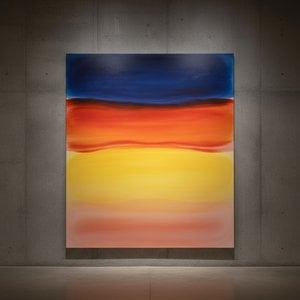
WahooArt.com presents an exquisite hand-painted reproduction of Mark Rothko's “No. 24,” a seminal work from 1949 that embodies the artist’s revolutionary approach to abstract expressionism. This piece, dominated by intense reds and greens, immediately draws the viewer into a realm of profound emotional resonance – a hallmark of Rothko’s mature style. The canvas itself is not merely a surface for paint; it's a textured landscape, built up in layers of thick impasto, creating a palpable physicality that invites tactile engagement. Subtle hints of orange peek through, adding to the complexity and dynamism within the seemingly simple color field composition.
Born in 1903 in Daugavpils, Latvia – then part of the Russian Empire – Mark Rothko's early life was profoundly shaped by displacement and a sensitivity to human suffering. His family’s experiences within the volatile political landscape of Eastern Europe instilled a deep awareness of mortality and existential questions, themes that would become central to his artistic vision. This biographical context is crucial to understanding “No. 24.” Rothko wasn't simply applying color; he was channeling deeply felt emotions, attempting to evoke a visceral response in the viewer. The layering technique, achieved through repeated applications of paint, builds up these emotional layers, creating an almost meditative effect.
Rothko’s use of color wasn't arbitrary. He meticulously studied color theory, particularly the work of Josef Albers, to understand how colors interact and influence each other. The juxtaposition of red and green in “No. 24” is particularly significant. These colors are often associated with primal emotions – red representing passion, anger, or danger, while green symbolizes nature, growth, and sometimes, decay. Rothko aimed to create a spiritual experience for the viewer, suggesting a connection between the individual’s inner world and the vastness of the universe. The thick application of paint, almost sculptural in its presence, further enhances this sense of depth and weight.
"No. 24" represents a pivotal moment in Rothko's career, solidifying his reputation as one of the foremost figures in abstract expressionism. This reproduction captures not just the visual elements of the original but also its emotional core – the profound sense of melancholy, contemplation, and perhaps even spiritual yearning that defines Rothko’s work. A hand-painted reproduction offers a unique opportunity to experience this artwork's power firsthand, bringing Rothko’s intensely personal vision into your space. This piece is more than just decoration; it’s an investment in art history and a gateway to exploring the depths of human emotion.
"No.24" har en Calm atmosfære.
"No.24" af Mark Rothko forener rothko, color field, red green, abstract art, emotional tone, canvas texture, mark rothko med en Calm atmosfære.
Der er en Elevguide-side tilgængelig for "No.24" af Mark Rothko: et printbart faktablad om kunstværket, designet til elever og undervisningsbrug.

1903 - 1970 , Latvian

Oplev Mark Rothkos 25 mest ikoniske malerier – en dybdegående rejse i abstrakt ekspressionisme og farvefeltmaleri. Lær historien bag værkerne & find inspiration til din indretning med WahooArt.dk. Udforsk samlingen online!

Oplev de 10 mest ikoniske værker inden for Abstrakt Ekspressionisme – Jackson Pollock, Mark Rothko og mere. Lær historien bag kunstnerne & teknikken. Find museumskvalitets reproduktioner på WahooArt.com.

Oplev Kandinskys 25 mest ikoniske værker! Dyk ned i abstrakt kunst, ekspressionisme og farvernes sprog. Find luksus reproduktioner af berømte malerier som 'Komposition VIII' på WahooArt.com – inspiration til din vægkunst & indretning.
Explore the profound emotional depth of Mark Rothko's abstract expressionism. Discover the history, techniques & lasting impact of this pivotal Color Field painter. Expert insights for collectors and art enthusiasts.

Explore the profound emotional depth of Color Field painting. Discover the history of mid-century abstraction, from Rothko to Newman, and learn how pure color transforms the viewer's experience through our expert art history guide.
 Se i rummet
 Del som kort
 Del
Del
 Detaljer
 Guide
Guide

 Download
 Lignende værker
 Røntgenundersøgelse
 Diasshow
 Spørgsmål og svar
 Statistikker

 Vis mere









 Glasmulighed er kun tilgængelig i størrelser under 110 cm


