A Victorian Adventurer i Blomst
Marianne North var en ånd uden bund, en kvinde der skiftede de forventede bekvemmeligheder af den victorianske hverdag ud med et liv fyldt med dristige udforskninger og kunstnerisk dedikation. Hun blev født i 1830 ind i en privilegeret familie i Hastings, England, og hendes tidlige vej virkede til at være bestemt for musikalske bestræbelser. Men en svag helbredelse ledte blidt hendes passioner hen mod den delikate kunst af blomstermaling – et skift, der ikke blot viste sig at være en trøst, men som blev fødslen til et ekstraordinært liv levet fuldstændig på hendes egne betingelser. Mens mange kvinder i sin æra var begrænset til saloner og samfundsmæssige forventninger, satte North sit eget formidable eventyr i gang, der ville bære hende over kontinenterne og transformere hende både til en anerkendt kunstner og en autodidakt botaniker. Hendes historie er et vidnesbyrd om modstandskraft, uafhængighed og en dyb forbindelse med den naturlige verden – et testamente til en ånd uden vægt af konventioner.
Fra Botanisk Observation til Global Ekspedition
Årene efter hendes mors død i 1855 var formative, fyldt med omfattende rejser sammen med sin far gennem Europa. Disse ture skar hendes observationsevner og kultiverede et skarp øje for landskab, der indså en rastløshed, der snart blomstrede ud i noget langt mere ambitiøst. Efter sin fars død i 1869 besluttede North at dedikere sig fuldt ud til at male floraen fra fjerne lande – en beslutning, der markerede et afgørende øjeblik i hendes liv. Dette var ikke blot om at indfange skønhed; det var en handling af videnskabelig dokumentation, drevet af et ønske om at registrere den botaniske mangfoldighed af en verden, der hurtigt ændrede sig under indflydelsen af kolonialisme og industrialisering. I 1871 satte North sin rejse i gang med en række ekspeditioner, der spændte over næsten fjorten år, og tog hende til områder så forskellige som Canada, Jamaica, Brasilien, Japan, Borneo, Indien, Australien og New Zealand. Hun rejste ikke med videnskabelige hold eller officielle tildelinger, men finansierede sine eventyr selv, afhangende af sin families formue og en ubønhørlig beslutsomhed om at forfølge sin kunstneriske vision. Hendes metode var minutiøs: hun ville dykke ned i hvert miljø, omhyggeligt observere og skitsere planterne, før hun oversatte dem til lærredet med bemærkelsesværdig præcision og livlige farver. Hun var ikke blot en besøgende; hun blev en del af landskaberne, hun portrætterede, absorberede deres essens og udtrykte den gennem sin kunst. Skalaen af hendes rejser, udført uafhængigt af en kvinde i en æra, der kraftigt begrænsede kvinders autonomi, er i sig selv et vidnesbyrd om Norths ekstraordinære karakter.
En Unik Kunstnerisk Stil & Arv ved Kew
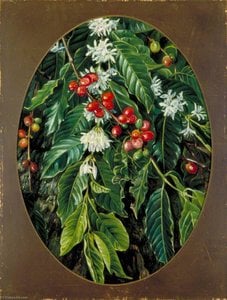
Norths kunstneriske stil er straks genkendelig for sin detaljerede realisme og lystfulde palet. Hun arbejdede primært med olier – et usædvanligt valg til botanisk illustration på det tidspunkt – og opnåede en dybde af farve og tekstur, der bragte hendes emner til live. Hendes malerier er ikke sterile videnskabelige gengivelser; de er gennemsyret af en følelse af atmosfære og sted, der fanger ikke kun plantens
form, men også dens miljø og følelsen af at være omsluttet af det. Hun var ikke blot en besøgende; hun blev en del af landskaberne, hun portrætterede, absorberede deres essens og udtrykte den gennem sin kunst. Hun var ikke trænet i nogen bestemt kunstbevægelse, men hendes arbejde afspejler elementer af victoriansk naturalisme og et engagement i nøjagtig repræsentation. Måske er hendes mest vedvarende arv galleriet, der er dedikeret til hendes værk ved Kew Gardens i London. Anerkendende vigtigheden af hendes samling – over 800 malerier, der dokumenterer planter fra hele verden – donerede North dem generøst til Royal Botanic Gardens i 1882 sammen med midler til at opbygge et formålsspecifikt udstillingsrum. Marianne North Gallery, åbnet samme år, er den eneste permanente solo-udstilling af en kvinde ved Kew og fortsætter med at inspirere besøgende i dag. Det står som et stærkt symbol på hendes kunstneriske præstationer og hendes engagement i at dele sine opdagelser med verden – et levende vidnesbyrd om et liv levet i jagt på skønhed og viden. Malerier som “Tegoro, Sarawak” illustrerer dette, der transporterer seerne til frodige regnskove fyldt med liv, mens værker som "On the Way from Tibet nær Nagkunda, North India" fanger det dramatiske Himalaya-landskaber med romantisk realisme.
Udfordring af Konventioner & Bæredygtig Indflydelse
Marianne North var mere end blot en kunstner; hun var en pioner, der udfordrede samfundets normer og udvidede grænserne for, hvad der blev betragtet som acceptabelt for kvinder i den victorianske æra. Hendes uafhængige rejser, professionelle karriere og dedikation til videnskabelig observation var alle bemærkelsesværdige præstationer for sin tid. Hun brød med konventionerne ved at nægte at gifte sig og i stedet vælge at forme sin egen vej, drevet af intellektuel nysgerrighed og kunstnerisk passion. Hendes malerier tjener som uvurderlige historiske dokumenter, der registrerer planteliv på et kritisk tidspunkt i historien – en periode med hurtig miljøændring og kolonial ekspansion. De giver indsigt i de botaniske landskaber i det 19. århundrede og leverer et visuelt arkiv over arter, der muligvis nu er truet eller uddødte. Hendes historie resonerer stadig i dag, inspirerer kunstnere, videnskabsfolk og eventyrere til at forfølge deres passioner med mod og beslutsomhed – et sandt vidnesbyrd om kraften i en uafhængig ånd og en livslang kærlighed til den naturlige verden.
Bemærkelsesværdige Værker
- Foliage, Flowers and Fruit of the Cashew, Tanjore, India: En levende gengivelse, der viser de intrikate detaljer i denne tropiske plante.
- Elephants, Exotic Fish, and Leaf Insect: Demonstrerer Norths evne til at fange ikke kun flora, men også fauna i deres naturlige habitat.
- Tegoro, Sarawak: Et frodigt regnskovsbillede, der illustrerer hendes detaljerede realisme og atmosfæriske skønhed.
- On the Way from Tibet nær Nagkunda, North India: Fanger det dramatiske Himalaya-landskaber med romantisk realisme.
- Lake of Ajmere, North West India: En oliemaleri af indiske bjerge og en fredelig solnedgang.



 Se i fuld skala
 Køb håndlavet maleri
 Del
Del Del
Del
 Detaljer

 Download
 Lignende værker
 Røntgenundersøgelse
 Diasshow
 Statistik


 Se mere






































 Glasmulighed er kun tilgængelig i størrelser under 110 cm