

Få en printklar fil, der rækker langt ud over web-forhåndsvisningen. Hvert digitalt billede, vi sælger, stammer fra en højopløst master i vores database — typisk mellem 5.000 og 15.000 pixels i bredden — så du med selvtillid kan printe stort, beskære tæt eller gengive fine detaljer.
Ingen fil forlader vores studie uden at være blevet behandlet. En digital ekspert kontrollerer farverne i forhold til det originale maleri og korrigerer dem efter behov, hvorefter klarhed og detaljer forbedres med professionelle retoucheringsværktøjer — altid med fuld respekt for kunstnerens penselstrøg og stil. Resultatet er et billede, der ligner selve maleriet, og ikke blot et scannet billede med et filter.
Du godkender først, når du er tilfreds: Vores ekspert sender billedet til din gennemgang via e-mail inden for 72 timer. Ikke tilfreds? Bed om rettelser eller forbedringer, eller anmod om en refundering, hvis kvaliteten ikke lever op til forventningerne.
Dette er den kvalitet, som forlag, designstudier, gallerier og trykkerier stoler på.
Download en højopløselig fil til personlig fremvisning, print og kreative projekter. ( Skift til printsalg Køb håndmalet maleri)
Når du vælger WahooArt.com, får du ikke blot et billede – du modtager et professionelt optimeret digitalt kunstværk, skabt med præcision og sikret med en tilfredshedsgaranti. Her er alt, hvad din ordre automatisk indeholder:
Din højtopløselige digitale billedfil sendes til din e-mail inden for 72 timer efter bestilling – klar til øjeblikkelig brug.
Dit kunstværk optimeres professionelt ved hjælp af avancerede AI-værktøjer og manuel redigering, hvilket sikrer maksimal detaljegrad, klarhed og farvenøjagtighed.
Har du ved en fejl slettet eller mistet din fil? Ingen bekymring – vi sender den igen til enhver tid, helt gratis.
Nyd dit kunstværk med det samme uden told, afgifter eller leveringsgebyrer – digitale downloads er altid skattefrie.
Vi sikrer, at dit digitale billede gengiver de originale farver så præcist som muligt ved hjælp af professionelle værktøjer og farvestyring.
Hvis du ikke er tilfreds med dit digitale billede, vil vi revidere det eller refundere 100% inden for 100 dage – uden spørgsmål.
Ik tilfreds? Få fuld refusion inden for 100 dage efter modtagelse af din digitale fil – uden spørgsmål.
Køb 3 billeder, spar 10% - Køb 5, spar 15% - Køb 10+, spar 20%. Ideelt til kreative projekter, gallerier og bureauer.
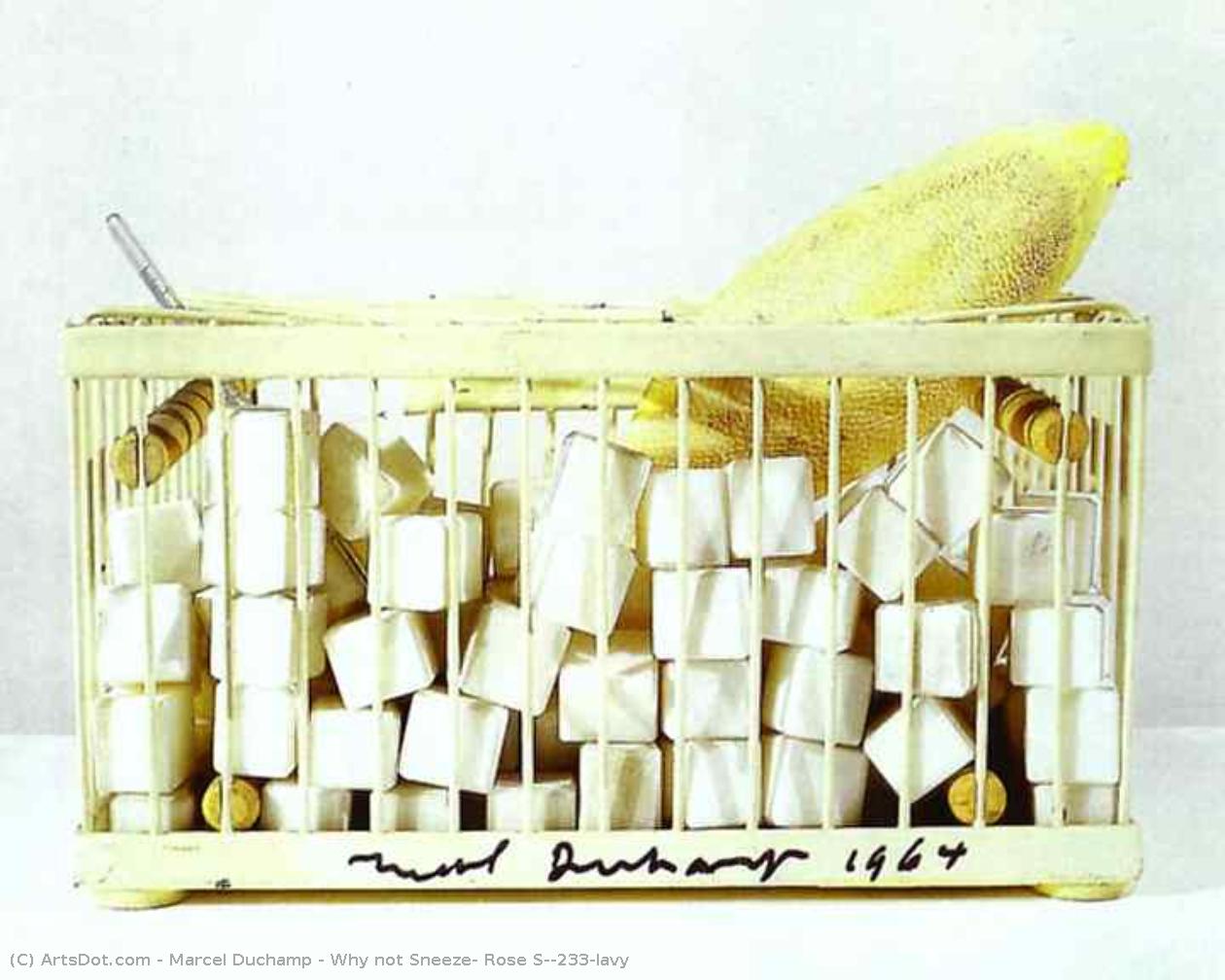
Marcel Duchamp’s "Why Not Sneeze, Rose Sélavy," painted in 1921, isn't merely a still life; it’s an audacious declaration. This deceptively simple image – a white box containing a yellow banana alongside several cups and spoons – immediately throws the viewer off balance, demanding they reconsider their assumptions about art itself. Duchamp, a pivotal figure in the Dada movement, wasn’t interested in replicating reality or expressing personal emotion through traditional means. Instead, he sought to dismantle established artistic conventions, forcing us to confront the very definition of what constitutes “art” and its role within society.
The painting's genesis lies within Duchamp’s exploration of chance and readymades – everyday objects presented as art without alteration. "Why Not Sneeze" exemplifies this approach perfectly. The choice of a banana, an utterly mundane item, elevates it to the status of subject matter through its placement within the box, transforming it into something worthy of contemplation. The inclusion of the cups and spoons further complicates the scene, suggesting a potential for consumption or ritual – elements deliberately devoid of inherent meaning, yet imbued with a subtle tension.
“Why Not Sneeze” is firmly rooted in the principles of Dadaism, a movement born from the disillusionment following World War I. Rejecting logic and reason, Dada artists embraced absurdity, chance, and anti-art sentiments. Duchamp’s technique reflects this ethos; he employed a precise, almost clinical approach to rendering the objects, using oil paint on canvas with a smooth, matte finish. There's no attempt at illusionistic depth or vibrant color – instead, the focus is entirely on the arrangement of the elements and their juxtaposition. The stark white box acts as a frame, isolating the objects and intensifying their impact.
Interestingly, Duchamp’s process involved a degree of chance. He reportedly placed the banana in the box after it had been emptied, allowing the positioning to be determined by accident. This element of randomness underscores the movement's core belief that art should not be dictated by conscious intention but rather emerge from unexpected encounters and unforeseen circumstances.
The symbolism within “Why Not Sneeze” is deliberately ambiguous, inviting multiple interpretations. The banana itself has been suggested to represent fertility, sexuality, or even a subtle critique of consumer culture – a small, yellow object placed in an enclosed space, hinting at both abundance and confinement. The cups and spoons could symbolize hospitality, offering, or perhaps the act of consuming – again, devoid of any specific narrative but laden with potential meanings.
Furthermore, the title itself, “Why Not Sneeze?”, is a direct challenge to conventional artistic expectations. Duchamp’s question implies that there are no rules governing art, no prescribed methods for creating it. It's an invitation to embrace spontaneity and reject rigid constraints. The painting can be viewed as a meditation on the absurdity of artistic norms and a playful provocation against established aesthetic values.
Despite its seemingly simple composition, “Why Not Sneeze, Rose Sélavy” possesses a profound emotional impact. It’s unsettling, humorous, and thought-provoking – qualities that have cemented its place as one of the most significant works in modern art history. Duchamp's work continues to resonate today, prompting us to question our own perceptions of beauty, value, and the very nature of artistic expression. A reproduction of this iconic piece offers a unique opportunity to engage with a pivotal moment in art history and contemplate the enduring legacy of Marcel Duchamp’s revolutionary spirit.
"Why not Sneeze, Rose Sélavy" af Marcel Duchamp er udført i Acrylic On Canvas. Reproduktionerne har til formål at gengive denne tekniks visuelle udtryk.
"Why not Sneeze, Rose Sélavy" er tilgængelig som et fine art-print på bomuldscanvas eller arkivbestandigt lærredspapir. Du kan bestille den i den ønskede størrelse på dens Kunstprint i høj kvalitet-side.
"Why not Sneeze, Rose Sélavy" af Marcel Duchamp tilhører Dada Gesamtkunstwerk-bevægelsen. Denne bevægelse giver den stilistiske kontekst for værket.


1887 - 1968 , Frankrig
 Se i rummet
 Del som kort
 Del
Del
 Detaljer
 Guide
Guide

 Download
 Lignende værker
 Røntgenundersøgelse
 Diasshow
 Spørgsmål og svar
 Statistikker


 Vis mere


![Genre Allegory [george Washington] — Marcel Duchamp, Surrealism](/media/artworks/images-thumb/90/d9/90d9ce324280fe5002abd42626b6c52f.jpg)


