Kunstværket vist på denne side er beskyttet af ophavsretsloven, hvilket betyder, at vi ikke lovligt kan skabe eller sælge en identisk reproduktion. Denne beskyttelse håndhæves i henhold til internationale aftaler som f.eks. den Bernerkonventionen og af nationale love, herunder de bestemmelser, der er fastlagt i Amerikansk ophavsretslov - Titel 17.
Denne metode overholder fuldt ud ophavsretsreglerne, da den ikke indebærer kopiering eller duplikering af det beskyttede kunstværk. I stedet er der tale om en kreativ nytolkning – et nyt maleri, som er inspireret af det oprindelige, men ikke identisk med det.
Giclée- eller lærredstryk i museumskvalitet med hurtig produktion og fleksible muligheder for finish. ( Bestil håndmalet reproduktion
Skift til digitalt billede)
Vælg mellem vores forudindstillede størrelser, der matcher kunstværkets originale proportioner.
Du kan indtaste dine egne mål for at passe til en specifik ramme eller et bestemt område. Hvis den valgte størrelse ikke stemmer overens med det originale billedes proportioner, vil vi enten beskære kunstværket eller udvide billedet med en spejlet eller ensfarvet kant. En digital mockup vil blive sendt til din godkendelse, før produktionen påbegyndes.
Bemærk venligst, at forhåndsvisningen på skærmen ikke afspejler den faktiske beskæring eller udvidelse. Kun mockuppen vil nøjagtigt vise den endelige komposition.
Selvom specialmål er tilgængelige, anbefaler vi at vælge et mål fra den foruddefinerede liste for at bevare de originale proportioner.
Verdensomspændende levering () på 2 uger i stedet for de sædvanlige 4/5 uger. (10 oktober)
Noah's Ark
Reproduktionsstørrelse
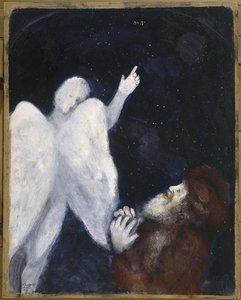
Marc Chagall's "Noah’s Ark," painted in 1963, isn’t merely a depiction of the biblical flood; it’s an immersion into a world brimming with memory, faith, and the artist’s deeply personal vision. This pastel on paper sketch and study, housed within WikiArt’s extensive collection, offers a glimpse into Chagall's unique artistic universe—a realm where folklore intertwines with profound spirituality and childhood recollections dance alongside grand narratives. The work immediately captivates with its vibrant palette and the seemingly chaotic yet harmonious arrangement of figures and animals, reflecting the artist’s signature style of Naïve Art (or Primitivism). It’s a piece that invites prolonged contemplation, revealing layers of meaning beneath its surface exuberance.
Born Moishe Shagal in 1887 in Liozna, Belarus—a town he would always consider his emotional center—Chagall’s artistic development was profoundly shaped by his upbringing within a Hasidic Jewish community. The vibrant rituals, storytelling traditions, and deeply ingrained folklore of Vitebsk permeated his work, manifesting as recurring motifs of flying figures, whimsical animals, and the evocative hues of remembered landscapes. This connection to his past is powerfully evident in “Noah’s Ark.” The painting echoes the artistic sensibilities of a region where Orthodox churches stood alongside bustling Jewish marketplaces—a potent blend of cultures that informed Chagall's distinctive aesthetic. He initially received formal training as a sign painter, but quickly abandoned academic constraints for a more intuitive and expressive approach, one deeply rooted in his personal experiences.
Executed in pastel on paper, “Noah’s Ark” exemplifies Chagall's characteristic use of flattened perspective and simplified forms. The figures are not rendered with meticulous realism but rather as stylized representations imbued with emotional weight. Notice the loose, gestural strokes that define the animals—a dog lounging casually, a pair of birds soaring upwards, a horse standing proudly—each rendered with an almost childlike directness. The composition is deliberately dynamic, creating a sense of movement and overflowing abundance. The colors are intensely saturated – blues, reds, yellows, and greens collide in a joyous explosion, reflecting the energy and vitality of Chagall’s artistic vision. This technique, rooted in Naïve Art, prioritizes emotional expression over precise representation, allowing the viewer to connect with the painting on an intuitive level.
Beyond its surface vibrancy, “Noah’s Ark” is rich in symbolic meaning. The ark itself—a vessel of salvation—becomes a stage for a multitude of figures, representing not just Noah and his family but also the diverse creatures entrusted to his care. The rainbow, prominently featured above the scene, symbolizes God's covenant with humanity after the flood, a promise of renewal and hope. However, Chagall’s interpretation transcends a purely literal reading of the biblical story. The painting feels less like a historical account and more like a dream—a personal meditation on themes of faith, memory, and the enduring power of the human spirit. The inclusion of figures reminiscent of Chagall's own family and friends adds another layer of intimacy to the scene, suggesting that the flood narrative is ultimately a metaphor for life’s challenges and the importance of finding refuge in love and connection.
A reproduction of this captivating artwork offers a beautiful addition to any collection. Its vibrant colors and evocative imagery will bring a touch of Chagall's dreamlike world into your home, serving as a constant reminder of the enduring power of faith, hope, and artistic expression.
Kunstneren bag "Noah's Ark" er Marc Chagall. Værket er katalogiseret under Marc Chagalls navn.
"Noah's Ark" af Marc Chagall er skabt i 1963.
"Noah's Ark" er udført i Acrylic On Paper i Naïve Art (Primitivism)-stil.
Marc Chagall skabte "Noah's Ark" i en alder af 76. Kunstneren blev født i 1887, og værket er dateret 1963.
"Noah's Ark" måler 30 x 23 cm i sin oprindelige form. De originale dimensioner er en nyttig reference, når du skal vælge størrelsen på en reproduktion.

Marc Chagall skabte "Noah's Ark" inden for Naïve Art (Primitivism)-bevægelsen.
Siden Statistikker for "Noah's Ark" af Marc Chagall præsenterer statistikker over offentlige besøg: månedlige besøg af dette kunstværk, en sammenligning med kunstnerens mest sete værker og hvor de besøgende kommer fra.
1887 - 1985 , Hviderusland