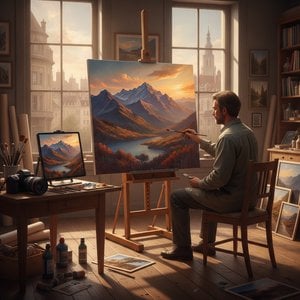
A Life Forged in Paint: The World of Lovis Corinth
Lovis Corinth, født Franz Heinrich Louis, så dagens lys den 21. juli 1858 i Tapiau, en lille landsby i det nuværende Østpreussen, et område præget af hårdt arbejde og tæt kontakt med naturen. Hans far var tanner, og denne tidlige eksponering for fysisk anstrengelse og den rå skønhed i landskabet ville subtilt indgyde hans senere værker – selvom han senere udforskede mere sofistikerede stilarter. Corinth begyndte sine studier på Königsberg Academy i 1876, men hurtigt erkendte han, at ren akademisk tradition alene ikke kunne tilfredsstille hans kunstneriske ambitioner. En rejse fulgte, der førte ham gennem München, Antwerpen og endelig Paris – hver by fungerede som et vigtigt skridt i hans udvikling. I München absorberede han den minutiøse realisme, der blev fremmet af Ludwig von Löfftz, forfinede sine observationsevner og mestrede teknikken. Antwerpen introducerede ham for den dramatiske barok intensitet hos Rubens, mens Paris åbnede dørene for den spirende impressionistiske bevægelse – selvom hans første reaktion var mere en forsigtig observation end et øjeblikkeligt omfavnelse.
From Naturalism to a Synthesis of Styles
Corinth’s kunstneriske udvikling var ikke præget af hurtige revolutioner, men snarere en gradvis assimilation og syntese af forskellige indflydelser. Hans tidlige værker lå tungt forvaltet til naturalisme, der afspejlede de dominerende akademiske standarder på tiden. Malerier som “In the Slaughterhouse” (1878), med sin ufortrængelige fremstilling af dyrekroppe, demonstrerer dette engagement i realistisk repræsentation – men selv her begynder en spirende følelsesmæssig intensitet at dukke op. Emnet selv – grotesk og visceral – antyder en villighed til at konfrontere ubehagelige sandheder, en karakteristikk der ville blive mere fremtrædende i hans senere arbejde. Hans tid ved studiet af de gamle mestre, især Rubens, indgydede ham en kærlighed til dynamisk komposition og udtryksfuld penselstrøg. Dog var det hans eksponering for impressionismen – oprindeligt set med skepsis – der i sidste ende viste sig at være transformativ. Han adopterede ikke blot de brudte farver og flygtige lys effekter fra Monet eller Renoir; snarere integrerede han disse elementer i sin egen unikke vision, hvilket skabte en stil, der blandede impressionistisk livlighed med en tydeligt tysk sans for tingene. Denne syntese ville til sidst positionere ham som en bro mellem impressionismen og expressionismen – to bevægelser, der definerede kunstens landskab i det tidlige 20. århundrede.
A Master of Portraiture and Landscape
Selvom Corinth udforskede forskellige genrer i løbet af sin karriere – herunder bibelske scener og mytologiske motiver – er han måske bedst kendt for sine portrætter og landskaber. Hans portrætter var ikke blot et forsøg på at fange fysisk lighed; det var et forsøg på at trænge ind i deres psykologiske dybder, afsløre deres indre liv gennem subtile gestus, udtryksfulde øjne og omhyggeligt overvejelte kompositioner. Han besad en bemærkelsesværdig evne til at formidle karakter og følelser med bemærkelsesværdig sparsomhed. Ligeledes var hans landskaber ikke blot fremstillinger af naturskuer, men snarere emotionelle reaktioner på naturen. Walchensee-regionen i det bavariske højland blev en særlig kilde til inspiration, der gav ham en rigdom af motiver, som han udforskede gentagne gange i løbet af sine senere år. Disse malerier er karakteriseret ved deres dristige farver, dynamiske penselstrøg og en følelse af rå energi, der afspejler Corinth’s egen passionerede engagement med den naturlige verden. Han var ikke interesseret i idylliske repræsentationer; snarere søgte han at fange landskabets ukontrollerede magt og iboende drama.
Tragedy, Resilience and Lasting Legacy
Et afgørende øjeblik i Corinth’s liv – og sandsynligvis i hans kunstneriske udvikling – var et slag, han led i december 1911. Paralyse på venstre side truede med at bringe hans karriere til ophør. Alligevel, med urokkelig beslutsomhed og støtte fra sin kone, Charlotte Berend-Corinth, lærte han at male igen, tilpassede sig sine fysiske begrænsninger og udviklede en endnu mere udtryksfuld stil. Denne periode markerede et vendepunkt i hans arbejde, da hans malerier blev mere dristige, gestikulære og følelsesmæssigt ladede. Oplevelsen af at konfrontere døden og fysisk sårbarhed infunderede hans kunst med en ny følelse af oprigtighed. Han omfavnede en løsere penselstrøg og intensiverede farvepaletten, hvilket forudså mange af de stilistiske innovationer, der ville definere expressionismen. Corinth’s indflydelse udspandt sig ud over hans egen maleri; han var også en respekteret lærer og kunstskribent, hvor han udgav essays som “On Learning to Paint” i 1908, og tilbød indsigt i sin kunstneriske filosofi og tekniske tilgang. Han tjente som præsident for Berlin Secession fra 1915 indtil sin død i 1925, der fremmede en levende kreativt fællesskab. Lovis Corinth’s arv ligger ikke kun i hans bemærkelsesværdige kunstværker, men også i hans urokkelige engagement i kunstnerisk integritet og hans evne til at forvandle personlig tragedie til dyb emotionel udtryk. Han er en afgørende figur i den tyske kunsthistorie, en mester der brolagde to æraer og efterlod et varigt præg på generationer af kunstnere.
Key Works & Their Significance
- In the Slaughterhouse (1878): En stærkt realistisk fremstilling af dyrekroppe, der demonstrerer Corinth’s tidlige mesterskab i teknik og hans villighed til at konfrontere ubehagelige emner.
- Self-Portrait (various years): En serie selvportrætter skabt årligt på sin fødselsdag, der tilbyder en fascinerende kronik af kunstnerens udviklende selvopfattelse og stil. Disse værker afslører en dyb introspektion og en modig udforskning af identitet.
- Female Semi-Nude with Hat (1906): Demonstrerer Corinth’s evne til at blande klassiske motiver med impressionistiske teknikker, hvilket skaber et sansende og psykologisk engagerende portræt.
- Walchensee Series (various years): En samling af landskaber, der forestiller Walchensee-regionen i Bayern, karakteriseret ved deres livlige farver, dynamiske penselstrøg og emotionelle intensitet. Disse malerier repræsenterer Corinth’s modne stil på sit mest kraftfulde og udtryksfulde.
- The Last Self-Portrait (1924): Malet kort før sin død, er dette værk et rørende vidnesbyrd om kunstnerens vedholdenhed og urokkelige ånd i mødet med fysisk modgang. Det indgyder den kulmination af hans kunstneriske rejse og tjener som et kraftfuldt symbol på menneskelig udholdenhed.



 Se i rummet
 Bestil håndmalet reproduktion
 Send
Send Del
Del
 Detaljer
 Guide
Guide

 Download
 Lignende værker
 Røntgenundersøgelse
 Se diasshow
 Statistik


 Læs mere






































 Glasmulighed er kun tilgængelig i størrelser under 110 cm