Se i rummet Se i AR Skift til printversion Skift til digitalt billede Send
Detaljer Studieguide til kunstværker Tilføj til favoritter Download Lignende værker Røntgenundersøgelse Se diasshow Statistik

Composition

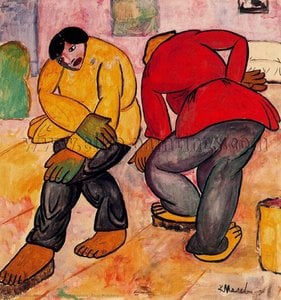
Kazimir Malevich’s "Composition" (1932) is a dynamic abstract painting featuring layered stripes & bold colors. Explore this Expressionistic/Constructivist masterpiece – a key work of 20th-century art.

Kazimir Malevich (1878-1935): Ukrainsk pioner indenfor abstrakt kunst med revolutionerende værker som 'Sorttavle'. Udforsk Suprematism og hans indflydelse på moderne kunst.

Håndlavet oliereproduktion

Håndmalet olie på lærred i din valgte størrelse og ramme, udført efter bestilling af vores kunstnere. ( Skift til printversion Skift til digitalt billede)

Corner sample of the P118B picture frame: støbt polystyren, 5 cm wide and 3 cm thick
P118B Dkr10
Corner sample of the P118H picture frame: støbt polystyren, 5 cm wide and 3 cm thick
P118H Dkr10
Corner sample of the P118W picture frame: støbt polystyren, 5 cm wide and 3 cm thick
P118W Dkr10
Corner sample of the P438Z picture frame: støbt polystyren, 5.5 cm wide and 3.5 cm thick
P438Z Dkr10
Corner sample of the P508JH picture frame: støbt polystyren, 7 cm wide and 3.5 cm thick
P508JH Dkr12
Corner sample of the P508YH picture frame: støbt polystyren, 7 cm wide and 3.5 cm thick
P508YH Dkr12
Corner sample of the P805H picture frame: støbt polystyren, 5 cm wide and 3.5 cm thick
P805H Dkr10
Corner sample of the P805Z picture frame: støbt polystyren, 5 cm wide and 3.5 cm thick
P805Z Dkr10
Corner sample of the P919BZ picture frame: støbt polystyren, 7 cm wide and 3.5 cm thick
P919BZ Dkr10
Corner sample of the P919G picture frame: støbt polystyren, 7 cm wide and 3.5 cm thick
P919G Dkr10
Corner sample of the P919XJ picture frame: støbt polystyren, 7 cm wide and 3.5 cm thick
P919XJ Dkr10
Corner sample of the P959ZH picture frame: støbt polystyren, 5 cm wide and 3 cm thick
P959ZH Dkr10
Corner sample of the P968JZ picture frame: støbt polystyren, 6 cm wide and 4 cm thick
P968JZ Dkr12
Corner sample of the W106C picture frame: massivt træ, 5 cm wide and 3 cm thick
W106C Dkr8
Corner sample of the W218G picture frame: massivt træ, 5 cm wide and 3 cm thick
W218G Dkr10
Corner sample of the W218JH picture frame: massivt træ, 5 cm wide and 3 cm thick
W218JH Dkr8
Corner sample of the W218Y picture frame: massivt træ, 5 cm wide and 3 cm thick
W218Y Dkr10
Corner sample of the W307PJ picture frame: massivt træ, 6 cm wide and 3 cm thick
W307PJ Dkr10
Corner sample of the W316G picture frame: massivt træ, 6 cm wide and 3 cm thick
W316G Dkr10
Corner sample of the W316PJ picture frame: massivt træ, 6 cm wide and 3 cm thick
W316PJ Dkr8
Corner sample of the W316Y picture frame: massivt træ, 6 cm wide and 3 cm thick
W316Y Dkr10
Corner sample of the W398PJ picture frame: massivt træ, 5 cm wide and 3 cm thick
W398PJ Dkr8
Corner sample of the W4111J picture frame: massivt træ, 6.5 cm wide and 3.5 cm thick
W4111J Dkr10
Corner sample of the W500HY picture frame: massivt træ, 7 cm wide and 5 cm thick
W500HY Dkr15
Corner sample of the W500JH picture frame: massivt træ, 7 cm wide and 5 cm thick
W500JH Dkr15
Corner sample of the W692G picture frame: massivt træ, 8 cm wide and 4 cm thick
W692G Dkr12
Corner sample of the W849H picture frame: massivt træ, 5 cm wide and 3 cm thick
W849H Dkr8
Corner sample of the W940BG picture frame: massivt træ, 7.5 cm wide and 4.5 cm thick
W940BG Dkr15
Corner sample of the W953PJ picture frame: massivt træ, 6 cm wide and 3.5 cm thick
W953PJ Dkr8

Standardstørrelse
speciallavet
CM
INCH

Vælg mellem vores forudindstillede størrelser, der matcher kunstværkets originale proportioner.

bredde
højde

Indtast den bredde og højde, du har brug for, så det passer til din ramme eller din væg. Da dette er håndmalet, kan kunstneren ved en anden form på størrelsen male lidt mere rundt om billedet eller skære lidt væk — det er op til dig. Vi sender dig et digitalt mockup til godkendelse, før maleriet påbegyndes. Billedet, der vises på denne side, viser ikke det endelige resultat — det er kun mockuppet, der gør.

Eksempler på tilpasningsmuligheder: Udskift ansigt med kundens eget foto; Tilføj kæledyr (f.eks. udskift kat med hund); Inkluder en skjult besked i baggrunden; Ændr baggrundslandskab eller elementer.
Efter bestilling vil WahooArt.com team sende en e-mail til kunden for at indhente instruktioner og fremsende et udkast til gennemgang.

Levering i hele verden () på 3-4 uger i stedet for de standard 5 uger. (26 oktober). Ingen kompromiser med kvaliteten.

Gratis ekspresforsendelse til hele verden
Lærred af linned i høj kvalitet
Komplet transportforsikring
Garanti for refusion af told og importafgifter
Garanti for autentisk farvegengivelse
100 dages returret ved fabrikationsfejl
100% fuld returret
Mængderabat ved flere køb

Samlet pris

Dkr 1784

Composition

Reproduktionsmateriale

Reproduktionsstørrelse

-

Samlet pris

Dkr 1784

Kort om værket

  • medium: Oil paints on canvas (likely)
  • year: 1932
  • artist: Kazimir Severinovich Malevich
  • movement: Suprematism, Expressionism, Constructivism

Kunstquiz

Der er kun ét korrekt svar på hvert spørgsmål.

Spørgsmål 1:
Kazimir Malevich is most famously associated with which art movement?
Spørgsmål 2:
What is a defining characteristic of the technique used in 'Composition'?
Spørgsmål 3:
The composition primarily utilizes what type of lines?
Spørgsmål 4:
Which of the following stylistic influences is *not* explicitly mentioned in relation to Malevich's work?

A Symphony of Abstraction: The Pure Sensation of Malevich’s ‘Composition’

To step before Kazimir Malevich's 1932 Composition is to enter a realm where the noise of the material world falls into a profound, rhythmic silence. This horizontal masterpiece does not seek to mirror the landscapes or faces of our daily existence; instead, it invites the viewer into a universe of pure artistic sensation. As a pinnacle of his mature Suprematist style, the work functions as a visual symphony, where color and form dance in a carefully orchestrated tension. It is an exploration of the non-objective, stripping away the skin of reality to reveal a skeletal truth composed entirely of energy, weight, and movement.

The painting is defined by a captivating interplay of layered, rectangular stripes that vary in width and intensity. These are not merely flat bands of pigment but are perceived as dynamic planes existing within a shallow, compressed pictorial space. By deliberately minimizing traditional perspective, Malevich pushes the composition forward, demanding an immediate, visceral engagement from the observer. The eye is drawn into a rhythmic pulse created by the overlapping edges, where the boundaries between shapes become sites of subtle conflict and unexpected harmony.

A Palette of Emotion and Tactile Depth

The emotional resonance of the piece is anchored in its masterful use of color. Malevich employs a bold palette—dominated by deep reds, vibrant greens, cool blues, sun-drenched yellows, and grounding blacks—not to mimic nature, but to evoke a spectrum of human feeling. The juxtaposition of these hues creates a sense of kinetic energy; certain stripes seem to vibrate against their neighbors, while others provide moments of structural stability. This chromatic tension is further heightened by the artist's signature impasto technique. The thick, deliberate application of oil paint lends the canvas a rugged, tactile quality that transforms the surface into a sculptural landscape of its own.

For the discerning collector or interior designer, this texture offers a profound sense of authenticity and presence. The visible brushstrokes serve as a poignant reminder of the artist’s hand, ensuring that the work feels deeply personal rather than mechanically produced. When placed within a modern architectural setting, the interplay of light across these raised ridges of paint creates a living composition that changes with the time of day, offering a sophisticated focal point that embodies both strength and elegance.

Historical Resonance and Modern Legacy

Understanding Composition requires a glimpse into the revolutionary spirit of its era. Emerging from the transformative atmosphere of the Russian avant-garde, Malevich sought to create an art form that reflected a new, utopian world order. Through Suprematism, he believed that geometric abstraction could transcend political and social boundaries to express a universal spirituality. This work represents a radical break from centuries of representational tradition, standing as a monument to the courage of the modern spirit.

Today, this painting remains a cornerstone of abstract art history, offering endless inspiration for those who appreciate the beauty of structural order and emotional depth. Whether serving as a bold statement in a minimalist gallery or adding a layer of intellectual complexity to a curated residential space, Malevich’s Composition continues to captivate. It is more than a painting; it is an invitation to experience the sublime power of pure form.

Spørgsmål & svar

Hvornår blev "Composition" af Kazimir Malevich skabt?

"Composition" af Kazimir Malevich er skabt i 1932.

Er "Composition" af Kazimir Malevich i det offentlige domæne, og hvorfor?

"Composition" af Kazimir Malevich er i det offentlige domæne – ophavsretten er udløbet. Ophavsretten beregnes fra kunstnerens dødsår, og Kazimir Malevich døde i 1935.

Hvornår blev "Composition" skabt, og hvilken stilart tilhører det?

"Composition" blev skabt i 1932 inden for Constructivism-bevægelsen.


Om kunstneren

Kazimir Malevich: En Pioner indenfor Abstrakt Kunst

Kazimir Malevich (1878-1935) var en ukrainsk kunstner og en banebrydende figur inden for abstrakt kunst, hvis revolutionerende værker som ”Sort Tavle” har efterladt sig et dybt præg på moderne kunsthistorie. Hans arbejde udforskede nye territorier af følelse og geometri og udfordrede fundamentale idéer om kunstens rolle i samfundet. Denne artikel vil beskrive Malevichs liv, hans kunstneriske udvikling og hans betydning som en af de mest indflydelsesrige kunstnere på det 20. århundrede.

Tidlig Liv og Påvirkninger

Malevich blev født i Kyiv Oblast, Ukraine, i 1878 til en polsk familie. Hans barndom var præget af den ukrainske landsbyidyl og dens rige folkelige kultur – elementer der senere ville finde deres vej ind i hans kunstneriske arbejde. Han modtog grundlæggende kunstuddannelse i Kyiv, hvor han blev introduceret til klassisk kunsthistorie og teknikker. Men allerede tidligt søgte Malevich efter inspiration uden for Ukrainens grænser og udviklede en interesse for europæiske kunststrømninger som Impressionisme og Symbolisme. Disse erfaringer ville forme hans kunstneriske verdensbillede og give ham et fundament til senere eksperimenter med nye stilformer.

Kunstnerisk Udvikling & Nøgle Strømninger

Malevichs kunstneriske rejse begyndte i Paris i 1912, hvor han blev mødt af den europæiske avantgarde og fik direkte kontakt med kunstnere som Picasso og Matisse. Han eksperimenterede aktivt med forskellige teknikker og stilarter – Cubisme var særligt vigtig for hans udvikling – før han omkring 1915 fandt sin egen unikke stil: Suprematism. Denne nye bevægelse prægede sig ved en fuldstændig afvisning af traditionelle kunstformer og søgte efter et ærligt udtryk af følelser gennem rene geometriske figurer og farver. Dette var ikke blot en teknisk udfordring, men også en filosofisk erklæring om kunstens rolle i verden. Suprematism blev direkte inspireret af Vladimir Tatlin og Piet Mondrian.

Nøgleværker & Filosofi

Malevichs mest ikoniske værker inkluderer ”Sort Tavle” (1915), hvor han reducerede billedet til blot en enkelt kvadratisk tavle, hvilket repræsenterede et radikalt brud med kunsthistorien og blev betragtet som et fundament for abstrakt kunst. Hans andet hovedværk var ”White on White” (1918), hvor han udforskede konceptet om ren geometri og følelse ved at præsentere kvadratiske områder af hvid maling på kvadratiske områder af hvid papir – en ekstrem reduktion, der skulle udtrykke essensen af kunstens ånd. Disse værker blev mødt med både begejstring og kritik fra kunstkritikerne og kunstnere på hans tid, men Malevichs vision om abstrakt kunst fortsatte at fascinere efterfølgende generationer af kunstnere. Han beskrev Suprematism som ”kunsten af det rene kvadrat” og hævdede, at målrettet kunst skulle være fri for alle referencer til den fysiske verden og fokusere på direkte følelsesmæssig kommunikation.

Historisk Betydning & Eftervirkninger

Kazimir Malevichs arbejde havde en enorm indflydelse på udviklingen af abstrakt kunst i hele Europa og Rusland. Han blev betragtet som en af de vigtigste figurer inden for den russiske avantgarde og inspirerede kunstnere som El Lissitzky og Aleksandr Rodchenko til at udforske nye muligheder indenfor geometrisk abstraktion. Malevichs filosofi om kunstens rolle og hans eksperimenter med rene former blev mødt med både støtte og modstand fra konservative kræfter i samfundet, men hans arbejde fortsatte at være relevant for kunstnere og kunsthistorikere gennem hele det 20. århundrede. Han døde i Leningrad (nu St. Petersburg) i 1935 efter en kort periode med politisk repression og blev æret som en af Ukrainas største kunstnere og en pioner indenfor abstrakt kunstens historie. Hans værker udgør stadig dagligt inspiration for kunstnere verden over.
Kazimir Malevich

Kazimir Malevich

1878 - 1935 , Ukraine

Hurtige fakta

  • Artistic Movement Or Style: Suprematisme, Abstrakt kunst
  • Artists Or Movements Influenced By This Artist:
    • Minimalisme
    • Konstruktivisme
  • Artists Who Influenced This Artist:
    • Impressionisme
    • Fauvisme
    • Kubisme
  • Date Of Birth: 1878
  • Date Of Death: 1935
  • Full Name: Kazimir Severinovich Malevich
  • Nationality: Ukrainsk/Russisk
  • Notable Artworks:
    • Sorttavle
    • Hvid på hvid
    • Bygning under konstruktion
  • Place Of Birth: Kijev, Ukraine
Udforsk kunstværker organiseret efter temaer, stilarter og karakteristika.