Kunstnerens biografi
A Spanish Visionary of Cubism: The Life and Art of Juan Gris
Juan Gris, født José Victoriano González-Pérez i Madrid i 1887, begyndte sin rejse mod kunstens verden med en tilsyneladende logisk vej – studier af ingeniørvidenskab på Kunstakademiet. Men selv under disse formative år brændte der en kreativ gnist, som manifesterede sig i tegninger for lokale blade, hvilket antydede et talent, der var klar til at bryde igennem. I 1905 tog han pseudonymet Juan Gris – et navn, der resonerede med en ny følelse af identitet og formål, da han begyndte sin formelle uddannelse i malerkunst under José Moreno Carbonero. Denne overgang markerede et skelsættende øjeblik, der satte ham på vejen mod kunstnerisk innovation.
Parisian Awakening and the Embrace of Cubism
1906 blev et vendepunkt, da han flyttede til Paris – en by, der pulserede af kunstnerisk energi og var fyldt med visionære sind. Gris kastede sig ud i denne levende scene, hvor han knyttede venskaber med store navne som Henri Matisse, Georges Braque og Fernand Léger. I starten illustrerede han satiriske billeder for blade som *L'Assiette au Beurre*, hvilket skarperte hans observationsevner og udviklede en fin sans for visuel humor. Men det var Pablo Picassos indflydelse, der viste sig at være særlig kraftfuld. Rundt omkring 1910 begyndte Gris alvorligt at dedikere sig til maleri, bevægende sig væk fra karikatyr mod sprogene i den spirende Cubisme. Dette var ikke blot imitation; han søgte at destillere essensen af form og rum, idet han ønskede at skabe en ny visuel orden. Hans tidlige udforskninger var præget af en bevidst afvigelse fra traditionel repræsentation, hvor han omfavnede abstraktion som et middel til at fange virkelighedens underliggende struktur.
The Geometry of Perception: Style and Key Works
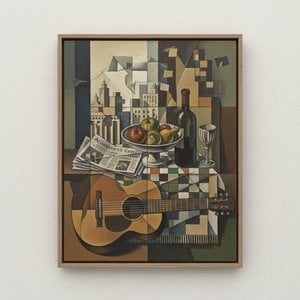
Juan Gris’ kunstneriske produktion er karakteriseret ved enestående klarhed og intellektuel dybde. Han dekonstruerede ikke blot objekter, men genopbyggede dem med omhyggelig præcision, fremhævede geometriske former og en velovervejet farvepalet. Denne tilgang førte til, hvad der blev kendt som hans "krystalperiode", illustreret af mesterværker som *Still Life Before an Open Window* og *Place Ravignan* (1915). Disse værker viser et bemærkelsesværdigt samspil mellem planer og vinkler, hvilket skaber en følelse af dybde og soliditet, samtidig med at de udfordrer traditionelle opfattelser af perspektiv. Efter 1913 omfavnede Gris entusiastisk den syntetiske Cubisme, hvor han banebrydende brugte *papier collé* – collage – ved at integrere virkelige materialer som avisudklip og teksturerede papirer i sine kompositioner. Denne teknik tilføjede et ekstra lag af kompleksitet og taktilitet til hans kunst, udvisker grænserne mellem maleri og skulptur. Bemærkelsesværdige eksempler omfatter *Guitar in front of the sea* (1925), der er et vidnesbyrd om hans forenklede former og overholdelse af kubistiske principper, og *Homage à Pablo Picasso* (14), som signalerede hans voksende anerkendelse i den avantgarde kunstverden.
Influences and Development
Gris’ udvikling var dybt påvirket af Picassos tidlige arbejde, men han udviklede hurtigt sin egen unikke stil. Han studerede intensivt geometriske former og farveforhold, hvilket førte til hans karakteristiske brug af skarpe linjer og en begrænset farvepalet. Hans tidlige værker er præget af en analytisk tilgang, hvor han nedbrød objekter i deres grundlæggende geometriske elementer. Senere bevægede han sig mod den syntetiske Cubisme, hvor han integrerede virkelige materialer i sine malerier og skabte et mere dynamisk og komplekst udtryk. Han var en af de første til at eksperimentere med *papier collé*, hvilket bidrog til at forme denne stil. Hans forhold til Matisse var også centralt for hans udvikling, idet han lærte af dennes farvepaletter og kompositioner.
Legacy and Lasting Influence
Juan Gris’ bidrag til Cubismen går ud over blot stilistisk innovation; han bragte en unik intellektuel dybde og strukturel klarhed til bevægelsen. Han bevægede sig væk fra den analytiske fase mod en mere organiseret og syntetisk tilgang, der fremhævede orden og præcision. Hans kunst havde en dybtgående indflydelse på Purist-stilen, som blev championed af Amédée Ozenfant og Charles Edouard Jeanneret (Le Corbusier), der argumenterede for en tilbagevenden til klassiske principper for form og komposition. Gris’ fokus på geometriske former, harmoniske farvepaletter og integrationen af hverdagsgenstande i hans kunst etablerede ham som en central figur i det 20. århundredes kunst. Hans arv inspirerer kunstnere i dag, hvilket demonstrerer den vedvarende kraft af Cubisme og den visionære genialitet hos Juan Gris – en spansk mester, der omskabte vores forståelse af perception og repræsentation.



 Se i fuld skala
 Køb håndlavet maleri
 Del
Del Del
Del
 Detaljer

 Download
 Lignende værker
 Røntgenundersøgelse
 Diasshow
 Statistik


 Se mere






































 Glasmulighed er kun tilgængelig i størrelser under 110 cm