

Giclée- eller lærredstryk i museumskvalitet med hurtig produktion og fleksible muligheder for finish. ( Køb håndmalet maleri Skift til digitalt billede)





























Vælg mellem vores forudindstillede størrelser, der matcher kunstværkets originale proportioner.

Indtast den bredde og højde, du har brug for, så det passer til din ramme eller din væg. Et print kan kun beskæres, aldrig gøres større end selve billedet, så en størrelse med et andet format vil medføre, at dele af motivet går tabt. Vi sender dig en digital mockup til godkendelse, før vi printer noget. Billedet vist på denne side viser ikke den faktiske beskæring — det er kun mockuppen, der gør.
Verdensomspændende levering () på 2 uger i stedet for de sædvanlige 4/5 uger. (16 november)
Faith
Størrelse på reproduktion
John Phillip’s “Faith,” painted in 1864, isn't merely a portrait; it’s a carefully constructed tableau of piety and domestic tranquility, steeped in the cultural currents of late Victorian Scotland. The painting depicts a woman, likely a member of the Scottish upper-middle class, enveloped in a quiet moment of prayer or contemplation. Her posture is graceful yet grounded, her hands clasped gently before her chest – a gesture universally understood as signifying reverence. The muted palette—dominated by earthy browns, soft greens, and subtle blues—evokes a sense of warmth and domesticity, while the carefully rendered fabrics and modest jewelry speak to a life of quiet dignity. Beyond the immediate subject, the inclusion of two figures on either side adds layers of narrative; one appears to be reading, perhaps offering guidance or support, while the other seems absorbed in conversation, suggesting a community bound by shared faith.
Phillip’s style is deeply rooted in the artistic traditions he studied at the Royal Academy and, crucially, his association with the influential “Clique” of Victorian artists. This group, led by Richard Dadd, championed the works of William Hogarth and David Wilkie, seeking to capture the spirit of realism and dramatic storytelling. However, Phillip’s work transcends mere imitation; he infused these influences with a distinctly Scottish sensibility, evident in his meticulous attention to detail—the texture of the woman's shawl, the subtle play of light on her face, the architectural backdrop hinting at a modest church. The composition itself is carefully balanced, drawing the eye inward towards the central figure and creating a sense of intimate serenity.
It’s important to understand that “Faith” emerged from John Phillip's transformative journey to Spain in 1851. He was deeply moved by the religious fervor he witnessed there, particularly within the Catholic communities. This experience profoundly altered his artistic perspective, leading him to dedicate much of his later work to depicting Spanish life and culture – a period that earned him the affectionate moniker “Spanish Phillip.” The painting reflects this newfound inspiration; the subtle warmth of the lighting, reminiscent of the Spanish sun, and the overall atmosphere of quiet devotion are hallmarks of his Spanish-influenced style. The inclusion of elements like the rosary beads and the implied presence of a church subtly allude to the religious context of the scene.
Phillip’s background as a member of the Clique also shaped his artistic approach. The group's admiration for Hogarth, known for his satirical social commentary, is evident in the painting’s ability to subtly convey a sense of moral virtue and domestic harmony. However, Phillip’s work goes beyond mere social critique; it offers a poignant glimpse into the private world of faith—a realm of quiet contemplation and spiritual connection.
The symbolism within “Faith” is both subtle and profound. The woman's closed eyes suggest a deep level of concentration, inviting the viewer to share in her moment of prayer or reflection. The simple setting—a modestly furnished room—underscores the importance of faith as an internal experience rather than an outward display of wealth or status. The two figures flanking the central subject represent the community that supports and nurtures this individual’s spiritual journey, highlighting the interconnectedness of faith within a domestic sphere.
More broadly, “Faith” speaks to the enduring human need for connection—to God, to family, and to one another. The painting's quiet dignity and serene atmosphere evoke a sense of peace and tranquility, offering a respite from the complexities of modern life. It’s a testament to the power of faith to provide solace, guidance, and a profound sense of belonging.
Reproducing “Faith” in high quality offers a beautiful way to bring this evocative Victorian painting into your home or office. The meticulous detail and rich colors of the original are faithfully captured in our hand-painted reproductions, ensuring that you experience the full emotional impact of Phillip’s masterpiece. Whether displayed as a statement piece in a living room or a calming addition to a study, “Faith” will serve as a timeless reminder of the enduring power of devotion and human connection.
"Faith" er klassificeret som Recognized.
"Faith" deler med John Phillips øvrige værker sin Victorian Scottish Painting-stil og de gennemgående temaer: spanish realism, hogarth, wilkie, scottish piety, religious themes, victorian social commentary, faith, portraiture.
"Faith" blev skabt i 1864 som en del af Victorian Scottish Painting-bevægelsen.

Født i det barske landskab i Aberdeen, Skotland, i 1817, ville John Phillip med tiden overskride sine beskedne begyndelser for at blive en af den victorianske æras mest stemningsfulde stemmer. Affektionsfuldt kendt under øgenavnet "Spanish Phillip," var hans rejse præget af en dyb transformation, hvor han bevægede sig fra de omhyggelige, dyster beskrivelser af det skotske landliv til de solbeskinnede, levende lærreder fra Sydeuropa. Hans tidlige år var præget af et spirende talent, der fangede de indflydelsesrige mæceners opmærksomhed, mest bemærkelsesværdigt Lord Panmure, hvis generøsitet dannede den afgørende bro, så Phillip kunne nå Londons Royal Academy of Arts i 1836. Det var inden for denne prestigefyldte institution, at Phillip fandt sin kunstneriske stamme ved at slutte sig til den indflydelsesrige gruppe kendt som The Clique. Ledet af den excentriske Richard Dadd, delte denne cirkel af kunstnere en dyb ærefrygt for William Hogarths narrative realisme og David Wilkies dramatiske landskaber – principper, der skulle danne fundamentet for Phillips tidlige tekniske mesterskab.
I hans formative år var Phillips pensel dedikeret til det skotske folks værdighed og hårde kår. Han indfangede de stille, ofte udmattende eksistenser hos småbrugere med en præcision, der talte direkte til hans hjemlands sjæl. Disse tidlige værker var kendetegnet ved en omhyggelig detaljegrad og en følelse af from hjemlighed, som afspejlede de kulturelle strømninger i det sene victorianske Skotland. Dog indtraf et skelsættende skift i 1851, ansporet af lægelige råd om at søge mod varmere klimaer af hensyn til hans helbred. Denne pilgrimsrejse til Spanien var ikke blot en helbredende rejse, men en kunstnerisk genfødsel. Da han vandrede gennem gaderne i Sevilla og Madrid, blev Skotlands skygger erstattet af Andalusiens strålende lys. Indflydelsen fra de spanske mestre Bartolom Tamayo, Bartolomé Esteban Murillo og Diego Velázquez begyndte at gennemtrænge hans arbejde og ændrede fundamentalt hans farvepalette og hans tilgang til form.
Overgangen fra den detaljerede, næsten dokumentariske stil fra hans skotske periode til en langt bredere og mere malerisk teknik markerer den mest fascinerende evolution i Phillips karriere. Selvom han indledningsvis gjorde modstand mod den spirende prærafaelitiske bevægelse, begyndte hans senere værker, såsom The Letter Writer, Seville, at udvise en subtil forbindelse til deres lysende kvaliteter. Som hans rejser uddybede hans forbindelse til den spanske ånd, blev hans penselstrøg mere selvsikre og ekspressive, hvilket spejlede de sene karriereudviklinger hos samtidige som John Everett Millais. Han bevægede sig væk fra stive konturer mod en udforskning af tekstur og atmosfære, hvor han brugte impasto til at indfange varmen og støvet i det spanske landskab.
Denne stilistiske modning nåede sit højdepunkt i 1860'erne, hvor hans kompositioner blev mere storslåede og følelsesmæssigt resonante. Hans evne til at væve følgende elementer sammen definerede hans modne periode:
Store bedrifter som The Early Career of Murillo (1864) og La Gloria (1865) står som testamenter til denne periode med mesterskab. I disse værker malede Phillip ikke blot motiver; han malede selve kunsthistorien og hyldede de mestre, der havde inspireret hans egen metamorfose. Hans eftermæle forbliver rollen som brobygger – mellem de dyster traditioner i skotsk genremaleri og den vibrerende, lysfyldte romantik fra Middelhavet. Selvom hans liv blev afbrudt i 1867, efterlod John Phillip et værk, der fortsat fortryller og inviterer beskueren til at træde ud af Nordens grå tåger og ind i de evige, gyldne glimt af hans spanske drømme.

1817 - 1867 , Storbritannien

Embark on a visual journey through the radiant sunlight of Joaquín Sorolla's masterpieces. Discover the brilliance of Spanish Impressionism and learn how to bring this luminous legacy into your home with museum-quality, hand-painted oil reproductions from WahooArt.

Embark on a sophisticated exploration of Spanish art history, from the chiaroscuro mastery of Velázquez to the profound shadows of Goya. Discover how the dramatic light and emotional depth of Spain's greatest masters continue to inspire collectors and connoisseurs today.
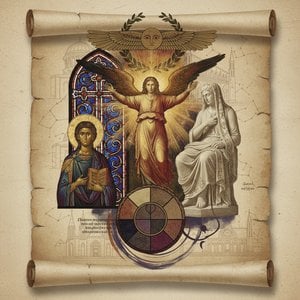
Explore the profound impact of spiritual themes in fine art. From Renaissance iconography to Baroque drama, discover how sacred symbolism and divine visions have shaped art history through a scholarly and reflective lens.

Uncover the hidden meanings behind 10 iconic masterpieces. From Surrealism to Renaissance, explore the stories, techniques, and deep symbolism of world-famous art. Find museum-quality reproductions and curated decor inspiration. Discover all masterpieces on WahooArt.com.

Immerse yourself in the profound legacy of Spanish Baroque art. From the spiritual intensity of Zurbarán to Goya’s emotive genius, explore museum-quality, hand-painted reproductions and bespoke commissions curated for the most discerning global collectors.
 Se i rummet

 Del som kort
 Del
 Detaljer
 Guide


 Download
 Lignende værker
 Røntgenundersøgelse
 Diasshow
 Spørgsmål og svar

 Statistikker


 Vis mere









 Glasmulighed er kun tilgængelig i størrelser under 110 cm


