Giclée- eller lærredstryk i museumskvalitet med hurtig produktion og fleksible muligheder for finish. ( Køb håndmalet maleri Skift til digitalt billede)





























Vælg mellem vores forudindstillede størrelser, der matcher kunstværkets originale proportioner.

Indtast den bredde og højde, du har brug for, så det passer til din ramme eller din væg. Et print kan kun beskæres, aldrig gøres større end selve billedet, så en størrelse med et andet format vil medføre, at dele af motivet går tabt. Vi sender dig en digital mockup til godkendelse, før vi printer noget. Billedet vist på denne side viser ikke den faktiske beskæring — det er kun mockuppen, der gør.
Verdensomspændende levering () på 2 uger i stedet for de sædvanlige 4/5 uger. (15 november)
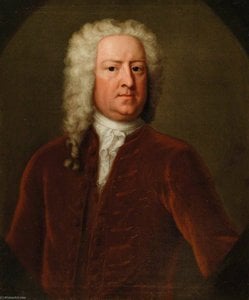
William Pitt
Størrelse på reproduktion
The gaze of William Pitt meets the viewer through this oil on canvas, a work emerging from the studio of John Hoppner. The portrait captures the statesman in a moment of heavy stillness, rendered with a sense of gravity that lingers on the surface. It is a work from circa 1805 or after, a period when the subject's presence in British politics was deeply felt. The scale of the image, measuring 55 1/2 in. x 42 1/2 in. (1410 mm x 1080 mm), gives the figure a physical weight that commands the space around it.
John Hoppner’s studio provides the hand behind this depiction, translating the likeness of the man into a study of light and shadow. The paint sits upon the canvas, building a presence that feels immediate and substantial. Every brushstroke contributes to the quiet intensity of the sitter, holding him in a permanent state of contemplation. The work exists as a direct encounter with a man who shaped the direction of a nation, frozen here in the medium of oil.
The subject emerges from a dark, indistinct background, positioned in a bust-length portrait that feels immediate and heavy with presence. He sits slightly off-center, his gaze directed toward the viewer's left, creating a sense of quiet, internal movement. Light descends from the upper left, carving out the contours of his face and neck with a soft, directional glow. This interplay of light and shadow grants the figure a palpable three-dimensional volume, pulling him forward from the atmospheric gloom behind him.
The color palette remains somber and grounded, relying on a restrained selection of earthy, muted tones. Browns, ochre, and cream dominate the scene, while subtle flesh tones define the skin. There is a tactile quality to the surface, where the texture of the canvas peeks through the layers of paint. The brushwork appears smooth and blended, particularly in the soft transitions of the background and the heavy folds of the clothing, yet it maintains enough definition to trace the sharp structure of the facial features and the weight of the coat.
The origins of this portrait trace back to a private commission by Lord Mulgrave, who sought to capture the likeness of the statesman. The artist began the work in December 1804, and the final brushstrokes were applied on the 28th of October, 1805. This specific version, identified as NPG L267, exists as a studio copy of the original portrait. While the primary work was intended for the Mulgrave family, the demand for the image grew rapidly among the subject's supporters, leading to many bespoke copies being produced by the artist's studio.
The movement of this painting through various collections reflects its enduring presence in British history. It currently resides within the collection of the Tate, though it is frequently seen on loan to the National Portrait Gallery in London. This arrangement allows the work to remain accessible to those tracing the political landscape of the era. The provenance of the piece is deeply intertwined with the social circles of the time, as the portrait's popularity ensured that many versions circulated among the elite of the Regency period.
The portrait stirs a profound tension between those who see its technical brilliance and those who recoil from its unflinching honesty. To some observers, the work represents the artist's finest achievement, a peak of his creative ability. Yet, this praise is met with sharp, visceral condemnation from those who knew the man behind the statesman. One contemporary observer famously dismissed the image as a vile picture, finding the depiction far too harsh to be a true likeness.
The debate centers on the psychological weight carried in the subject's expression. Critics have argued that the face appears anxious and diseased, as if reddened by wine and soured by the heavy burden of disappointment. There is a sense that the portrait captures a man at his breaking point, a version of the statesman that many found difficult to accept. This perceived severity led some to suggest that the likeness was almost too unflattering, questioning if such a grim portrayal should ever have been intended for a man of his standing.
While some find the work's power in its ability to strip away the veneer of political dignity, others see it as a departure from the idealized grace expected in high-society portraiture. The tension remains: is this a profound study of a man weathered by his duties, or a failure to capture the youthful spirit of a leader? The brushstrokes hold both the weight of a statesman's exhaustion and the controversy of a likeness that refuses to look away from the toll of power.
The portrait resides within the National Portrait Gallery in London, United Kingdom. Visitors find the subject waiting for them on the third floor, specifically positioned in Room 18. It exists as a vital part of the National Portrait Gallery collection, though its presence in the gallery is a temporary arrangement. The work is currently on loan from the Tate Gallery, which maintains its primary stewardship.
Walking through the halls of the museum, one encounters this depiction of the statesman in a space dedicated to the faces that shaped a nation. The lighting in the gallery room catches the subtle textures of the oil on canvas, allowing the viewer to observe the heavy shadows and the serious expression of the sitter. It remains a central fixture for those tracing the political history of the United Kingdom through its visual records.
The artist's hand moves through other lives and faces, capturing the essence of the Georgian era with a similar command of light. In one notable work, he presents Mrs. Jordan as Viola in 'Twelfth Night', a piece that highlights his celebrated ability to render women and children. This portrait reveals a specific skill that defined his career, much like the way he handles the textures and shadows in his other commissions. He moves between the heavy gravity of statesmen and the softer, more spirited depictions of his female sitters, always maintaining a sense of physical presence.
His reach extends into the highest circles of British society, where he finds himself painting the very figures who shape the nation. He captures the likeness of the Prince of Wales, a man whose patronage helped secure Hoppner's position among the elite. This ability to navigate the social landscape is evident in his portraits of influential men like Lord Hugh Seymour. Each sitter emerges from the dim, atmospheric backgrounds with a distinct vitality, whether they are members of the royal court or prominent figures of the military and aristocracy.
The artist's brush also finds its way to the faces of those who leave their own marks on history, such as in his portrait of Thomas Williams. Through these various subjects, a pattern of character emerges. He uses chiaroscuro to sculpt forms, pulling his subjects forward from the shadows to create a sense of depth. Whether he is working on a formal bust-length portrait or a more expansive composition, his touch remains loose and free, avoiding a rigid or overly precious finish in favor of a living, breathing likeness.
En reproduktion af "William Pitt" vil passe smukt ind i et Office.
"William Pitt" af John Hoppner har en Classic atmosfære og anbefales til et Office. Stemningen er det, som værket bringer til de omkringliggende omgivelser.
Du kan bestille et tryk af "William Pitt" af John Hoppner direkte på dens Kunstprint i høj kvalitet side: et fine art-print på bomuldscanvas eller arkivbestandigt lærredspapir.

John Hoppner blev født i Whitechapel, London, i 1758 af tyske forældre. Hans mor besad en stilling som en af de tyske tjenestepiger ved det kongelige slot, en forbindelse der fra begyndelsen bragte familien i tæt nærhed af hoffet. Dette tidlige miljø formede hans livsbane, selvom hans oprindelige vej var musikalsk snarere end visuel. Som ung dreng tjente han som korist i det kongelige kapel, en rolle der krævede disciplin, men som i sidste ende ikke kunne fastholde hans interesse over for hans medfødte hang til kunsten.
Hans formelle indtræden i kunstens verden fandt sted i 1775, da han blev optaget på Royal Academy. Han beviste hurtigt sin tekniske dygtighed gennem institutionel anerkendelse. I 1778 modtog han en sølvmedalje for tegning efter levende model, en praktisk validering af hans observationsevner. Ved 1782 havde han sikret sig Akademiets guldmedalje for historiemaleri, en bedrift opnået gennem hans arbejde med King Lear. Denne tidlige succes lagde det tekniske fundament, der var nødvendigt for den portrætkunst af det højere samfund, som skulle komme til at definere hans karriere.
John Hoppner sikrede sin plads i de øverste lag af det britiske samfund ved at indfange ansigtstrækkene hos tidens mest indflydelsesrige skikkelser. Hans evne til at navigere i de højere sociale kredses bestillinger betød, at hans portrætter af prinsen af Wales, hertugen og hertuginden af York, Lord Rodney og Lord Nelson blev ophængt i de storslåede gemakker på St James's Palace. Disse placeringer var ikke blot dekorationer; de var monumentale beviser på hans professionelle status. Selvom hans historiemaleri bragte ham tidlig anerkendelse, var det hans skildringer af kvinder og børn, som kritikerne konsekvent pegede på som hans mest succesfulde og livfulde bidrag til kunsten.
Hans evne til at indfange karakter og sjæl er måske mest tydelig i Mrs. Jordan as Viola in 'Twelfth Night', et værk der i dag findes hos English Heritage i London, Storbritannien. Dette mesterværk demonstrerer netop den særlige tekniske dygtighed, der kom til at definere hans karriere. Men Hoppners virke strakte sig langt ud over lærredet; han var også dybt engageret i tidens litterære kultur. I 1803 udgav han A Series of Portraits of Ladies, og i 1805 havde han udgivet en samling oversættelser af østlige fortællinger på engelsk vers. Disse projekter vidner om en kunstner, hvis indflydelse rakte langt ind i periodens intellektuelle og sociale væv.
Hoppners tekniske identitet er uadskillelig fra hans mesterlige beherskelse af farver. Han blev vidt anset som en fremragende kolorist, der anvendte en sublim kontrol over pigmenterne til at definere sine motiver. Hans tilgang var aldrig stiv eller overdrevent detaljeorienteret på en præcis måde; i stedet var hans penselstrøg karakteriseret ved en vis bredde og frihed. Denne løse teknik tillod ham at bevæge sig ud over ren efterligning og indblæse sine portrætter med en særlig vitalitet, der adskilte hans værker fra de mere rigide akademiske traditioner i samtiden.
Skyggen fra Joshua Reynolds kaster et betydeligt lys over Hoppners metode. Han var stærkt påvirket af Reynolds og adopterede en arbejdsform, der spejlede den etablerede mesters sanselighed. Denne indflydelse er mest synlig i den måde, hans malerier bærer en svag refleksion af Reynolds' charme, især i håndteringen af lyset og den bløde, maleriske atmosfære, der omslutter hans portrætterede. Han kopierede ikke blot stilen, men tilpassede dens principper til at tjene hans egne ekspressive behov.
I praksis resulterede dette i en stil, der balancerede naturalisme med en vis aristokratisk ynde. Han benyttede chiaroscuro til at skulpturere former og trak figurerne frem fra de dunkle baggrunde gennem det dramatiske samspil mellem lys og skygge. Denne teknik var særligt effektiv i hans skildringer af teksturer, såsom de fine detaljer i hår eller de tunge folder i akademiske gevandter. Hans evne til at mestre disse elementer sikrede, at hans portrætter besad en fysisk tilstedeværelse, som stadig er levende og nærværende for det moderne øje.
John Hoppners professionelle liv var præget af en intens og indædt konkurrence med Thomas Lawrence. Denne rivalisering handlede ikke blot om prestige eller ry, men var en direkte kamp om at vinde de britiske eliters gunst og opmærksomhed i London. Spændingen mellem disse to store skikkelser blev endda gjort fysisk mærkbar mellem 1803 og 1809, da de i en periode faktisk delte den samme assistent, Samuel Lane. Dette overlap i deres professionelle kredse understreger, hvor tæt og begrænset det eksklusive portrætmarked var i denne periode.
Hans professionelle netværk strakte sig langt ind i betydningsfulde samarbejder, der berørte de højeste niveauer af britisk kunst. Omkring 1788 bidrog han til et værk af Thomas Gainsborough, hvor han specifikt malede baggrunden til portrættet af Charlotte, grevinde Talbot. Han arbejdede desuden tæt sammen med kobberstikkeren Charles Wilkin for at producere sine portrætserier. Disse partnerskaber vidner om, hvordan hans kunstneriske virke var afhængig af et velstruktureret system af tekniske specialister for at kunne nå ud til et bredere publikum.
John Hoppners tilstedeværelse i store internationale samlinger bekræfter hans enorme rækkevidde langt ud over de britiske øer. I USA finder man to af hans værker i Metropolitan Museum of Art i New York, mens Taft Museum of Art i Cincinnati huser yderligere to eksempler på hans talent. Disse værker giver et direkte indblik i hans exceptionelle evne til at mestre farve og form inden for sin tids aristokratiske portrætkunst.
I Storbritannien er hans eftermæle spredt ud over flere centrale institutioner. English Heritage i London bevarer et særdeles betydningsfuldt værk, nærmere bestemt Mrs Jordan as Viola in 'Twelfth Night', som står som et lysende eksempel på hans mesterskab inden for portrættets kunst. National Maritime Museum i London besidder ligeledes et af hans malerier, hvilket sikrer, at hans indflydelse forbliver synlig i den britiske flåde- og socialhistorie. Derudover findes et værk i samlingen hos National Library of Wales i Aberystwyth.

1758 - 1810 , Storbritannien
 Se i rummet
 Del som kort
 Del
Del
 Detaljer
 Guide
Guide

 Download
 Lignende værker
 Røntgenundersøgelse
 Diasshow
 Spørgsmål og svar
 Statistikker


 Vis mere









 Glasmulighed er kun tilgængelig i størrelser under 110 cm