Se i rummet Se i AR Skift til printsalg Skift til digitalt billede Del som kort
Detaljer Guide Tilføj til favoritter Download Lignende værker Røntgenundersøgelse Diasshow Q&A Statistikker

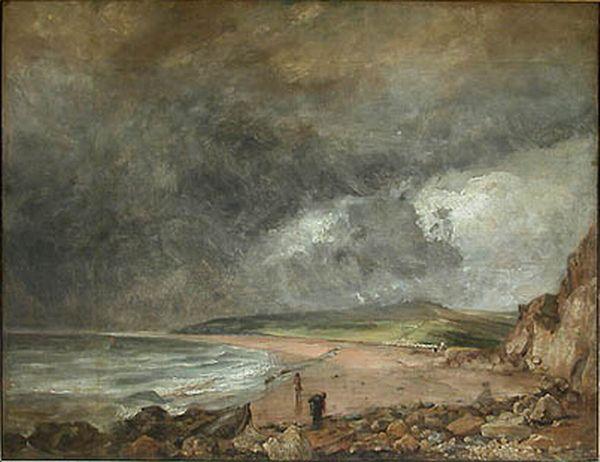
Weymouth Bay with Approaching Storm Hand-painted oil painting reproduction

Experience the raw power of a gathering tempest in John Constable's Weymouth Bay with Approaching Storm, a Romantic masterpiece capturing nature's untamed beauty, now available to bring dramatic elegance to your collection.

Opdag John Constable (1776-1837), den romantiske engelske landskabsmaler, der revolutionerede genren med følelsesfulde billeder af Suffolk & naturen. Udforsk ikoniske værker nu!

Håndlavet oliereproduktion

Håndmalet olie på lærred i din valgte størrelse og ramme, udført efter bestilling af vores kunstnere. ( Skift til printsalg Skift til digitalt billede)

Corner sample of the P118B picture frame: støbt polystyren, 5 cm wide and 3 cm thick
P118B Dkr10
Corner sample of the P118H picture frame: støbt polystyren, 5 cm wide and 3 cm thick
P118H Dkr10
Corner sample of the P118W picture frame: støbt polystyren, 5 cm wide and 3 cm thick
P118W Dkr10
Corner sample of the P438Z picture frame: støbt polystyren, 5.5 cm wide and 3.5 cm thick
P438Z Dkr10
Corner sample of the P508JH picture frame: støbt polystyren, 7 cm wide and 3.5 cm thick
P508JH Dkr12
Corner sample of the P508YH picture frame: støbt polystyren, 7 cm wide and 3.5 cm thick
P508YH Dkr12
Corner sample of the P805H picture frame: støbt polystyren, 5 cm wide and 3.5 cm thick
P805H Dkr10
Corner sample of the P805Z picture frame: støbt polystyren, 5 cm wide and 3.5 cm thick
P805Z Dkr10
Corner sample of the P919BZ picture frame: støbt polystyren, 7 cm wide and 3.5 cm thick
P919BZ Dkr10
Corner sample of the P919G picture frame: støbt polystyren, 7 cm wide and 3.5 cm thick
P919G Dkr10
Corner sample of the P919XJ picture frame: støbt polystyren, 7 cm wide and 3.5 cm thick
P919XJ Dkr10
Corner sample of the P959ZH picture frame: støbt polystyren, 5 cm wide and 3 cm thick
P959ZH Dkr10
Corner sample of the P968JZ picture frame: støbt polystyren, 6 cm wide and 4 cm thick
P968JZ Dkr12
Corner sample of the W106C picture frame: massivt træ, 5 cm wide and 3 cm thick
W106C Dkr8
Corner sample of the W218G picture frame: massivt træ, 5 cm wide and 3 cm thick
W218G Dkr10
Corner sample of the W218JH picture frame: massivt træ, 5 cm wide and 3 cm thick
W218JH Dkr8
Corner sample of the W218Y picture frame: massivt træ, 5 cm wide and 3 cm thick
W218Y Dkr10
Corner sample of the W307PJ picture frame: massivt træ, 6 cm wide and 3 cm thick
W307PJ Dkr10
Corner sample of the W316G picture frame: massivt træ, 6 cm wide and 3 cm thick
W316G Dkr10
Corner sample of the W316PJ picture frame: massivt træ, 6 cm wide and 3 cm thick
W316PJ Dkr8
Corner sample of the W316Y picture frame: massivt træ, 6 cm wide and 3 cm thick
W316Y Dkr10
Corner sample of the W398PJ picture frame: massivt træ, 5 cm wide and 3 cm thick
W398PJ Dkr8
Corner sample of the W4111J picture frame: massivt træ, 6.5 cm wide and 3.5 cm thick
W4111J Dkr10
Corner sample of the W500HY picture frame: massivt træ, 7 cm wide and 5 cm thick
W500HY Dkr15
Corner sample of the W500JH picture frame: massivt træ, 7 cm wide and 5 cm thick
W500JH Dkr15
Corner sample of the W692G picture frame: massivt træ, 8 cm wide and 4 cm thick
W692G Dkr12
Corner sample of the W849H picture frame: massivt træ, 5 cm wide and 3 cm thick
W849H Dkr8
Corner sample of the W940BG picture frame: massivt træ, 7.5 cm wide and 4.5 cm thick
W940BG Dkr15
Corner sample of the W953PJ picture frame: massivt træ, 6 cm wide and 3.5 cm thick
W953PJ Dkr8

Standardstørrelse
speciallavet
CM
INCH

Vælg mellem vores forudindstillede størrelser, der matcher kunstværkets originale proportioner.

bredde
højde

Indtast den bredde og højde, du har brug for, så det passer til din ramme eller din væg. Da dette er håndmalet, kan kunstneren ved en anden form på størrelsen male lidt mere rundt om billedet eller skære lidt væk — det er op til dig. Vi sender dig et digitalt mockup til godkendelse, før maleriet påbegyndes. Billedet, der vises på denne side, viser ikke det endelige resultat — det er kun mockuppet, der gør.

Eksempler på hvad der kan ændres: Udskift ansigt med kundens eget foto; Tilføj kæledyr (f.eks. udskift kat med hund); Inkluder en skjult besked i baggrunden; Ændr baggrundslandskab eller elementer.
Efter bestilling vil WahooArt.com team sende en e-mail til kunden for at indhente instruktioner og fremsende et udkast til gennemgang

Verdensomspændende levering () på 3-4 uger i stedet for de standard 5 uger. (30 oktober). Ingen kompromiser med kvaliteten.

Gratis ekspresforsendelse til hele verden
Lærred af linned i høj kvalitet
Fuld transportforsikring
Garanti for refusion af told og importafgifter
Garanti for præcis farvegengivelse
100 dages returret ved fabrikationsfejl
100% fuld returret
Mængderabat ved flere køb

Samlet pris

Dkr 1802

Weymouth Bay with Approaching Storm

Reproduktionsmetode

Størrelse på reproduktion

-

Samlet pris

Dkr 1802

Hurtige fakta

  • notable elements: Turbulent water, crashing waves, dark clouds, chiaroscuro
  • style: Landscape painting, Seascape
  • location: Louvre, Paris (one version); National Gallery, London (another version)
  • movement: Romanticism
  • subject: Seascape, approaching storm, coastal view

Kunstquiz

Der er kun ét korrekt svar på hvert spørgsmål.

Spørgsmål 1:
John Constable is most renowned for his paintings of what type of scenery?
Spørgsmål 2:
What artistic technique does the description highlight as being prominently used in 'Weymouth Bay with Approaching Storm' to create depth and drama?
Spørgsmål 3:
To what art movement is John Constable generally associated?
Spørgsmål 4:
The painting depicts a scene with an approaching storm. What mood or feeling does the artist evoke through this depiction?
Spørgsmål 5:
According to the provided information, where can versions of 'Weymouth Bay with Approaching Storm' be found?

A Tempestuous Vision: Unveiling John Constable’s ‘Weymouth Bay with Approaching Storm’

John Constable stands as a titan of Romantic landscape painting, celebrated for his deeply personal and evocative depictions of the English countryside. While often associated with the tranquil scenes of Suffolk, *‘Weymouth Bay with Approaching Storm’* reveals another facet of his genius – a masterful ability to capture the raw power and dramatic beauty of the sea. This work isn't merely a seascape; it is an emotional experience rendered in oil paint.

Decoding the Scene: Subject & Composition

The painting presents a dynamic view of Weymouth Bay, Dorset, as a storm gathers on the horizon. Unlike idealized depictions of calm seas, Constable confronts us with nature’s untamed energy. The composition is skillfully balanced between the expansive sky dominating the upper portion and the turbulent waters below. Figures populate the beach – small in scale relative to the vastness of their surroundings – suggesting both humanity's connection to, and vulnerability before, the forces of nature. A distant boat adds a sense of scale and hints at the perils faced by those who venture onto the water.

Constable’s Technique: Brushwork & Palette

Constable’s signature technique is brilliantly on display here. His brushwork is loose, expressive, and remarkably fluid, particularly in his rendering of the waves and clouds. He doesn't strive for photographic realism but rather seeks to convey *the feeling* of a storm brewing. The artist employs a nuanced palette, dominated by greys, blues, and whites, punctuated by darker tones that foreshadow the approaching tempest. This masterful use of chiaroscuro – the dramatic contrast between light and dark – creates depth, atmosphere, and heightens the emotional impact of the scene.

Historical Context & Romantic Sensibilities

Painted between 1816-1817 during his honeymoon in Osmington, near Weymouth, this work reflects the core tenets of the Romantic movement. Rejecting the Neoclassical emphasis on order and reason, Romantics prioritized emotion, intuition, and the sublime power of nature. Constable’s painting embodies these ideals; it's not simply a representation of a coastal scene but an exploration of awe, fear, and the overwhelming grandeur of the natural world. It also demonstrates his departure from traditional marine painting conventions, focusing on atmospheric effects rather than precise topographical detail.

Symbolism & Emotional Resonance

The approaching storm can be interpreted as symbolic of life’s inevitable challenges and uncertainties. The small figures on the beach represent humanity's resilience in the face of adversity. Constable doesn’t offer a comforting or idyllic vision; instead, he presents an honest portrayal of nature’s ambivalent power – beautiful yet potentially destructive. *‘Weymouth Bay with Approaching Storm’* evokes feelings of both trepidation and exhilaration, reminding us of our place within the larger cosmic order.

A Timeless Masterpiece for Today's Spaces

This painting is more than just a historical artifact; it’s a powerful work of art that continues to resonate with contemporary audiences. Its dramatic composition and evocative atmosphere make it an ideal focal point for any interior space. The cool tones and dynamic energy would complement modern or traditional décor, adding depth and sophistication. A high-quality reproduction from WahooArt allows you to bring the emotional power and artistic brilliance of Constable’s masterpiece into your home.
  • Ideal for living rooms, studies, or hallways seeking a touch of dramatic elegance.
  • Complements both contemporary and traditional interior design styles.
  • A conversation starter that invites contemplation and appreciation of the natural world.

Spørgsmål og svar

Er "Weymouth Bay with Approaching Storm" af John Constable et velkendt kunstværk?

"Weymouth Bay with Approaching Storm" er klassificeret som Iconic.

Hvilken gennemgående nuance præger "Weymouth Bay with Approaching Storm" af John Constable?

Den dominerende nuance i "Weymouth Bay with Approaching Storm" af John Constable er Green to Violet Spectrum. Nuancen er den underliggende tone i farvepaletten.

Fra hvilket land stammer Romantic Landscape Painting-værket "Weymouth Bay with Approaching Storm"?

"Weymouth Bay with Approaching Storm" blev skabt af John Constable, født i Storbritannien, inden for Romantic Landscape Painting-bevægelsen. Kunstnerens oprindelse forbinder værket med Romantic Landscape Painting, som det praktiseres af kunstnere fra Storbritannien.


Kunstnerbiografi

A Life Rooted in the English Landscape

John Constable, født i 1776 i den idylliske Suffolk-landsby East Bergholt, var langt fra blot en maler af landskaber; han var en digter af jorden, der oversatte dens subtile stemninger og vedvarende skønhed på lærredet med en hidtil uset følelsesmæssig dybde. Hans far, en velhavende kornhandler, der ejede både Dedham Vale og møllerier langs River Stour, leverede ikke blot økonomisk sikkerhed, men også selve emnet for konstables kunstneriske liv. Denne tidlige indlevelse i det landlige liv – den langsomme rytme af landbrugsaktiviteter, det evigt skiftende lys over marker og vand, de intime detaljer i naturen – blev uomgængeligt indgraveret i hans sansninger. Selvom han oprindeligt var tiltænkt at følge sin far ind i erhvervet, styrede en spirende passion for kunst, dyrket af lokale støtter som George Beaumont, der introducerede ham til værkerne hos Claude Lorrain, ham mod en anden vej. Konstables kunstneriske rejse var ikke umiddelbar; det var en gradvis udfoldelse, formet af omhyggelig observation og et vedvarende ønske om at fange ikke kun *hvad* han så, men *hvordan* det føltes at være til stede i landskabet.

Breaking with Convention: A New Vision of Nature

Konstables kunstneriske udvikling var præget af en bevidst afvisning af gældende akademiske konventioner. Utilfreds med de idealiserede og ofte teatralske landskaber, der blev foretrukket af Royal Academy, søgte han i stedet efter en sandfærdig repræsentation af naturen, fortryllet med personlig følelse. Han var ikke interesseret i store historiske fortællinger eller mytologiske scener; hans fokus forblev fast på det velkendte landskab omkring ham. Denne forpligtelse til at skildre almindelige emner – høbaler, landbrugsbygninger, landsbysliv – blev oprindeligt mødt med modstand fra kritikere, der fandt hans arbejde for simpelt og manglende ambition. Alligevel holdt Constable ud, drevet af en overbevisning om, at skønhed lå i det hverdagsagtige. Han bane vejen for en teknik med *plein air*-maleri, hvor han ventured udendørs for direkte at observere og fange de flygtende effekter af lys og vejr. Denne direkte involvering med naturen tillod ham at indgyde sine lærred med en umiddelbarhed og vitalitet, der tidligere ikke var set i britisk landskabskunst. Hans penselstrøg blev mere løse og udtryksfulde, idet han brugte impasto – tykke lag maling – til at skabe tekstur og formidle en følelse af bevægelse og atmosfære. Han optog ikke blot det, han så; han oversatte sin følelsesmæssige reaktion på jorden til visuel form.

Iconic Works and Lasting Influence

Konstables mest berømte værker står som vidnesbyrd om hans unikke vision. The Hay Wain (1821), måske hans mest genkendelige maleri, skildrer en typisk landskabs scene på River Stour og fanger den ro og harmoni, der er forbundet med landbrugs livet. Hadleigh Castle (1829) viser hans dramatiske brug af lys og atmosfæriske effekter, og forvandler et forfaldent ruiner til et kraftfuldt symbol på tidens gang. Serien af malerier, der skildrer Salisbury Cathedral from the Meadows (1831), demonstrerer hans evne til at vække forskellige stemninger og tider på dagen, og afslører katedralen som en integreret del af det naturlige landskab. Netley Abbey (1824), med sin beskrivende skildring af arkitektonisk pragt midt i den vilde natur, illustrerer hans evne til at blande menneskelig skabelse med naturens skønhed. På trods af den indledende modstand fra anerkendte kunstnere, opnåede Constable betydelig ros i Frankrig, hvor hans innovative teknikker og følelsesmæssige dybde resonerede dybt hos kunstnere, der søgte en mere naturalistisk tilgang til landskabsmaleri. Han påvirkede markant Barbizon-skolen, en gruppe franske malere, der delte hans engagement i *plein air*-maleri og direkte observation af naturen.

Personal Life & Final Years

Konstables personlige liv var præget af både glæde og sorg. Han giftede sig med Maria Bicknell i 1816, og de fik syv børn, men desværre overlevede ikke alle barndommen. Hans ægteskab gav ham følelsesmæssig støtte, men også økonomisk pres. Han blev valgt til Royal Academy i 1829, fortsatte dog med at møde kritik fra nogle sider, især med hensyn til hans ukonventionelle teknikker. Hans senere år var skyggelagt af Marias forværrede helbred og hendes endelige død i 1828, en begivenhed, der dybt påvirkede ham. På trods af disse vanskeligheder fortsatte Constable med at male, indtil hans egen død den 31. marts 1837. Han efterlod sig et rigt kunstnerisk arv – et vidnesbyrd om hans urokkelige engagement i at fange skønheden og den følelsesmæssige dybde af det engelske landskab. Hans malerier er fortsat kraftfulde evokationer af en forgangne æra, der inviterer seerne til at opleve landskabet gennem hans unikt følsomme øjne.

Key Influences

Constable’s artistic development was profoundly shaped by a number of key influences. Firstly, his early work was heavily influenced by the landscape paintings of Gainsborough and the 17th-century Dutch masters, particularly Ruisdael. He admired their ability to capture atmospheric effects and convey a sense of light and space. Secondly, he drew inspiration from the writings of Romantic poets like Wordsworth, who emphasized the importance of direct experience and emotional response in art. Thirdly, his exposure to the works of Claude Lorrain at an early age instilled in him a love for idealized landscapes and classical composition. Finally, his friendship with George Beaumont introduced him to a network of artists and collectors who fostered his artistic development and provided him with opportunities to study nature firsthand.

Legacy

John Constable’s historical significance lies not only in his artistic innovations but also in his profound impact on the development of landscape painting. He challenged academic conventions, elevated the status of ordinary subjects, and paved the way for a more personal and emotionally expressive approach to art. His emphasis on direct observation, atmospheric effects, and truthful representation of nature anticipated many of the concerns of later Impressionist painters. He demonstrated that landscape could be a vehicle for profound emotional expression, capable of evoking feelings of nostalgia, tranquility, and awe.

John Constable

John Constable

1776 - 1837 , Storbritannien

Kort om kunstneren

  • Artistic Movement Or Style: Romantik
  • Artists Or Movements Influenced By This Artist: ['Barbizon Skolen']
  • Artists Who Influenced This Artist:
    • Claude Lorrain
    • Ruisdael
  • Date Of Birth: 11. juni 1776
  • Date Of Death: 31. marts 1837
  • Full Name: John Constable
  • Nationality: Britisk
  • Notable Artworks:
    • The Hay Wain
    • Hadleigh Slot
    • Salisbury Katedral
  • Place Of Birth: East Bergholt, UK
Udforsk kunstværker organiseret efter temaer, stilarter og karakteristika.