Om kunstneren
A Brooklyn Beginning and the Rise of SAMO
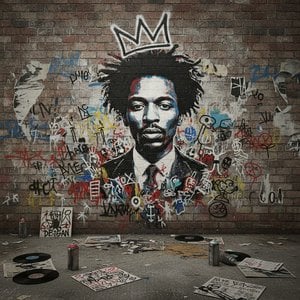
Jean-Michel Basquiat brød igennem 1980’ernes kunstscene som en kraftfuld og intellektuel figur, en indflydelse der stadig resonerer dybt i dag. Han blev født den 22. december 1960 i Brooklyn, New York, til en haitansk far og en puertoricansk mor, og hans barndom var et levende tæppe vævet af forskellige kulturer og sprog – spansk, engelsk og fransk fyldte hjemmet. Denne flersprogede baggrund, kombineret med sin mors dedikation til kunst – hun tilmeldte ham som Junior Member i Brooklyn Museum i seksårsalderen – lagde et tidligt fundament for hans kreative rejse. Alligevel var Basquiats liv ikke uden udfordringer; en bilulykke som otteårig resulterede i en splenektomi og en periode med bedring, hvor han blev betaget af en kopi af *Gray’s Anatomy*, der blev givet til ham af sin mor. Bogen’s detaljerede illustrationer ville senere dybt påvirke den anatomiske billedlighed, der ofte optræder i hans arbejde, og blev et foruroligende motiv gennem hele hans karriere. Før han opnåede anerkendelse som maler, gjorde Basquiat sit spor under pseudonymet SAMO, sammen med sin ven Al Diaz. Sammen dækkede de Lower Manhattan med kryptiske, poetiske graffiti – epigrammer, der udfordrede samfundets normer og stillede spørgsmålstegn ved etablerede magtstrukturer. Disse var ikke blot tags; de var tankevækkende udsagn, der fangede ånden i den spirende hip-hop kultur og New Yorks gritty energi i 1970’erne. SAMO var mere end bare gadekunst; det var en filosofisk intervention, en visuel forstyrrelse designet til at provokere dialog og udfordre opfattelser.
Neo-Expressionisme og Kunstnerisk Innovation
I de tidlige 1980'ere overgik Basquiat fra graffiti til lærred, og opnåede hurtigt anerkendelse i den New York kunstverden. Hans malerier kunne ikke let kategoriseres; de var en unik syntese af indflydelser, der spændte fra Abstrakt Ekspressionisme til tribal kunst, tegneserier og historiske malerier. Han blev en central figur i Neo-Expressionismen, selvom han modstod nem etikettering. Hans lærredspersoner er karakteriseret ved en frenetisk energi – et kaotisk lag af tekst, symboler, figurer og farver. Basquiats teknik var bevidst rå og improvisatorisk, ofte med collage, skrabning og dryppende maling. Han var ikke interesseret i teknisk perfektion; han søgte snarere at udtrykke følelser, ideer og social kommentar ved hjælp af en visceral umiddelbarhed. Gentagne motiver – kroner, skaller, anatomiske diagrammer, ord krydset ud eller gentaget – blev hans signatur visuelle sprog. Kronen, måske hans mest ikoniske symbol, er blevet fortolket som en repræsentation af aspiration, selvmytologisering og de komplekse identiteter i den afroamerikanske diaspora. Hans arbejde har ofte kæmpet med temaer om rigdom versus fattigdom, integration versus segregation og de interne kampe hos den enkelte i samfundet. Malerier som *Piscine versus the Best Hotels (or various loin)* eksemplificerer hans evne til at placere tilsyneladende disparate elementer – luksus og deprivation, skønhed og forfald – og skaber en kraftfuld kommentar til sociale uligheder. Basquiats kunst var ikke blot hvad han afbildede, men hvordan han afbildede det, hvilket skabte et visuelt sprog, der var både dybt personligt og universelt resonansfuldt.
Samarbejde, Anerkendelse og en Tragisk Afslutning
Basquiats fremgang var meteortisk. I 1982, kun tyve år gammel, deltog han i Documenta i Kassel, Tyskland, og blev den yngste kunstner nogensinde til at udstille der. Det følgende år viste han sit arbejde på Whitney Biennial, hvilket yderligere befæstede hans position inden for kunstmiljøet. Et afgørende øjeblik kom med hans venskab og kunstneriske samarbejde med Andy Warhol. De to kunstnere udfordrede hinanden kreativt, udforskede temaer om forbrugerisme, berømmelse og massemedier i en række samarbejdsmaleri. Selvom deres partnerskab var komplekst og nogle gange præget af spændinger, har det utvivlsomt løftet begge kunstneres profiler. På trods af at opnå international anerkendelse og økonomisk succes kæmpede Basquiat med presset fra berømmelsen og sin fortsatte kamp med afhængighed. Hans arbejde blev mere introspektivt og mørkere, da han kæmpede med personlige dæmoner og samfundsmæssige uretfærdigheder. Tragisk døde Jean-Michel Basquiat den 12. august 1988 i en alder af tyve syv fra en overdosis heroin.
Arv og Vedvarende Indflydelse
I de senere år er Basquiats ry kun vokset. Hans kunst fortsætter med at fange publikums opmærksomhed med sin rå energi, intellektuelle dybde og urokkelige sociale kommentarer. I 2017 blev *Untitled* (1982), et kraftfuldt billede af en skalle, solgt på auktion for 110,5 millioner dollars på Sotheby's, hvilket satte en ny rekord for enhver amerikansk kunstner på en auktion – et vidnesbyrd om den vedvarende værdi og det kulturelle betydning af hans arbejde. Basquiats indflydelse kan ses i arbejdet hos utallige samtidskunstnere, især dem, der udforsker temaer som identitet, race og social retfærdighed. Han banede vejen for en mere mangfoldig og inkluderende kunstverden, udfordrede traditionelle opfattelser af kunstnerisk udtryk og repræsentation. Hans evne til at blande høje og lave kulturer – graffiti, fine kunst, musik, poesi – fortsætter med at inspirere kunstnere i dag. Han var ikke blot en kunstner; han var en kulturel kommentator, en digter og en visionær, der efterlod et uforgængeligt aftryk på kunstverdenen og ud over den. Hans malerier er ikke blot æstetiske objekter; de er vinduer ind i en kompleks tankegang, der kæmper med dybe spørgsmål om menneskeheden, samfundet og søgen efter mening i en kaotisk verden.



 Se i rummet
 Bestil håndmalet reproduktion
 Send
Send Del
Del
 Detaljer
 Guide
Guide

 Download
 Lignende værker
 Røntgenundersøgelse
 Se diasshow
 Statistik


 Læs mere






































 Glasmulighed er kun tilgængelig i størrelser under 110 cm