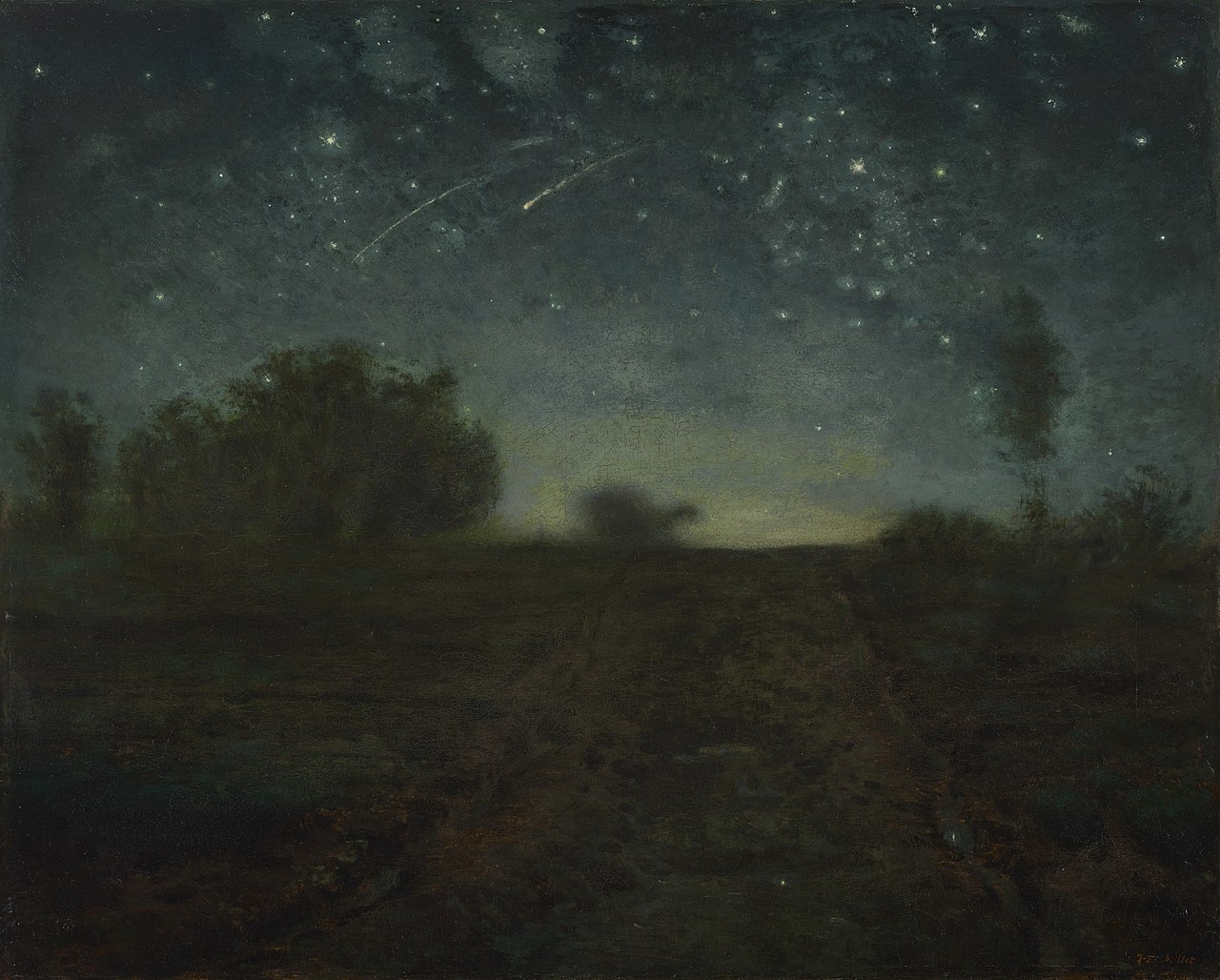
Jean-François Millet: En Mandes Ånd i Maleriets Hjerte
Jean-François Millet, en mand hvis navn er synonymt med den ydmyge landbefolkningens værdighed og Realismens spirende kraft i det 19. århundredes Frankrig, blev ikke født ind i kunstnerisk privilegium, men snarere i selve den verden, han ville forvandle til malerier. Den 4. oktober 1814 ankom han til Gruchy, en lille normandisk landsby dybt rodfæstet i landbrugstraditioner. Denne baggrund var ikke blot et kulisse for hans liv; det *var* hans liv, der formede hans vision og indgydede hans kunst med en autenticitet, der resonerede dybt hos et samfund under hastig forandring. Hans forældre, Jean-Louis-Nicolas og Aimée-Henriette-Adélaïde Henry Millet, var selv landmænd, og de overførte en dyb forbindelse til jorden og dens arbejdere til deres søn. Ungdommens uddannelse kom ikke kun fra formel skolegang – faciliteret af lokale præster, der genkendte hans intellektuelle potentiale – men også gennem rytmen i landbrugsarbejdet: såning, høst, slåning, opgaver, der senere ville blive centrale motiver i hans malerier. Denne intime viden var ikke blot observationsbaseret; det var en visceral forståelse af hårdt arbejde og udholdenhed.
Fra Akademiske Ambitioner til Landlivets Åbenbaring
Millets kunstneriske rejse begyndte med formel træning, først under portrætmaleren Bon Du Mouchel i Cherbourg, derefter med Théophile Langlois de Chèvreville, en elev af Baron Gros. I 1837 tog han til Paris og blev optaget på den prestigefyldte École des Beaux-Arts, hvor han studerede under Paul Delaroche. De akademiske forventninger ved Salonsystemet viste sig dog kvælende. Tidlige succeser fulgtes af afvisninger, og Millet kæmpede med kunstnerisk disillusionment. Et vendepunkt kom i 1840'erne – præget af personlig tragedie – tabet af sin kone, Pauline-Virginie Ono – og en voksende utilfredshed med de dominerende romantiske fremstillinger af landbefolkningen. Han begyndte at afvise idealiserede pastoralscener og søgte i stedet at portrættere landlivets eksistens med upartisk ærlighed. Denne udvikling blev yderligere forstærket ved hans tilknytning til kunstnere som Correa Benito Rebolledo, Narcisse Diaz, Charles Jacque og Théodore Rousseau, der udgjorde kernen i Barbizon-skolen. Disse malere delte et engagement i *plein air* – at male direkte fra naturen – og en afviselse af akademisk kunstnerisk kunstighed. Millets flytning til Barbizon i 1849 markerede et afgørende brud med Pariss konventioner og en omfavnelse af hans kunstneriske skæbne, dybt forankret i de landskaber og liv omkring ham.
Poesiens Arbejde: Temaer og Teknikker
Millets oeuvre er karakteriseret ved en dyb medfølelse med arbejderklassen, især landarbejdere. Han portrætterede ikke blot deres arbejde; han forhøjede det til et niveau af værdighed og åndelig betydning, der hidtil var uset i kunsten. Hans malerier er ikke sentimental idealisering, men snarere ærlige fremstillinger af hårdt arbejde, udholdenhed og stille hengivenhed.
The Gleaners (1857) er måske et af hans mest ikoniske værker. De tre kvinder, der portrætteres i maleriet, er ikke romantiseret figurer; de er arbejdere, bøjet under anstrengelsen, men med en stille værdighed, der vækker respekt.
The Angelus (1850-1861) er et andet mesterværk, der fanger et øjeblik af dyb åndelighed – et landarbejderepar, der holder pause for at bede ved solnedgang – og transformerer en almindelig handling til noget helligt.
The Sower (1850) er måske hans mest genkendelige billede, der repræsenterer den cykliske natur af landbrugsarbejdet og menneskehedens forbindelse til jorden. Teknisk set trådte Millet ind under påvirkning af de hollandske mestre, især deres mesterlige brug af lys og skygge, og fra klassisk skulptur, der er tydelig i figurenes monumentale kvalitet. Han anvendte en begrænset palet, der fokuserede på jordfarver, der afspejlede landskabets farver, og byggede lag efter lag for at skabe en følelse af tekstur og dybde.
Et Varigt Arv: Millets Indflydelse og Historiske Betydning
Jean-François Millet døde i Barbizon den 20. januar 1875, og efterlod sig et værk, der dybt påvirkede kunstens forløb. Han spillede en afgørende rolle i at etablere Realisme som en dominerende kraft i maleriet og udfordrede konventionerne i akademisk kunst og banede vejen for fremtidige bevægelser som Impressionisme og Social Realisme. Hans fokus på hverdagsliv og sociale spørgsmål resonerede med kunstnere, der søgte at skildre verden omkring dem med ærlighed og autenticitet. Hans indflydelse spredte sig ud over maleriet; hans billeder blev symboler på landlig dyd og arbejderklassens solidaritet, hvilket inspirerede forfattere, digtere og politiske tænkere. Kunstnere som Correa Benito Rebolledo fortsatte med at udforske temaer om landliv og social retfærdighed, direkte påvirket af Millets eksempel. I dag fortsætter Millets malerier med at fange publikums opmærksomhed med deres tidløse skønhed, følelsesmæssige dybde og vedvarende budskab om menneskelig værdighed. Hans kunst tjener som en kraftfuld påmindelse om, at selv i mødet med vanskeligheder er der værdighed, udholdenhed og dyb åndelig betydning at finde i de mest simple liv.
Vigtige Værker
- The Gleaners (1857): En rørende fremstilling af kvinder, der samler rester efter høsten.
- The Angelus (1850-1861): Et symbol på landlig pietet og et øjeblik af stille hengivenhed.
- The Sower (1850): Et ikonisk billede, der repræsenterer den cykliske natur af landbrugsarbejdet.
- Man with a Hoe: En kraftfuld fremstilling af fysisk anstrengelse og menneskelig udholdenhed.
- Harvesters Resting: Fanger et øjebliks hvil i midten af anstrengende arbejde.
- Woman Baking Bread: En portrættering af husarbejde, der er fyldt med værdighed.



 Se i fuld skala
 Køb håndlavet maleri
 Del
Del Del
Del
 Detaljer

 Download
 Lignende værker
 Røntgenundersøgelse
 Diasshow
 Statistik


 Se mere






































 Glasmulighed er kun tilgængelig i størrelser under 110 cm