Få en printklar fil, der rækker langt ud over web-forhåndsvisningen. Hvert digitalt billede, vi sælger, stammer fra en højopløst master i vores database — typisk mellem 5.000 og 15.000 pixels i bredden — så du med selvtillid kan printe stort, beskære tæt eller gengive fine detaljer.
Ingen fil forlader vores studie uden at være blevet behandlet. En digital ekspert kontrollerer farverne i forhold til det originale maleri og korrigerer dem efter behov, hvorefter klarhed og detaljer forbedres med professionelle retoucheringsværktøjer — altid med fuld respekt for kunstnerens penselstrøg og stil. Resultatet er et billede, der ligner selve maleriet, og ikke blot et scannet billede med et filter.
Du godkender først, når du er tilfreds: Vores ekspert sender billedet til din gennemgang via e-mail inden for 72 timer. Ikke tilfreds? Bed om rettelser eller forbedringer, eller anmod om en refundering, hvis kvaliteten ikke lever op til forventningerne.
Dette er den kvalitet, som forlag, designstudier, gallerier og trykkerier stoler på.
Download en højopløselig fil til personlig fremvisning, print og kreative projekter. ( Skift til printsalg Køb håndmalet maleri)
Når du vælger WahooArt.com, får du ikke blot et billede – du modtager et professionelt optimeret digitalt kunstværk, skabt med præcision og sikret med en tilfredshedsgaranti. Her er alt, hvad din ordre automatisk indeholder:
Din højtopløselige digitale billedfil sendes til din e-mail inden for 72 timer efter bestilling – klar til øjeblikkelig brug.
Dit kunstværk optimeres professionelt ved hjælp af avancerede AI-værktøjer og manuel redigering, hvilket sikrer maksimal detaljegrad, klarhed og farvenøjagtighed.
Har du ved en fejl slettet eller mistet din fil? Ingen bekymring – vi sender den igen til enhver tid, helt gratis.
Nyd dit kunstværk med det samme uden told, afgifter eller leveringsgebyrer – digitale downloads er altid skattefrie.
Vi sikrer, at dit digitale billede gengiver de originale farver så præcist som muligt ved hjælp af professionelle værktøjer og farvestyring.
Hvis du ikke er tilfreds med dit digitale billede, vil vi revidere det eller refundere 100% inden for 100 dage – uden spørgsmål.
Ik tilfreds? Få fuld refusion inden for 100 dage efter modtagelse af din digitale fil – uden spørgsmål.
Køb 3 billeder, spar 10% - Køb 5, spar 15% - Køb 10+, spar 20%. Ideelt til kreative projekter, gallerier og bureauer.
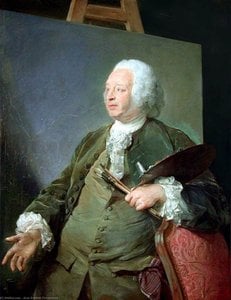
The Self-Portrait by Jean-Baptiste Greuze, a renowned French painter, offers an intimate and compelling view of the artist himself. Created in 1785, this oil on canvas painting (measuring 73 x 59 cm) resides within the esteemed Musée du Louvre in Paris, France. More than just a likeness, it's a study of character and introspection, reflecting the artistic sensibilities of its time.
Jean-Baptiste Greuze was a pivotal figure in French painting during the late 18th century. His style is characterized by a delicate balance between Rococo elegance and emerging Neoclassical ideals. While he initially gained recognition for his genre scenes depicting everyday life, this self-portrait showcases a more formal approach, influenced by the clarity and precision of Neoclassicism. You can see echoes of artists like Jacques-Louis David in the composition's structure and attention to detail. Greuze’s mastery lies in his ability to render textures with remarkable realism, using soft, golden light to create a sense of warmth and intimacy while maintaining a dignified composure.
The self-portrait depicts Greuze dressed in a dark coat with a high collar, paired with a crisp white shirt and a neatly tied cravat. His expression is serious, almost contemplative, conveying an air of quiet confidence and perhaps a touch of melancholy. The background is deliberately muted – a soft brown hue that doesn't distract from the subject but rather serves to highlight Greuze’s figure. The painting demonstrates a skillful use of chiaroscuro, the dramatic interplay of light and shadow, which adds depth and volume to his face and clothing. Notice the meticulous attention paid to the texture of the fabric – the subtle sheen of the shirt, the rich weave of the coat – all rendered with impressive accuracy. The artist’s hand is evident in the smooth blending of colors and the careful modeling of forms.
Beyond a simple portrait, Greuze's self-portrait offers insights into the artistic climate of late 18th-century France. The formal attire suggests a desire to be recognized as a serious artist, aligning himself with the established traditions of portraiture while subtly hinting at his evolving style. The era was one of significant social and political change, leading up to the French Revolution. While this painting doesn't explicitly depict revolutionary themes, it reflects a sense of introspection and quiet dignity that characterized many artists during this period. The choice to portray himself in a moment of contemplation suggests an artist deeply engaged with his craft and aware of his place within art history. The influence of other portraitists like George Romney is also apparent in the focus on capturing the essence and character of the sitter.
Greuze’s Self-Portrait remains a compelling testament to his skill as an artist and provides a fascinating glimpse into the life of one of France's most important painters. It is a work that continues to resonate with viewers today, offering a moment of quiet reflection on artistry, identity, and the passage of time. For those interested in exploring more of Greuze’s works or learning about other artists, Jean-Baptiste Greuze's Self-Portrait is an excellent starting point. The Musée du Louvre also houses an impressive collection of artworks, including pieces by Peter Paul Rubens.
Nej – kunstværket opbevares i udlandet. Jean-Baptiste Greuze er født i Frankrig, og museet, der opbevarer originalen af "Self-Portrait", ligger i France.
"Self-Portrait" af Jean-Baptiste Greuze er kunsthistorisk klassificeret som Neoclassical fra Early Modern-perioden.
For at se en forhåndsvisning af en reproduktion af "Self-Portrait" af Jean-Baptiste Greuze, skal du åbne værkets Forhåndsvisning-side.


1725 - 1805 , Frankrig
 Se i rummet
 Del som kort
 Del
Del
 Detaljer
 Guide
Guide

 Download
 Lignende værker
 Røntgenundersøgelse
 Diasshow
 Spørgsmål og svar
 Statistikker


 Vis mere