James Abbott McNeill Whistler: En Pionerers Kamp for Kunstens Frihed
James Abbott McNeill Whistler, født i Lowell, Massachusetts i 1834, var en kunstner der konstant stod over for konventionerne – en maler der kæmpede for “kunst for kunstens skyld” i en æra, hvor moralisering blev betragtet som kunstens primære formål. Hans tidlige liv, præget af hyppige flytninger på grund af hans fars arbejde som jernbaningeniør, indgydte ham en følelse af tilpasningsevne og eksponering for forskellige miljøer. Et kort, ulykkeligt forsøg på at studere ved West Point, efterfulgt af arbejde med den amerikanske kyst- og geodetiske undersøgelse – selvom det forsinkede hans kunstneriske udvikling – slukte ikke hans brændende passion for kunst. Disse formative år var kendetegnet af en naturlig talent for tegning og et bestemt ønske om at skabe en karriere som professionel kunstner, en stræben der i sidste ende førte ham over Atlanten og ind i hjertet af den europæiske avantgarde. Frøene til Whistlers kunstneriske oprør blev sået tidligt, næret af et åndedræt, der modstod konformitet og omfavnede æstetisk udforskning frem for alt andet.
Paris’s Indflydelse: Fra Realisme til Æstetisk Eksperimentering
Det afgørende øjeblik i Whistlers kunstneriske rejse kom med hans flytning til Paris i 1855. Her, under vejledning af Sébastien Bouré, forfinede han sine færdigheder inden for oliemaleri, vandfarve og trykning, absorberede indflydelserne fra fransk realisme og Barbizon-malerne. Whistler overgik hurtigt blot imitation; han søgte at fange *essensen* af tingene – deres flygtige stemninger og subtile nuancer. Han var ikke interesseret i at gengive virkeligheden nøjagtigt, men snarere i at skabe et kunstværk, der udtrykte den atmosfære og følelse, han oplevede. Denne periode markerede en afgørende forandring fra repræsentationsnøjagtighed mod en udforskning af ren æstetisk form. Hans tidlige værker antydede allerede den delikate balance mellem observation og abstraktion, der skulle definere hans modne stil. Det var i Paris, at Whistler begyndte at argumentere for, at kunstens værdi kun kunne måles ud fra dens æstetiske kvalitet – fri for moralske eller sociale kommentarer. Denne filosofi blev hjørnestenen i hans kunstneriske praksis og en afgørende faktor i den æstetiske bevægelse.
Tonalisme og Atmosfære: En Ny Form for Maleri
Whistlers unikke stil var præget af tonal harmonier og atmosfæriske effekter, hvilket adskilte ham fra mange af hans samtidige. Han eksperimenterede med begrænsede farvepaletter og lette penselstrøg for at skabe en følelse af æterisk skønhed og ro. Hans malerier var ofte studier i lys og skygge, der forsøgte at fange øjeblikket – den flygtige stemning i et rum eller en scene. Dette er tydeligt synligt i hans mest berømte værk, *Arrangement in Grey and Black No. 1 (Whistler’s Mother)*, hvor han transformerer et portræt af sin mor til et ikonisk symbol på moderlighed gennem sin omhyggelige brug af form og tone. Han var inspireret af den japanske kunst – især ukiyo-e-tryk – som informerede hans kompositionsprincipper og hans fokus på dekorative mønstre.
Kontroversen og Whistlers Kamp for Frihed
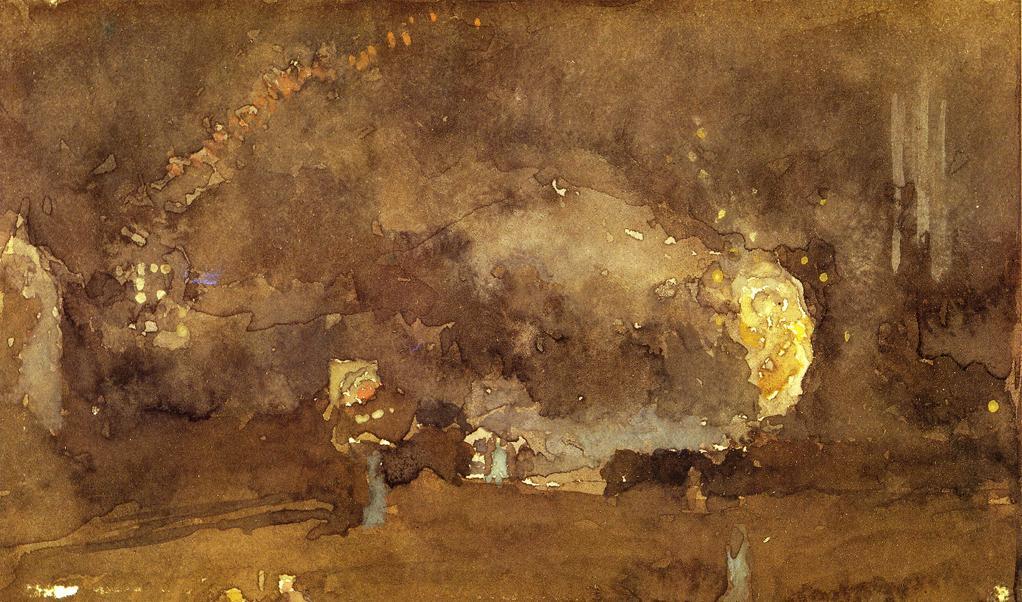
Whistlers karriere var ikke uden kontroverser. Den berømte retssag mod ham i 1878, anlagt af kritikeren John Ruskin, blev udløst af *Nocturne in Black and Gold – The Falling Rocket*. Whistler argumenterede overbevisende for, at hans malerier ikke var ment som realistiske gengivelser, men snarere æstetiske arrangementer af farve og form. Denne sag hævede hans profil og udløste vigtige debatter om kunstens natur og den kunstneriske friheds værdi. Selvom han vandt sagen, blev Whistlers kamp for at definere kunstens rolle som en uafhængig disciplin et symbol på den æstetiske bevægelses stræben efter at frigøre kunsten fra traditionelle moralske og didaktiske begrænsninger.
Et Eftermæle af Æstetik
James Abbott McNeill Whistler døde i London i 1903, men hans kunstneriske arv lever videre. Han er husket som en pioner, der kæmpede for kunstens frihed og udforskede de æstetiske muligheder for farve og form. Hans værker fortsætter med at fascinere og inspirere kunstnere verden over, og hans bidrag til den moderne kunsthistorie er uomtvisteligt.
- Bemærkelsesværdige værker: *The Forge* (1861), *Portrait of Charles Lang Freer* (1873), *Brown and Gold: The Gold Girl—Connie Gilchrist* (1876-77), *Arrangement in Grey and Black No. 1 (Whistler’s Mother)* (1871), *Nocturne in Black and Gold – The Falling Rocket* (1875).
- Indflydelser: Japansk kunst, Velázquez.


 Se i fuld skala
 Køb håndlavet maleri
 Del
Del Del
Del
 Detaljer

 Download
 Lignende værker
 Røntgenundersøgelse
 Diasshow
 Statistik

 Se mere






































 Glasmulighed er kun tilgængelig i størrelser under 110 cm


