Se i rummet Se i AR Bestil håndmalet reproduktion Skift til digitalt billede Send
Detaljer Studieguide til kunstværker Tilføj til favoritter Download Lignende værker Røntgenundersøgelse Se diasshow Statistik

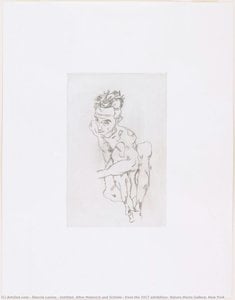
Untitled

Black & white drawing of a woman in motion by Hugo Robus. Captivating study of female form & movement. Explore this evocative artwork's grace and fluidity.

Discover Hugo Robus's evocative paintings of everyday life & landscapes. Explore his unique style through captivating works from WahooArt.

Kunstværket vist på denne side er beskyttet af ophavsretsloven, hvilket betyder, at vi ikke lovligt kan skabe eller sælge en identisk reproduktion. Denne beskyttelse håndhæves i henhold til internationale aftaler som f.eks. den Bernerkonventionen og af nationale love, herunder de bestemmelser, der er fastlagt i Amerikansk ophavsretslov - Titel 17.

Denne metode overholder fuldt ud ophavsretsreglerne, da den ikke indebærer kopiering eller duplikering af det beskyttede kunstværk. I stedet er der tale om en kreativ nytolkning – et nyt maleri, som er inspireret af det oprindelige, men ikke identisk med det.

Giclée / Kunsttryk

Giclée- eller lærredstryk i museumskvalitet med hurtig produktion og fleksible muligheder for finish. ( Bestil håndmalet reproduktion Skift til digitalt billede)

Corner sample of the P118B picture frame: støbt polystyren, 5 cm wide and 3 cm thick
P118B Dkr10
Corner sample of the P118H picture frame: støbt polystyren, 5 cm wide and 3 cm thick
P118H Dkr10
Corner sample of the P118W picture frame: støbt polystyren, 5 cm wide and 3 cm thick
P118W Dkr10
Corner sample of the P438Z picture frame: støbt polystyren, 5.5 cm wide and 3.5 cm thick
P438Z Dkr10
Corner sample of the P508JH picture frame: støbt polystyren, 7 cm wide and 3.5 cm thick
P508JH Dkr12
Corner sample of the P508YH picture frame: støbt polystyren, 7 cm wide and 3.5 cm thick
P508YH Dkr12
Corner sample of the P805H picture frame: støbt polystyren, 5 cm wide and 3.5 cm thick
P805H Dkr10
Corner sample of the P805Z picture frame: støbt polystyren, 5 cm wide and 3.5 cm thick
P805Z Dkr10
Corner sample of the P919BZ picture frame: støbt polystyren, 7 cm wide and 3.5 cm thick
P919BZ Dkr10
Corner sample of the P919G picture frame: støbt polystyren, 7 cm wide and 3.5 cm thick
P919G Dkr10
Corner sample of the P919XJ picture frame: støbt polystyren, 7 cm wide and 3.5 cm thick
P919XJ Dkr10
Corner sample of the P959ZH picture frame: støbt polystyren, 5 cm wide and 3 cm thick
P959ZH Dkr10
Corner sample of the P968JZ picture frame: støbt polystyren, 6 cm wide and 4 cm thick
P968JZ Dkr12
Corner sample of the W106C picture frame: massivt træ, 5 cm wide and 3 cm thick
W106C Dkr8
Corner sample of the W218G picture frame: massivt træ, 5 cm wide and 3 cm thick
W218G Dkr10
Corner sample of the W218JH picture frame: massivt træ, 5 cm wide and 3 cm thick
W218JH Dkr8
Corner sample of the W218Y picture frame: massivt træ, 5 cm wide and 3 cm thick
W218Y Dkr10
Corner sample of the W307PJ picture frame: massivt træ, 6 cm wide and 3 cm thick
W307PJ Dkr10
Corner sample of the W316G picture frame: massivt træ, 6 cm wide and 3 cm thick
W316G Dkr10
Corner sample of the W316PJ picture frame: massivt træ, 6 cm wide and 3 cm thick
W316PJ Dkr8
Corner sample of the W316Y picture frame: massivt træ, 6 cm wide and 3 cm thick
W316Y Dkr10
Corner sample of the W398PJ picture frame: massivt træ, 5 cm wide and 3 cm thick
W398PJ Dkr8
Corner sample of the W4111J picture frame: massivt træ, 6.5 cm wide and 3.5 cm thick
W4111J Dkr10
Corner sample of the W500HY picture frame: massivt træ, 7 cm wide and 5 cm thick
W500HY Dkr15
Corner sample of the W500JH picture frame: massivt træ, 7 cm wide and 5 cm thick
W500JH Dkr15
Corner sample of the W692G picture frame: massivt træ, 8 cm wide and 4 cm thick
W692G Dkr12
Corner sample of the W849H picture frame: massivt træ, 5 cm wide and 3 cm thick
W849H Dkr8
Corner sample of the W940BG picture frame: massivt træ, 7.5 cm wide and 4.5 cm thick
W940BG Dkr15
Corner sample of the W953PJ picture frame: massivt træ, 6 cm wide and 3.5 cm thick
W953PJ Dkr8

Standardstørrelse
speciallavet
CM
INCH

Vælg mellem vores forudindstillede størrelser, der matcher kunstværkets originale proportioner.

bredde
højde

Indtast den bredde og højde, du har brug for, så det passer til din ramme eller din væg. Et print kan kun beskæres, aldrig gøres større end billedet, så en størrelse med en anden form vil miste en del af motivet. Vi sender dig en digital mockup til godkendelse, før vi printer noget. Billedet vist på denne side viser ikke den faktiske beskæring — det er kun mockuppen, der gør.

Verdensomspændende levering () på 2 uger i stedet for de sædvanlige 4/5 uger. (26 oktober)

Gratis ekspresforsendelse til hele verden
Lærred af linned i høj kvalitet
Komplet transportforsikring
Garanti for refusion af told og importafgifter
Garanti for autentisk farvegengivelse
100 dages returret ved fabrikationsfejl
100% fuld returret
Mængderabat ved flere køb

Samlet pris

Dkr 453

Untitled

Giclée / Kunsttryk

Reproduktionsstørrelse

-

Samlet pris

Dkr 453


Om kunstneren

The Sculptural Lyricism of Hugo Robus

In the grand tapestry of twentieth-century American art, few figures possess the quiet, transformative power of Hugo Robus. Born in Cleveland, Ohio, in 1885, Robus embarked on a creative odyssey that would see him traverse the boundaries between the two-dimensional world of painting and the tactile, three-dimensional realm of sculpture. His journey was not merely one of changing mediums, but an evolution of spirit—a movement from the structured, fragmented perspectives of Cubism toward a deeply personal, lyrical abstraction that sought to capture the very essence of human emotion through form.

Robus’s artistic foundation was built upon rigorous classical training. His early years at the Cleveland School of Art and the National Academy of Design in New York City provided him with a disciplined command of technique, yet it was his time in Paris that truly ignited his avant-garde sensibilities. Immersed in the vibrant atmosphere of the Académie de la Grande Chaumière under the guidance of Emile Carlsen, Robus breathed in the revolutionary air of European modernism. This exposure to the radical shifts of the era allowed him to experiment with the geometric complexities of Picasso and Braque, yet he possessed an innate drive to move beyond purely intellectual exercises toward something more visceral and emotive.

A Transition from Canvas to Bronze

The 1920s marked a profound metamorphosis in Robus’s career. While he began his professional life as a painter, the limitations of the flat surface eventually gave way to a fascination with volume, weight, and the interplay of light upon physical form. This transition was not an abandonment of his earlier explorations but a refinement of them. The fragmented logic of Cubism found a new, more fluid expression in his sculptural work, where he began to masterfully balance positive and negative space—a technique that would later echo the profound influence of Surrealist masters like Henry Moore.

As a sculptor, Robus developed a signature style characterized by serene elegance and sinuous contours. His works often feature stylized figures with polished surfaces that invite the eye to dance along their curves. He possessed a unique ability to render the human form not as a rigid anatomical study, but as a vessel for movement and feeling. Whether through the rhythmic lines of a bronze figure or the delicate tension in a pencil drawing, his work consistently sought to embody fundamental themes of domesticity, grace, and the quiet rhythms of life.

Legacy and the New City Colony

Beyond his individual masterpieces, Robus played a vital role in the communal fabric of American modernism. In 1918, alongside contemporaries such as Henry Varnum Poor and Martha Kantor, he co-founded an influential art colony in New City, New York. This enclave became a sanctuary for creative experimentation, fostering a community where the boundaries between different artistic disciplines could blur and evolve.

The enduring significance of Hugo Robus is etched into the permanent collections of the world's most prestigious institutions. His ability to bridge the gap between the structural rigor of early modernism and the expressive freedom of lyrical abstraction ensures his place in art history. Today, his works serve as poignant reminders of a period when American art was finding its unique voice—a voice that Robus helped shape through bronze, stone, and an unwavering commitment to the beauty of the human spirit.

  • Notable Sculptural Works: Woman Washing Her Hair, Girl Reading, Mother With Child, and Torso in Flight.
  • Key Artistic Influences: Cubism (Picasso, Braque), Surrealism (Henry Moore), and the classical training of Emile Carlsen.
  • Institutional Recognition: The Whitney Museum of American Art, The Museum of Modern Art (MoMA), and the Metropolitan Museum of Art.

Hugo Robus

Hugo Robus

1885 - 1964

Hurtige fakta

  • Full Name: Hugo Robus
  • Nationality: American
  • Date Of Birth: 1885
  • Date Of Death: 1964
  • Place Of Birth: Cleveland, Ohio
  • Notable Artworks:
    • Study for Figure in a Hammock
    • Backyards
  • Artistic Movement Or Style: Cubist
  • Artists Who Influenced This Artist:
    • Emile Carlsen
    • Antoine Bourdelle
  • Artists Or Movements Influenced By This Artist: ['Italian Futurism']