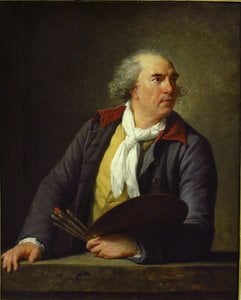
Hubert Robert (1733–1808): En Maler af Ruiner og Visioner – Verden omkring Hubert Robert
Hubert Robert, et navn der er synonymt med maleriske landskaber og den romantiske fortryllelse af ruiner, optager en unik position i det 18. århundredes franske kunst. Han blev født i Paris i 1733 og levede sit liv mod baggrunden af skiftende kunstneriske stilarter og monumentale historiske omvæltninger – fra Rococo’s legende elegance til Neoklassicismens fremkomst, og endelig gennem de turbulente år under den franske revolution. Han var ikke blot en dokumentator af forfald; han skabte visioner, der blandede observation med fantasi for at skabe scener, der resonerede med både et nostalgisk længsel efter fortiden og en forventning om fremtiden. Hans rejse begyndte i den strukturerede verden af kunstnerisk uddannelse, hvor han oprindeligt var under skulptøren Michel-Ange Slodtz, som genkendte Roberts talent, men klokken skar ham hen mod maleri, idet han følte, at Roberts sande kald lå i at fange lys, atmosfære og den subtile poesi i form.
Romanske Drømme: Shaping en Kunstnerisk Identitet
Det afgørende øjeblik i Roberts kunstneriske udvikling kom med hans forlængede ophold i Rom i 1754. Sammen med Étienne-François de Choiseul, blev han kastet ind i en verden, der var dybt forankret i historie og arkitektonisk pragt. I over ti år blev den gamle by hans åbne atelier, dets faldende templer, majestætiske søjlegange og overgroede haver brændte hans fantasi. Dette var ikke blot om at kopiere det, han så; det var om at fortolke det, genfortælle det og indgyde det med en følelse af melankolsk skønhed. Han arbejdede sammen med Giovanni Paolo Panini, hvis indflydelse er synlig i Roberts tidlige *capriccio*-kompositioner – disse fantasifulde visninger, der placerede klassiske ruiner side om side med nutidig liv. Dog bevægede Robert sig hurtigt ud over imitationen og udviklede sin egen distinkte stil, karakteriseret af minutiøs detalje, atmosfærisk perspektiv og en dyb følelse for lysets leg og skygge. Han malede ikke blot ruiner; han malede tiden selv, fangede den bittersøde skønhed i forgængelighed og den vedvarende kraft af erindring. Hans skitser fra denne periode er uvurderlige registre af hans observationer, fyldt med detaljerede studier af romerske landmærker som Villa d’Este og Caprarola, der demonstrerer et skarpt blik for arkitektonisk nuance og landskabs komposition.
Parisis Ære og Kongelig Patronage
Roberts tilbagevenden til Paris i 1765 markerede et vendepunkt i hans karriere. Han opnåede hurtigt anerkendelse inden for det kunstneriske miljø, hvor han blev optaget i Académie Royale de Peinture et de Sculpture med “The Port of Rome, Ornamented with Different Monuments of Architecture, Ancient and Modern.” Hans efterfølgende udstillinger på Salonen fik bred appel, fangede publikums opmærksomhed med deres evokende billeder af ruiner og pittoreske landskaber. Denis Diderot, en fremtrædende figur i Det Oplyste Tidsalder, roste kunstværkerne for deres overdådige skønhed, anerkendte Roberts evne til at transportere seerne til en anden tid og sted. Denne succes førte til kongelig patronage, med bestillinger til dekorative projekter og udnævnelse som “Designer of the King’s Gardens” og senere, “Keeper of the King’s Pictures.” Han blev en eftertragtet kunstner, ikke kun for sine lærredsmalerier, men også for sine innovative designs til haver og paladser. Hans arbejde resonerede med den gældende smag for *capriccio*-maleri – en genre, der appellerede til samlere, der var fascineret af historie, arkæologi og det pittoreske – men Robert indgydede det en unik sans for sig selv, hævede det over blot dekorativ kunst.
Revolution, Udholdenhed og Et Varigt Arv
Den franske revolution præsenterede en hidtil uset udfordring for Robert. Mens mange kunstnere kæmpede med at navigere i de turbulente politiske klima, fandt han sig selv fanget i krydsilden af forandringer. Han blev endda arresteret under Terrorregimet, en hjerteskærende oplevelse, der alligevel inspirerede en række tegninger, der dokumenterede hans tid i fængsel. På trods af dette fortsatte han med at male produktivt gennem denne periode, demonstrerende et urokkeligt engagement i sin kunst. Efter Revolutionen blev Robert udnævnt til kurator af det nyoprettede Muséum Central des Arts – det fremtidige Louvre – som en testamente til hans ekspertise og dedikation til at bevare den kulturelle arv. Han spillede en central rolle i at organisere og katalogisere museets samling, sikre at Frankrigs kunstværker blev beskyttet for kommende generationer. Hubert Robert døde i Paris i 1808 og efterlod et ekstraordinært værk, der fortsat inspirerer til beundring og beundring. Hans arv ligger ikke kun i hans tekniske mesterskab, men også i hans unikke evne til at blande historisk nøjagtighed med fantasifuld fantasi. Han bane vejen for en genre af maleri, der fejrede både skønheden i forfald og den vedvarende kraft af menneskelig kreativitet, hvilket cementerede sin plads som en central figur, der forbinder Rococo- og Neoklassisk perioder, og forudser aspekter af Romantikken med hans fascination for historie og fantasi.
- Nøglepåvirkninger: Giovanni Paolo Panini, Piranesi, den arkitektoniske landskab i Rom.
- Vigtigste temaer: Ruiner, landskaber, *capriccio*-malerier, historisk erindring, tidens gang.
- Kunstnerisk stil: Minutiae detalje, atmosfærisk perspektiv, evokende lys, blanding af observation med fantasi.



 Se i rummet
 Skift til printversion
 Send
Send Del
Del
 Detaljer
 Guide
Guide

 Download
 Lignende værker
 Røntgenundersøgelse
 Se diasshow
 Statistik


 Læs mere