

Få en printklar fil, der rækker langt ud over web-forhåndsvisningen. Hvert digitalt billede, vi sælger, stammer fra en højopløst master i vores database — typisk mellem 5.000 og 15.000 pixels i bredden — så du med selvtillid kan printe stort, beskære tæt eller gengive fine detaljer.
Ingen fil forlader vores studie uden at være blevet behandlet. En digital ekspert kontrollerer farverne i forhold til det originale maleri og korrigerer dem efter behov, hvorefter klarhed og detaljer forbedres med professionelle retoucheringsværktøjer — altid med fuld respekt for kunstnerens penselstrøg og stil. Resultatet er et billede, der ligner selve maleriet, og ikke blot et scannet billede med et filter.
Du godkender først, når du er tilfreds: Vores ekspert sender billedet til din gennemgang via e-mail inden for 72 timer. Ikke tilfreds? Bed om rettelser eller forbedringer, eller anmod om en refundering, hvis kvaliteten ikke lever op til forventningerne.
Dette er den kvalitet, som forlag, designstudier, gallerier og trykkerier stoler på.
Download en højopløselig fil til personlig fremvisning, print og kreative projekter. ( Skift til printsalg Køb håndmalet maleri)
Når du vælger WahooArt.com, får du ikke blot et billede – du modtager et professionelt optimeret digitalt kunstværk, skabt med præcision og sikret med en tilfredshedsgaranti. Her er alt, hvad din ordre automatisk indeholder:
Din højtopløselige digitale billedfil sendes til din e-mail inden for 72 timer efter bestilling – klar til øjeblikkelig brug.
Dit kunstværk optimeres professionelt ved hjælp af avancerede AI-værktøjer og manuel redigering, hvilket sikrer maksimal detaljegrad, klarhed og farvenøjagtighed.
Har du ved en fejl slettet eller mistet din fil? Ingen bekymring – vi sender den igen til enhver tid, helt gratis.
Nyd dit kunstværk med det samme uden told, afgifter eller leveringsgebyrer – digitale downloads er altid skattefrie.
Vi sikrer, at dit digitale billede gengiver de originale farver så præcist som muligt ved hjælp af professionelle værktøjer og farvestyring.
Hvis du ikke er tilfreds med dit digitale billede, vil vi revidere det eller refundere 100% inden for 100 dage – uden spørgsmål.
Ik tilfreds? Få fuld refusion inden for 100 dage efter modtagelse af din digitale fil – uden spørgsmål.
Køb 3 billeder, spar 10% - Køb 5, spar 15% - Køb 10+, spar 20%. Ideelt til kreative projekter, gallerier og bureauer.
Hubert Robert’s “Alexandre le Grand devant le tombeau d’Achille” (c. 1754-1757) is not merely a depiction of a historical scene; it's a carefully constructed tableau brimming with symbolic weight, rendered in the evocative style characteristic of the late 18th century. The painting transports us to a ruined Roman landscape – a deliberate choice by Robert that immediately establishes a dialogue between grandeur and transience. Here, Alexander the Great stands before what is clearly identified as Achilles’ tomb, not in triumphant victory, but in a posture of contemplative solemnity. This isn't the heroic Alexander of classical sculpture; he appears almost weary, his gaze fixed on the fragmented remains of the past, suggesting a profound awareness of mortality and the fleeting nature of even the most formidable power.
Robert masterfully employs a flattened perspective, prioritizing atmosphere and emotional resonance over strict adherence to linear realism. The composition is deliberately complex, layering figures – soldiers, onlookers, and Alexander himself – within a carefully orchestrated architectural setting. The strong vertical lines of the columns contrast sharply with the horizontal fragmentation of the fallen structures, creating a visual tension that mirrors the painting’s thematic concerns. Notice how Robert uses diffused lighting, reminiscent of an overcast day, to soften the edges and imbue the scene with a melancholic quality. The earthy color palette – dominated by ochres, browns, and muted blues – further reinforces this sense of age and decay, while subtle touches of red in the drapery draw the eye and add a touch of dramatic intensity.
While firmly rooted in the Neoclassical tradition—a style emphasizing clarity, order, and rational composition—Robert’s work also reveals a strong influence from the burgeoning Romantic movement. The ruins themselves are not simply historical artifacts; they represent a powerful symbol of time's relentless passage and the inevitable decline of all things. The scene evokes a sense of nostalgia for a lost golden age, a yearning for beauty amidst decay – a hallmark of Romanticism’s fascination with emotion and the sublime. Robert wasn’t just documenting ruins; he was crafting visions, blending observation with imagination to create scenes that resonated with both a longing for the past and an anticipation of the future.
The choice of Achilles' tomb is particularly significant. Achilles, the epitome of heroic strength and martial prowess, represents an ideal of masculine virtue—a concept increasingly challenged by the Enlightenment’s emphasis on reason and individual liberty. Alexander, standing before his demise, implicitly acknowledges this shift in values. The juxtaposition of the powerful conqueror with the fallen hero suggests a subtle critique of unchecked ambition and the ultimate futility of earthly glory. Robert's skill lies not just in depicting the scene accurately but in imbuing it with layers of meaning that invite contemplation.
“Alexandre le Grand devant le tombeau d’Achille” is a testament to Robert's meticulous technique. Likely executed in oil on canvas, the painting demonstrates a sophisticated understanding of color blending and layering—a hallmark of the Rococo and Neoclassical periods. The visible brushstrokes contribute to the sense of texture and immediacy, while subtle glazing techniques create depth and luminosity. The rough, aged surfaces of the ruins are contrasted with smoother areas of skin tones, further emphasizing the painting’s thematic concerns about time and decay. Robert's use of pigments mixed with oil—a standard practice at the time—allowed him to achieve a remarkable range of tonal values and subtle color variations.
The painting’s composition suggests a deliberate effort to capture not just a visual likeness but also an emotional atmosphere. Robert’s careful attention to detail, combined with his masterful use of light and shadow, creates a scene that is both visually stunning and profoundly moving. It's a work that invites the viewer to contemplate the enduring legacy of heroes, the inevitability of decay, and the complex relationship between power and mortality.
Den Earthy farvepalet i "Alexandre le Grand devant le tombeau d'Achille" af Hubert Robert harmonerer med værkets Melancholic følelsesmæssige tone. Farven er en af de måder, et værk formidler følelser på.
Farverne i "Alexandre le Grand devant le tombeau d'Achille" udgør en Earthy palet. Denne klassificering beskriver de dominerende farvefamilier.
"Alexandre le Grand devant le tombeau d'Achille" af Hubert Robert er udstillet på Louvren, Paris, France. Museets fortegnelse henviser til det originale værk og ikke til reproduktioner.

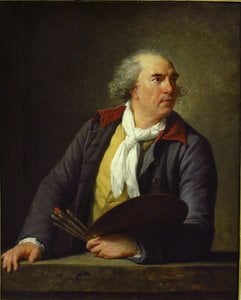
1733 - 1808 , Frankrig
 Se i rummet
 Del som kort
 Del
Del
 Detaljer
 Guide
Guide

 Download
 Lignende værker
 Røntgenundersøgelse
 Diasshow
 Spørgsmål og svar
 Statistikker

 Vis mere


