Om kunstneren
En Liv Immerseret i Bevægelse
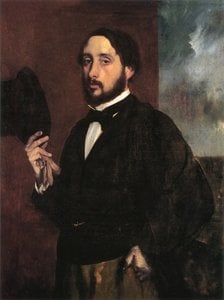
Edgar Degas, født Hilaire-Germain-Edgar De Gas i Paris i 1834, var en kunstner af fascinerende modsætninger. Selvom han ofte er grupperet sammen med Impressionisterne – Monet, Renoir og andre, der revolutionerede maleriet i det sene 1800-tal – nægtede han aktivt at blive betragtet som en del af denne bevægelse, idet han hellere identificerede sig som en realist. Denne forpligtelse skyldtes hans omhyggelige observation af verden omkring ham og en dedikation til at portrættere den med upartisk ærlighed. Degas’s tidlige liv var komfortabelt bourgeois; hans far var bankmand, og hans mor kom fra en kreolsk familie i New Orleans. Denne baggrund gav ham adgang til uddannelse og kunstnerisk træning, selvom han ofte grublede over akademiske begrænsninger. Han begyndte oprindeligt ved Lycée Louis-le-Grand, men sin egentlige uddannelse begyndte, da han begyndte at kopiere værker i Louvre, hvorved han skar sine færdigheder og antændte en livslang passion for klassisk kunst. Dog var Degas’s vej ikke én af streng overholdelse af tradition; den var præget af konstant spørgsmål og omvurdering af kunstneriske normer. Han besad et uafhængigt åndssæt, der ville definere hele hans karriere.
Uden for Impressionismen: En Unik Kunstnerisk Vision
Mens samtidige som Monet jagte de flygtende effekter af lys udendørs, arbejdede Degas primært inden for grænserne for sit atelier, omhyggeligt konstruerede scener fra observation og hukommelse. Hans emner var bestemt moderne – et fald fra historiske eller mytologiske temaer, som foregudstrukket af mange akademiske malere. Han fandt inspiration i de daglige liv af parisianere: vasketrættere, cabaret-sangerinder, hattemakere og, mest fremtrædende, balletdanser. Det er denne fascination med ballet, der definerer meget af hans oeuvre. Degas malede ikke blot smukke balleriner; han fangede den slidende virkelighed af deres profession – de endeløse prøver, den fysiske anstrengelse, de flygtige øjeblikke af elegance midt i en verden af hårdt arbejde. Hans kompositioner er ofte ukonventionelle, hvor figurer klippes på uventede måder og bruger asymmetriske arrangementer for at skabe en følelse af dynamik og øjeblikkelighed. Han var en mester i at fange bevægelse, ikke gennem slørede linjer eller tågede effekter, men gennem præcis observation og omhyggelig gengivelse af form. *Dancer, A Group of Dancers* og *Women Combing Their Hair* er eksempler på denne dedikation til at portrættere det menneskelige væsen i bevægelse og afsløre kompleksiteten af moderne liv. Han var ikke interesseret i overfladisk skønhed; han søgte at afsløre sandheden under overfladen.
Indflydelser og Kunstnerisk Udvikling
Degas’s kunstneriske rejse blev formet af en mangfoldighed af indflydelse. Hans tidlige uddannelse lagde vægt på klassiske principper, især arbejdet fra Jean-Auguste-Dominique Ingres, hvis betoning på håndværk og præcis form efterlod et varigt indtryk. Dog beundrede Degas også Realisterne, såsom Gustave Courbet, der udfordrede akademiske normer og fremmede portrætteringen af nutidig liv. Et centralt øjeblik i hans udvikling kom gennem hans tilknytning til Camille Pissarro, en førende Impressionist, der introducerede ham for andre kunstnere og opfordrede ham til at eksperimentere med nye teknikker. Han blev betaget af japanske tryk – Ukiyo-e – som påvirkede hans brug af asymmetriske kompositioner, fladperspektiver og dristige mønstre. Han omfavnede også fotografi, anerkendte dets potentiale som et værktøj til at studere bevægelse og fange flygtende øjeblikke i tiden. Denne villighed til at inkorporere forskellige indflydelser i sit arbejde er det, der gør Degas unik og bidrager til karakteren af hans kunst. Han var ikke bange for at låne fra forskellige kilder og syntetisere dem til noget helt nyt.
Vigtigste Opnåelser og Historisk Betydning
Edgar Degas døde i Paris i 1917, efterlod sig et værk, der fortsat fanger og inspirerer publikum i dag. Hans innovative tilgang til komposition, hans mesterlige håndværk og hans upartiske portrættering af moderne liv har haft en dybtgående indvirkning på kunsthistorien. Han banede vejen for fremtidige generationer af kunstnere, der søgte at bryde med traditionelle konventioner og udforske nye måder at repræsentere verden omkring dem. Hans indflydelse kan ses i arbejdet fra Pablo Picasso og Henri Matisse blandt andre. Museer over hele verden – herunder Musée d'Orsay og Musée de l’Orangerie i Paris – huser betydelige samlinger af hans malerier, pasteller, skulpturer og tryk, hvilket sikrer, at hans arv vil bestå for kommende generationer. Degas var ikke blot en maler af balleriner eller heste; han var en skarp observatør af menneskelig natur, en mester i form og bevægelse og en sand innovator, der omdefinerede mulighederne for kunst.



 Se i rummet
 Bestil håndmalet reproduktion
 Send
Send Del
Del
 Detaljer
 Guide
Guide

 Download
 Lignende værker
 Røntgenundersøgelse
 Se diasshow
 Statistik


 Læs mere






































 Glasmulighed er kun tilgængelig i størrelser under 110 cm