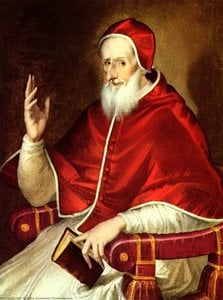
A Legacy of Flemish Elegance: The Life and Art of Hieronymus Francken I
In the vibrant, bustling heart of 16th-century Antwerp, a period defined by artistic flourishing and cultural transition, Hieronymus Francken I emerged as a master of courtly grace and religious intensity. Born in 1540 in Herentals, Belgium, he was destined for a life steeped in the pigments and palettes of the great Flemish tradition. As a member of the illustrious Francken dynasty, his very identity was woven into the fabric of Antwerp’s artistic elite. He was the son of Nicolaes Francken, a painter who laid the groundwork for a family legacy that would dominate the regional art scene for generations. Alongside his brothers, Frans Francken I and Ambrosius Francken I, Hieronymus helped establish a lineage of excellence that bridged the gap between the late Renaissance and the burgeoning Baroque era.
The formative years of Hieronymus were shaped by the rigorous training of the Antwerp school, most notably under the mentorship of the legendary Frans Floris. From Floris, Francken inherited a sophisticated command of perspective and a profound understanding of compositional balance, elements that would become the hallmarks of his mature style. While historical records suggest he may have traversed the landscapes of Italy, absorbing the classical ideals of the Italian Renaissance, his true genius lay in his ability to synthesize these foreign influences with the expressive, often restless energy of Mannerism. This fusion allowed him to create works that were not merely decorative but possessed a psychological depth and a rhythmic vitality that captivated both the clergy and the nobility.
The Splendor of the Court and the Sacred Narrative
Hieronymus Francken I achieved a level of prestige that few of his contemporaries could claim, finding great success as a court painter for the French monarchs Henry IV and Louis XIII. His presence at the court of Fontainebleau placed him at the epicenter of European artistic patronage, where he was tasked with decorating palaces and immortalizing the grandeur of royal life. In these monumental canvases, one observes a meticulous attention to detail—the shimmer of silk, the intricate patterns of lace, and the dignified posture of the aristocracy. His ability to capture the formal elegance of courtly gatherings, often featuring dancing figures and aristocratic processions, anticipated the genre painting that would flourish in the 17th century.
Yet, his mastery was not confined to the secular splendor of the palace; he was equally adept at navigating the profound emotional landscapes of religious iconography. His sacred works, such as The Last Judgment and Carrying the Cross, demonstrate a dramatic use of light and shadow, a technique that would later become central to the Baroque movement. In these pieces, Francken utilized muscular, dynamic figures and sweeping compositions to evoke a sense of divine awe and human suffering. Whether depicting the biblical gravity of a judgment or the delicate moral lessons found in works like Wise and Foolish Maidens, his brushwork remained imbued with a certain Mannerist tension—a sophisticated interplay of grace and drama.
Historical Significance and Artistic Heritage
The historical importance of Hieronymus Francken I lies in his role as a transitional figure who helped steer Flemish art from the structured elegance of the Renaissance toward the emotive power of the Baroque. He was a painter of dualities: capable of the delicate, almost ornamental beauty required for courtly decoration, yet possessed of the technical strength to execute heavy, theological narratives. His career serves as a vital link in the evolution of Northern European painting, providing a foundation upon which his descendants and successors would build.
To reflect on the breadth of his contribution is to recognize the following:
- The Mastery of Mannerism: His ability to blend Italianate proportions with Flemish expressive detail.
- Courtly Innovation: His role in defining the visual language of the French royal courts during a period of immense political change.
- Family Legacy: The establishment of the Francken name as a symbol of artistic prestige in Antwerp and beyond.
- Genre Precursor: His early explorations into scenes of daily life, dance, and social interaction that paved the way for later masters of genre painting.
Though he passed away in 1610, leaving behind a body of work that continues to resonate with its technical brilliance and narrative depth, the influence of Hieronymus Francken I remains etched in the history of Flemish art. He remains a painter of profound sophistication, a man who could capture both the fleeting joy of a courtly dance and the eternal weight of a divine decree.



 Se i fuld skala
 Skift til print
 Del
Del Del
Del
 Detaljer

 Download
 Lignende værker
 Røntgenundersøgelse
 Diasshow
 Statistik


 Se mere






































 Glasmulighed er kun tilgængelig i størrelser under 110 cm