Om kunstneren
Hieronymus Bosch: En Mystisk Maler fra Den Bosch
Hieronymus Bosch, ofte kaldet Jheronimus van Aken, er en af kunsthistoriens mest gådefulde og fascinerende figurer. Han blev født omkring 1450 i den pulserende by ’s-Hertogenbosch i Holland – dengang en del af Brabant – og hans kunstværker er præget af en unik blanding af detaljerigdom, fantasifulde billeder og en dyb, ofte ubehagelig stemning. Bosch var søn af en maler, Jan van Aken, og hans far, Anthonius van Aken, fortsatte også med at male, hvilket sandsynligvis gav ham de tidlige færdigheder, der lå til grund for hans karriere. Men selv i sine formative år begyndte han at adskille sig fra de etablerede normer, hvilket antydede den ekstraordinære fantasi, der skulle definere hans kunstneriske vision. Information om Boschs liv er sparsom og fragmenteret; optegnelserne er ufuldstændige, hvilket bidrager til mystikken omkring både manden og hans arbejde. Han giftede sig med Aleyt Goyaerts van den Meerveen før 1481, en union der gav ham økonomisk sikkerhed gennem hendes families ejendomme, men ellers var hans personlige liv relativt uselvisk.
Fantastiske Visioner og Symbolsk Dybde
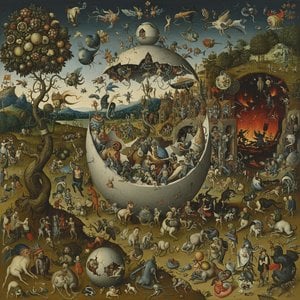
Boschs kunststil er umiddelbart genkendelig – en forbløffende blanding af minutiøs detalje og vildt fantasifulde billeder. Han arbejdede primært med olie på egetræsplader, hvilket demonstrerer hans mesterlige beherskelse af mediet og evnen til at skabe lystfulde farver og intrikate teksturer. Selvom hans tidlige værker viser indflydelse fra traditionel hollandsk maleri – især deres realisme og opmærksomhed på detaljer – bevægede han sig hurtigt ud over blot imitation, og udviklede en dybt original vision. Hans malerier er ikke blot repræsentationer af virkeligheden; de er allegoriske landskaber befolket af bizarre væsner, hybride skabninger og foruroligende scener, der synes stjålet fra drømme – eller mareridt. Bosch var en mester i at kombinere det hellige og det profane, den smukke og det groteske, hvilket skaber en unik og fortsat fascinerende effekt. Hans væsner – monstrøse dæmoner, fantastiske dyr og underligt menneskelige figurer – er ikke blot dekorative elementer; de er udtryk for synd, fristelse og åndelig korruption. Han udforskede komplekse moralske og teologiske koncepter gennem symbolik, ofte med fokus på farene ved synd, den skrøbelighed af jordiske fornøjelser og den uundgåelige guddommelige dom.
Vigtigste Værker og Symbolisme
Boschs mest kendte værker er et bevis på hans evne til at skabe komplekse allegorier. *Haven af Jordiske Fornøjelser* (ca. 1490-1510) er et triptych, der anses for at være hans mesterværk og fortsat er en af kunsthistoriens mest gådefulde og debatterede værker. Når det åbnes, præsenteres der en panoramaudsigt over paradis, jordisk liv og helvede – en kompleks allegorisk repræsentation af menneskehedens fald fra nåden. Venstre panel viser Edens Have med fantastiske væsner og frodig vegetation; det centrale panel skildrer en verden opslugt af sanselig lyst og ukontrolleret begær, mens højre panel giver et rædselsvækkende glimt ind i helvedes torturer. Andre bemærkelsesværdige værker inkluderer *Det Sidste Dom* Triptych (ca. 1480-1490), der viser både himmelsk lykke og infernalsk pine, samt *Stigningen af De Hellige* (ca. 1480-1490), som demonstrerer hans evne til at skabe etæriske og drømmende scener. Selv mindre værker som *Epifani* (ca. 1495) viser hans innovative brug af olie på træ og kompleks symbolik, hvilket afslører en tankeproces, der konstant gravede i dybe spørgsmål om tro, moral og den menneskelige tilstand.
Indflydelser og Arv
Det er vanskeligt at fastslå Boschs direkte indflydelsesfaktorer, da hans vision var så original. Kunsthistorikere peger på mulige forbindelser til middelalderlig folklore, religiøse tekster – især dem, der understreger apokalyptiske temaer – og den voksende sociale uro i tiden. Men det er klart, at han syntetiserede disse elementer til noget helt nyt og unikt for sig selv. Hans indflydelse på efterfølgende kunstnere er uomtvistelig. *Pieter Bruegel den Ældre* fulgte hans spor, adopterede lignende temaer og kompositionsmetoder, mens senere bevægelser, såsom Surrealismen, også trak inspiration fra Boschs drømmelignende billeder og udforskning af det ubevidste. Kunstnere som Salvador Dalí og Max Ernst anerkendte åbent hans skyldige visioner. Selv i dag fortsætter Boschs arbejde med at fascinere og provokere debat, hvilket sikrer hans plads som en mester blandt hollandske malere og en kunstnerisk stemme, hvis indflydelse strækker sig langt ud over sin egen tid. Hans malerier giver værdifulde indsigter i den religiøse, sociale og psykologiske atmosfære i det sene 15. og tidlige 16. århundrede, udfordrer konventionelle normer og baner vejen for nye former for kunstnerisk udtryk.
Bosch's liv
Boschs liv er omgivet af mystik og mangel på sikre oplysninger. Han blev født omkring 1450 i den pulserende by ’s-Hertogenbosch, der senere inspirerede hans kunstners navn “Hieronymus Bosch”. Hans far var en maler, Jan van Aken, og hans farfar, Anthonius van Aken, var også kunstner. Det er sandsynligt, at han modtog sin tidlige uddannelse inden for familiens værksted, hvor han absorberede teknikkerne og konventionerne i hollandsk maleri. Men selv i sine formative år begyndte han at afvige fra de etablerede normer, hvilket antydede den ekstraordinære fantasi, der skulle definere hans karriere. Han giftede sig med Aleyt Goyaerts van den Meerveen omkring 1481, en union der gav ham økonomisk sikkerhed gennem hendes families ejendomme, men ellers var hans personlige liv relativt uselvisk.



 Se i rummet
 Skift til printversion
 Send
Send Del
Del
 Detaljer
 Studieguide til kunstværker

 Download
 Lignende værker
 Røntgenundersøgelse
 Se diasshow
 Statistik


 Læs mere






































 Glasmulighed er kun tilgængelig i størrelser under 110 cm