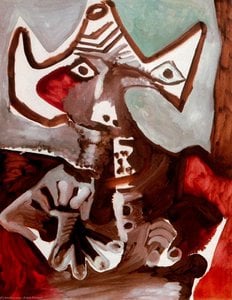
Få en printklar fil, der rækker langt ud over web-forhåndsvisningen. Hvert digitalt billede, vi sælger, stammer fra en højopløst master i vores database — typisk mellem 5.000 og 15.000 pixels i bredden — så du med selvtillid kan printe stort, beskære tæt eller gengive fine detaljer.
Ingen fil forlader vores studie uden at være blevet behandlet. En digital ekspert kontrollerer farverne i forhold til det originale maleri og korrigerer dem efter behov, hvorefter klarhed og detaljer forbedres med professionelle retoucheringsværktøjer — altid med fuld respekt for kunstnerens penselstrøg og stil. Resultatet er et billede, der ligner selve maleriet, og ikke blot et scannet billede med et filter.
Du godkender først, når du er tilfreds: Vores ekspert sender billedet til din gennemgang via e-mail inden for 72 timer. Ikke tilfreds? Bed om rettelser eller forbedringer, eller anmod om en refundering, hvis kvaliteten ikke lever op til forventningerne.
Dette er den kvalitet, som forlag, designstudier, gallerier og trykkerier stoler på.
Download en højopløselig fil til personlig fremvisning, print og kreative projekter. ( Skift til printsalg Køb håndmalet maleri)
Når du vælger WahooArt.com, får du ikke blot et billede – du modtager et professionelt optimeret digitalt kunstværk, skabt med præcision og sikret med en tilfredshedsgaranti. Her er alt, hvad din ordre automatisk indeholder:
Din højtopløselige digitale billedfil sendes til din e-mail inden for 72 timer efter bestilling – klar til øjeblikkelig brug.
Dit kunstværk optimeres professionelt ved hjælp af avancerede AI-værktøjer og manuel redigering, hvilket sikrer maksimal detaljegrad, klarhed og farvenøjagtighed.
Har du ved en fejl slettet eller mistet din fil? Ingen bekymring – vi sender den igen til enhver tid, helt gratis.
Nyd dit kunstværk med det samme uden told, afgifter eller leveringsgebyrer – digitale downloads er altid skattefrie.
Vi sikrer, at dit digitale billede gengiver de originale farver så præcist som muligt ved hjælp af professionelle værktøjer og farvestyring.
Hvis du ikke er tilfreds med dit digitale billede, vil vi revidere det eller refundere 100% inden for 100 dage – uden spørgsmål.
Ik tilfreds? Få fuld refusion inden for 100 dage efter modtagelse af din digitale fil – uden spørgsmål.
Køb 3 billeder, spar 10% - Køb 5, spar 15% - Køb 10+, spar 20%. Ideelt til kreative projekter, gallerier og bureauer.

In the annals of Central European modernism, few names evoke as much psychological intrigue as Gyula Hincz. Born in Budapest in 1904, Hincz emerged not merely as a painter, but as a cartographer of the subconscious. His journey began within the prestigious halls of the Hungarian Academy of Fine Arts, where he studied under masters such as Gyula Rudnay and János Vasary. Yet, while his formal training provided a foundation in classical technique, his spirit was restless, seeking the frontiers of the avant-garde. By the late 1920s, through pivotal travels to Berlin and encounters with figures like Herwarth Walden and László Moholy-Nagy, Hincz began to weave together a tapestry of influences that would become uniquely his own—a synthesis of Cubism, Futurism, and the burgeoning Surrealist movement.
Hincz’s artistic evolution was marked by an extraordinary ability to absorb diverse global aesthetics. He was a chameleon of style, capable of translating the structural rigor of Cubism and the dynamic energy of Futurism into a deeply personal visual language. His time in Paris in 1926 served as a transformative encounter with Surrealism, an influence that would permeate his work for decades. He did not merely mimic the movement; he internalized its fascination with dreams and the uncanny. This was further enriched by his profound appreciation for Far Eastern art, particularly the delicate precision of Japanese woodcuts and ink paintings, which allowed him to balance grotesque intensity with a refined, almost meditative, graphic clarity.
To enter a Hincz canvas is to step into a world where the boundaries between reality and nightmare are perpetually blurred. His work from the Surrealist period is famously characterized by its unsettling motifs and symbolic depth. He often utilized imagery of decay—most notably through the recurring, haunting presence of insects like lice—to serve as potent emblems of human vulnerability and the pervasive anxieties of the modern age. His landscapes were rarely pastoral; instead, they were often desolate, apocalyptic vistas populated by distorted figures engaged in ritualistic, bizarre behaviors that mirrored the fractured psyche of a continent caught between two World Wars.
The emotional weight of his compositions was frequently amplified by a masterful command of color and light. Hincz favored a dramatic palette, where deep blacks and stark whites clashed with visceral reds and ochre yellows to heighten the sense of drama and tension. His technical prowess extended far beyond the oil canvas; he was a gifted printmaker, sculptor, and poster designer whose graphic works possessed a painting-like intimacy. Whether through the meticulous detail of an etching or the bold, expressive strokes of a tempera piece, Hincz maintained a singular focus on the human condition, exploring themes of superstition, mortality, and the darker recesses of social interaction.
As his career progressed, Hincz’s work continued to expand in scope and complexity. His later years saw him exploring new thematic territories, including a fascinating series inspired by his travels through Korea, China, and Vietnam, as well as more enigmatic explorations of African themes during the 1960s. Despite the shifting political landscapes of post-war Hungary, Hincz remained a steadfast figure of intellectual and artistic vitality. His contributions to the Hungarian art scene were recognized with the highest honors, including the prestigious Kossuth Prize in 1958 and the Munkácsy Award.
Beyond his individual canvases, Hincz left an indelible mark on the institution of art itself, serving as a teacher at the Hungarian College of Fine Arts and as the director of the Hungarian Academy of Applied Arts. His legacy is defined by a rare versatility:

1909 - 1986 , Slovakia
 Se i rummet
 Del som kort
 Del
Del
 Detaljer
 Guide
Guide

 Download
 Lignende værker
 Røntgenundersøgelse
 Diasshow
 Spørgsmål og svar
 Statistikker
 Vis mere