Tidlig Liv og Kunstnerisk Begyndelse
Gustav Klimt, født den 14. juli 1862 i Baumgarten nær Wien, voksede op i et hjem præget af både kunstneriske tilbøjeligheder og økonomiske vanskeligheder. Hans far, Ernst Klimt, var guldsmed, et håndværk der subtilt, men dybtgående, kom til at påvirke den unge Gustavs æstetiske følsomhed – fascinationen af bladguld, de omhyggelige detaljer og den overdådige pragt. Familiens økonomiske udfordringer medførte hyppige flytninger inden for Wien, en ustabil opvækst der måske bidrog til Klimts skarpe iagttagelsesevne og følsomhed overfor menneskelige erfaringer. Allerede som barn viste han bemærkelsesværdige tegnetalenter, plejet af faderens profession og et medfødt talent, der hurtigt blev tydeligt. I 1876 optog han på Kunstgewerbeschule i Wien (Skolen for Anvendt Kunst), hvor han begyndte en formel uddannelse indenfor arkitektonisk maleri under Ferdinand Laufberger. Dette gav ham et solidt teknisk fundament, men udsatte ham også for de fremherskende akademiske stilarter – stilarter Klimt senere ville udfordre og overgå. Det var her han indledte et vigtigt kunstnerisk samarbejde med sin bror Ernst og Franz von Matsch, et partnerskab der sikrede tidlige bestillinger på dekorative vægmalerier og lofter, hvilket lagde grundlaget for hans fremtidige succes.
Fremkomsten af Wien Secession
I 1890’erne var Klimt blevet stadig mere desillusioneret over det konservative kunstmiljø i Wien. Han længtes efter større kreativ frihed, et rum hvor innovation kunne blomstre uden traditionens begrænsninger. Denne stræben kulminerede i dannelsen af Wien Secession i 1897, et skelsættende øjeblik i den østrigske kunsthistorie. Klimt blev valgt som bevægelsens første præsident og blev frontfiguren for en retning der søgte at bryde med de stive akademiske normer og omfavne nye kunstneriske strømninger, der skyllede ind over Europa – Art Nouveau, Symbolisme og Japonisme. Secession’s eget udstillingshus, designet af Joseph Maria Olbrich, blev et symbol på denne oprør, et tempel dedikeret til moderne kunst. Klimts arbejde var centralt for Secessions ethos, legemliggjorde afvisningen af konventionelle æstetik og omfavnelsen af dekorative elementer, dristige farver og symbolsk billedsprog. Hans malerier begyndte at udforske temaer som kærlighed, død og seksualitet med en hidtil uset åbenhed, hvilket udfordrede samfundsnormerne og fremkaldte både beundring og forargelse.
Den Gyldne Periode og Kunstnerisk Modenhed
Omkring år 1900 indtrådte Klimt i det, der nu er kendt som hans “gyldne periode”, en tid præget af den overdådige brug af bladguld inspireret af byzantinske mosaikker og middelalderlige illuminerede manuskripter. Denne teknik forvandlede hans malerier til skinnende, overjordiske visioner, fyldt med en følelse af åndelig dybde og sensuel lokkende kraft.
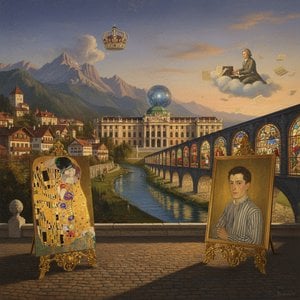
Kysset (1907-1908), måske hans mest ikoniske værk, er et eksempel på denne stil – et par indfanget i en omfavnelse, omsluttet af en gylden aura, deres kroppe dekoreret med intrikate mønstre. I denne periode skabte Klimt også en række betagende portrætter, herunder *Portræt af Adele Bloch-Bauer I* (1907), der viste hans evne til at fange ikke kun fysisk lighed, men også sine modellers psykologiske kompleksitet. Han slørede i stigende grad grænsen mellem maleri og ornamentik, integrerede dekorative elementer i sine kompositioner for at skabe en harmonisk fusion af form og indhold. Indflydelsen fra japansk kunst – Japonisme – var særligt tydelig i hans flade perspektiv, vægt på linjen og brugen af dekorative mønstre.
Kontroverser, Indflydelser og Varig Arv
Klimts karriere var ikke uden kontroverser. I 1900 modtog han en prestigefyldt bestilling til at male loftsmalerier i Det Store Auditorium på Universitetet i Wien, der repræsenterede Filosofi, Jura og Teologi. Disse værker – især *Filosofi* – blev imidlertid anset for at være provokerende og endda pornografiske af konservative kritikere, hvilket førte til offentlig harme og i sidste ende fik Klimt til at afvise yderligere offentlige bestillinger. Denne hændelse markerede et vendepunkt i hans karriere, der skubbede ham mod mere privat patronage og gav ham større kunstnerisk frihed. Gennem hele sit liv var Klimt påvirket af en mangfoldighed af kunstnere og stilarter – fra Hans Makarts historiemalerier til den dekorative kunst fra Byzans og Japan. Han hentede også inspiration fra Symbolistbevægelsen, hvor han udforskede temaer som mytologi, allegori og det underbevidste. Gustav Klimt fortsatte med at male flittigt indtil sin død den 6. februar 1918 af et slagtilfælde under spanske influenzaepidemien. Hans senere værker udforskede mere abstrakte former og landskaber, hvilket demonstrerede en løbende kunstnerisk udvikling. Han anerkendes nu som en af de vigtigste figurer i den østrigske kunsthistorie, en førende eksponent for Wien Secession og et varigt symbol på Art Nouveau-elegance.
Hans malerier opnår høje priser på auktion, og hans indflydelse fortsætter med at resonere i moderne kunst og design.
Nøglekarakteristika & Kunstnerisk Stil
- Symbolisme: Klimts arbejde er dybt symbolsk og udforsker ofte temaer som kærlighed, død, seksualitet og den menneskelige tilstand.
- Art Nouveau: Han var en førende figur i Art Nouveau-bevægelsen, der er kendetegnet ved sine organiske linjer, dekorative mønstre og vægt på skønhed.
- Den Gyldne Periode: Hans brug af bladguld skabte skinnende, overdådige overflader, der blev hans signaturstil.
- Dekorative Elementer: Klimt integrerede dekorative elementer i sine kompositioner og slørede grænsen mellem maleri og ornamentik.
- Den Kvindelige Form: Den kvindelige krop var et centralt emne i hans arbejde, ofte afbildet med sensualitet og psykologisk dybde.



 Se i rummet
 Bestil håndmalet reproduktion
 Send
Send Del
Del
 Detaljer
 Studieguide til kunstværker

 Download
 Lignende værker
 Røntgenundersøgelse
 Se diasshow
 Statistik


 Læs mere






































 Glasmulighed er kun tilgængelig i størrelser under 110 cm