

Giclée- eller lærredstryk i museumskvalitet med hurtig produktion og fleksible muligheder for finish. ( Køb håndmalet maleri Skift til digitalt billede)





























Vælg mellem vores forudindstillede størrelser, der matcher kunstværkets originale proportioner.

Indtast den bredde og højde, du har brug for, så det passer til din ramme eller din væg. Et print kan kun beskæres, aldrig gøres større end selve billedet, så en størrelse med et andet format vil medføre, at dele af motivet går tabt. Vi sender dig en digital mockup til godkendelse, før vi printer noget. Billedet vist på denne side viser ikke den faktiske beskæring — det er kun mockuppen, der gør.
Verdensomspændende levering () på 2 uger i stedet for de sædvanlige 4/5 uger. (8 november)
Self Portrait aged - (24)
Størrelse på reproduktion

Govert Teunisz Flinck, et navn der genlyder af den hollandske malerkunsts guldalder, var mere end blot en portrætmaler; han var en formidler mellem Rembrandts revolutionerende stil og det spirende kunstneriske landskab i 1600-tallets Amsterdam. Flinck blev født i Kleve, Tyskland, i 1615 – en by gennemsyret af både tyske og hollandske indflydelser – og hans tidlige liv antydede en vej langt væk fra kunstens verden. Hans far, en velstående klædehandler, forestillede sig en fremtid for sin søn inden for faget, men skæbnen greb ind med den uventede vejledning fra Lambert Jacobsz, en fremtrædende mennonitisk prædikant og maler, der genkendte den unge mands medfødte kunstneriske talent. Dette afgørende møde ledte Flinck mod Leeuwarden, hvor han påbegyndte sin formelle uddannelse under Jacobsz, hvilket lagde fundamentet for en karriere, der i sidste ende ville overskygge hans oprindelige ambitioner.
Flytningen til Amsterdam i 1633 markerede et vendepunkt. Her trådte Flinck ind i Rembrandts værksted, et forhold, der dybtgående formede hans kunstneriske udvikling. Rembrandts indflydelse er ubestrideligt til stede i hele Flincks værk – især i hans tidlige værker – karakteriseret ved dramatisk lyssætning, nuancerede udtryk og en mesterlig manipulation af chiaroscuro. Men i modsætning til Rembrandt, der ofte omfavnede det teatralske, udviklede Flinck gradvist en mere raffineret og elegant stil, som inkorporerede elementer af rubensiansk dynamik og en forhøjet følelse af realisme. Denne evolution er slående tydelig i værker som ”Isak velsigner Jakob” (1638), hvor kompositionens balance og figurernes emotionelle dybde demonstrerer et klart brud med Rembrandts umiddelbare indflydelse.
Flinck etablerede sig hurtigt som en af Amsterdams mest eftertragtede portrætmalere, der betjente en klientel bestående af velhavende købmænd, embedsmænd og fremtrædende medlemmer af det mennonitiske samfund. Hans portrætter var ikke blot gengivelser af lighed; de var omhyggeligt konstruerede fortællinger, gennemsyret af social kommentar og reflekterende sine subjekters status og ambitioner. ”Portræt af en mand, sandsynligvis Augustijn Wtenbogaert (1577-1655)” eksemplificerer denne tilgang ved at fremvise en ældre model malet med bemærkelsesværdig følsomhed, der fanger ikke blot hans fysiske fremtoning, men også tyngden af de erfaringer, der er indgraveret i hans ansigt. Brugen af rige tekstiler, de intrikate detaljer i baggrunden og de subtile gestus bidrager alle til et portræt, der transcenderer simpel lighed og tilbyder et glimt ind i subjektets liv og karakter.
Hans bestillingsarbejder for borgergarden – som set i ”Officerer og andre borgergardister i distrikt XVIII i Amsterdam…” – cementerede yderligere hans ry. Disse værker er ikke blot afbildninger af militært personel; de er levende fejringer af borgerlig stolthed, omhyggeligt udført med sans for detaljen og en skarp bevidsthed om de sociale dynamikker, der var i spil. Rembrandts indflydelse er mærkbar her, især i den dynamiske komposition og brugen af lys og skygge til at skabe en følelse af bevægelse og drama. Maleriet fanger ikke blot gardisternes udseende, men også deres rolle som beskyttere af Amsterdams velstand og stabilitet.
Selvom han var berømt for sine portrætter, strakte Flincks kunstneriske spændvidde sig langt ud over de formelle repræsentationers grænser. Han producerede en række fængslende genrebilleder – intime skildringer af hverdagslivet – som tilbød et vindue ind til det hjemlige liv i 1600-tallets Amsterdam. Disse værker er kendetegnet ved deres realisme og deres evne til at indfange nuancerne i menneskelig interaktion, hvilket afslører både glæderne og udfordringerne ved den daglige eksistens. Hans religiøse malerier, såsom ”Engle der forkynner Kristi fødsel for hyrderne”, udviser en mesterlig kontrol over komposition, farve og symbolik, hvilket skaber scener, der er både visuelt betagende og emotionelt resonante.
Govert Teunisz Flincks karriere strakte sig over næsten fire årtier, hvorigennem han producerede en imponerende mængde værker, der fortsat fanger beskuere den dag i dag. Hans kunstneriske udvikling – fra hans tidlige læretid under Rembrandt til forfinelsen af hans egen særprægede stil – afspejler det dynamiske kunstneriske klima i den hollandske guldalder. Han efterlod sig en varig arv som en af sin tids mest fuldendte portrætmalere og genremalere, hvilket påvirkede generationer af kunstnere, der fulgte i hans fodspor. Hans værker er i dag indkvarteret i prestigefyldte samlinger verden over, herunder Rijksmuseum i Amsterdam, som et vidnesbyrd om hans vedvarende bidrag til kunsthistorien.

1615 - 1660 , Tyskland

Explore the Dutch Golden Age of painting! Discover key artists like Vermeer & ter Borch, their innovative techniques, and the rich cultural context behind these Baroque masterpieces. Learn about collecting & appreciating this iconic art period.

Oplev Hollandsk Barok's 10 mest ikoniske værker! Rembrandt, Vermeer & co. – dyk ned i historien bag mesterværkerne og find inspiration til din boligindretning. Køb luksus kunsttryk på WahooArt.com.

Explore the dramatic mastery of the Dutch Baroque era. Discover how masters like Rembrandt used chiaroscuro to transform everyday life into timeless art. An expert guide for collectors and enthusiasts seeking to understand the profound interplay of light and shadow.

Få en autoritativ guide til barokkens dramatiske lys og teknikker. Oplev det 17. århundredes mestre her.
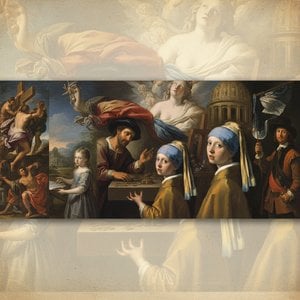
Oplev barokkens storhed! Dyk ned i 10 ikoniske kunstværker af Caravaggio, Rembrandt & Vermeer. Lær historierne bag mesterværkerne og find inspiration til din indretning med museumskvalitets reproduktioner på WahooArt.com
 Se i rummet
 Del som kort
 Del
Del
 Detaljer
 Guide
Guide

 Download
 Lignende værker
 Røntgenundersøgelse
 Diasshow
 Spørgsmål og svar
 Statistikker
 Vis mere









 Glasmulighed er kun tilgængelig i størrelser under 110 cm


