


 Oil On CanvasWallArtRomanticism
 182019th Century
 69.0 x 56.0 cm
 Metropolitan Museum of Art
Køb et højopløst, forbedret digitalt billede, der er langt bedre end online-forhåndsvisningen.
Hver fil er omhyggeligt forberedt af vores interne specialister ved hjælp af avancerede værktøjer og ekspertmæssig manuel retuschering. Vi sikrer, at hvert billede har enestående klarhed, præcis farvegengivelse og fine detaljer.
Den endelige fil leveres via e-mail inden for 72 timer og er optimeret til øjeblikkelig brug i professionelle, redaktionelle og trykte miljøer. Det er den samme kvalitet, som førende designstudier, forlag og gallerier har tillid til.
Download en højopløselig fil til personlig fremvisning, print og kreative projekter. ( Køb print Køb håndlavet maleri)
Når du vælger WahooArt.com, får du ikke blot et billede – du modtager et professionelt optimeret digitalt kunstværk, skabt med præcision og sikret med en tilfredshedsgaranti. Her er alt, hvad din ordre automatisk indeholder:

Din højkvalitets digitale billedfil vil blive sendt til din e-mail inden for 72 timer efter bestilling – klar til øjeblikkelig brug.

Dit kunstværk optimeres professionelt ved hjælp af avancerede AI-værktøjer og manuel redigering, hvilket sikrer maksimal detaljegrad, klarhed og farvenøjagtighed.

Har du ved en fejl slettet eller mistet din fil? Ingen bekymring – vi sender den igen til enhver tid, helt gratis.

Nyd dit kunstværk med det samme uden told, afgifter eller leveringsgebyrer – digitale downloads er altid skattefrie.

Vi sikrer, at dit digitale billede gengiver de originale farver så præcist som muligt ved hjælp af professionelle værktøjer og farvestyring.

Hvis du ikke er tilfreds med dit digitale billede, vil vi revidere det eller refundere 100% inden for 100 dage – uden spørgsmål.

Ik tilfreds? Få fuld refusion inden for 100 dage efter modtagelse af din digitale fil – uden spørgsmål.

Køb 3 billeder, spar 10% - Køb 5, spar 15% - Køb 10+, spar 20%. Ideelt til kreative projekter, gallerier og bureauer.
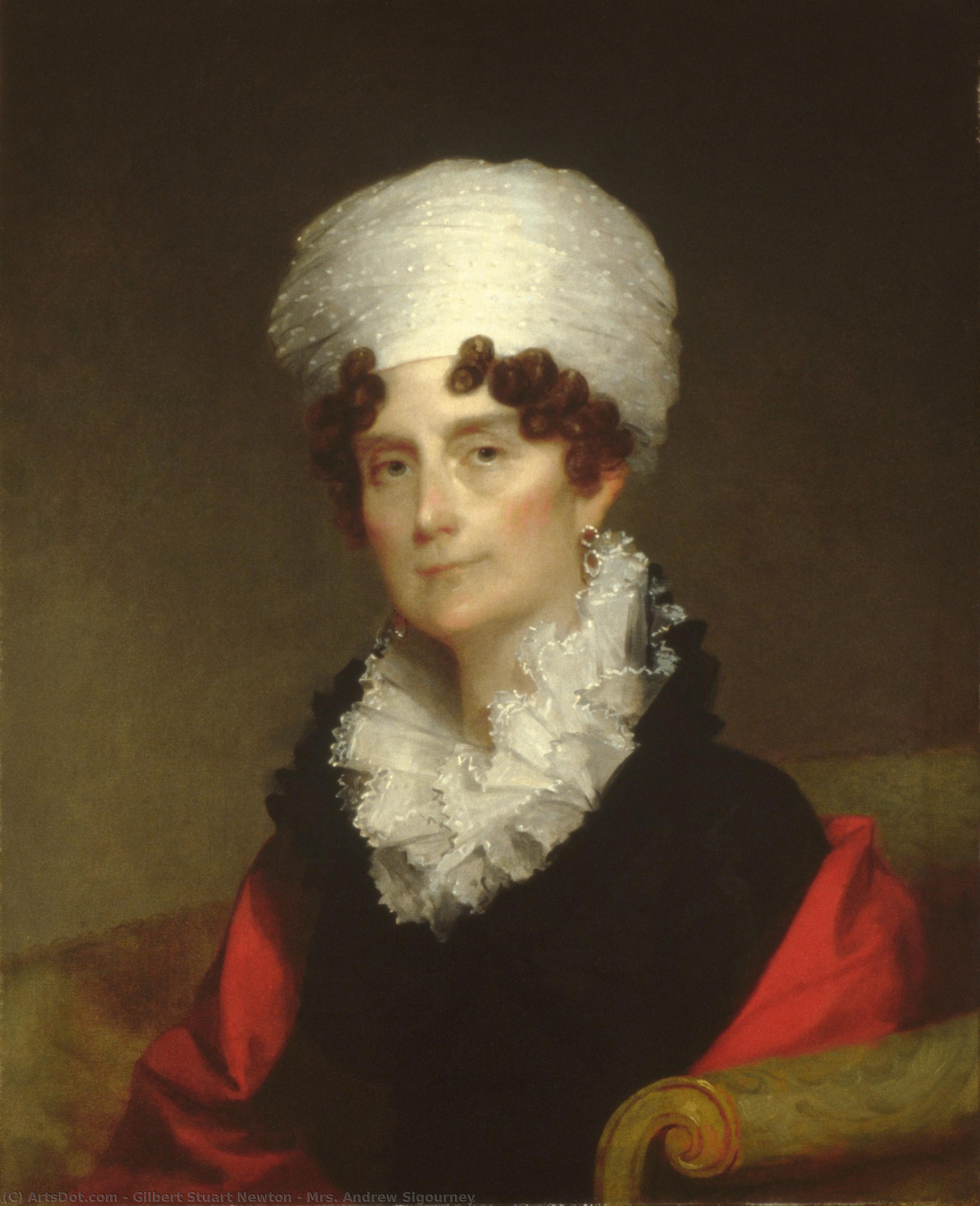
To stand before Gilbert Stuart Newton's portrait of Mrs. Andrew Sigourney is to step directly into the refined drawing rooms of early nineteenth-century Boston. This painting, executed around 1820, transcends a mere likeness; it is a carefully composed tableau vivant that speaks volumes about social standing, intellectual grace, and the quiet prosperity of its sitter. Elizabeth Williams, as she was known, is presented not just as a beautiful woman, but as a figure of considerable intelligence and established means. The composition itself suggests a moment paused in time—a gathering where conversation and status mingle effortlessly.
Newton’s handling of paint here demonstrates the technical prowess inherited from his celebrated lineage. While the subject is seated, allowing for a sense of repose, the artist has imbued the scene with vibrant life through meticulous detail. Observe the texture captured in the white, ruffled edge of her hat, contrasting sharply with the deep, sober tones of her black attire. This contrast is not accidental; it serves to draw the eye immediately to her face and hands. The technique employed allows for both an almost photographic realism in rendering fabric and skin, while simultaneously maintaining the romantic idealization characteristic of the era. It is a balance that speaks to Newton's sophisticated understanding of light and shadow.
What truly elevates this portrait beyond simple representation is the subtle narrative woven into its details. The description notes that Stuart toned down any overly sensual quality, choosing instead to emphasize Mrs. Sigourney’s "knowing intelligence." This focus suggests a cultural shift in portraiture, moving away from pure glamour toward celebrating the sitter's inner life and accomplishments. Her direct gaze meets the viewer’s eye with an assurance that speaks of her family connections and her husband’s prominent civic roles. The inclusion of other figures subtly grounds her within a social context—a circle of peers whose presence validates her own elevated position in Boston society.
For the collector or designer, this piece offers more than just decoration; it offers atmosphere. Reproducing such a work allows one to infuse a room with the gravitas and refined elegance of the Federal and early Victorian periods. Imagine this painting gracing a formal study or a drawing-room corner. The deep blacks and crisp whites provide an immediate anchor of sophisticated contrast, while the historical narrative adds layers of intellectual depth. It is a piece that invites conversation, prompting admirers to inquire about the life and times it so beautifully captures.


1795 - 1835

 Se i fuld skala
 Del
Del Del
Del
 Detaljer

 Download
 Lignende værker
 Røntgenundersøgelse
 Diasshow
 Se mere


